Redesigning Work for the AI Era: How Greenprint Partners is Turning Implicit Knowledge into Shared Intelligence
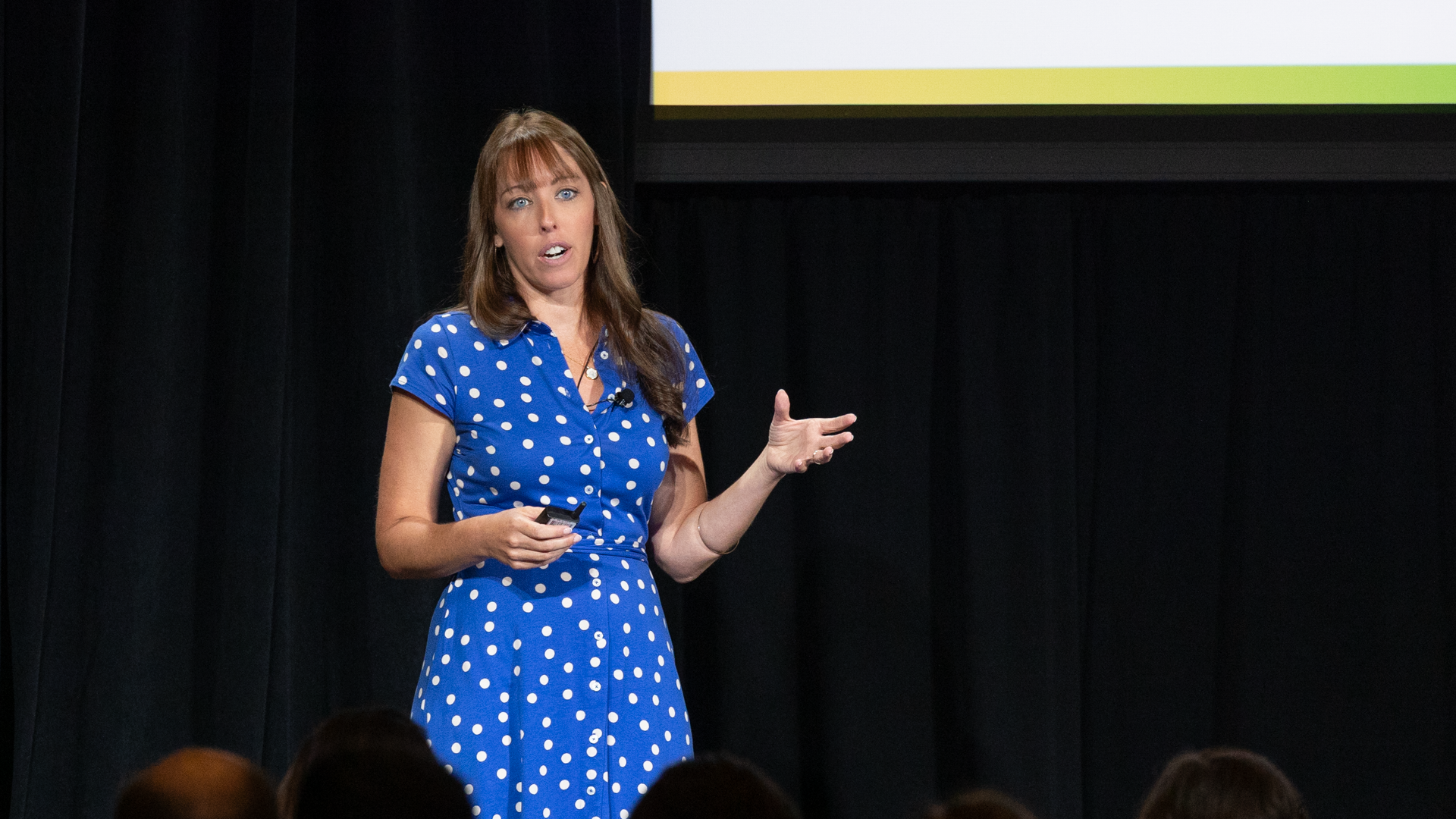
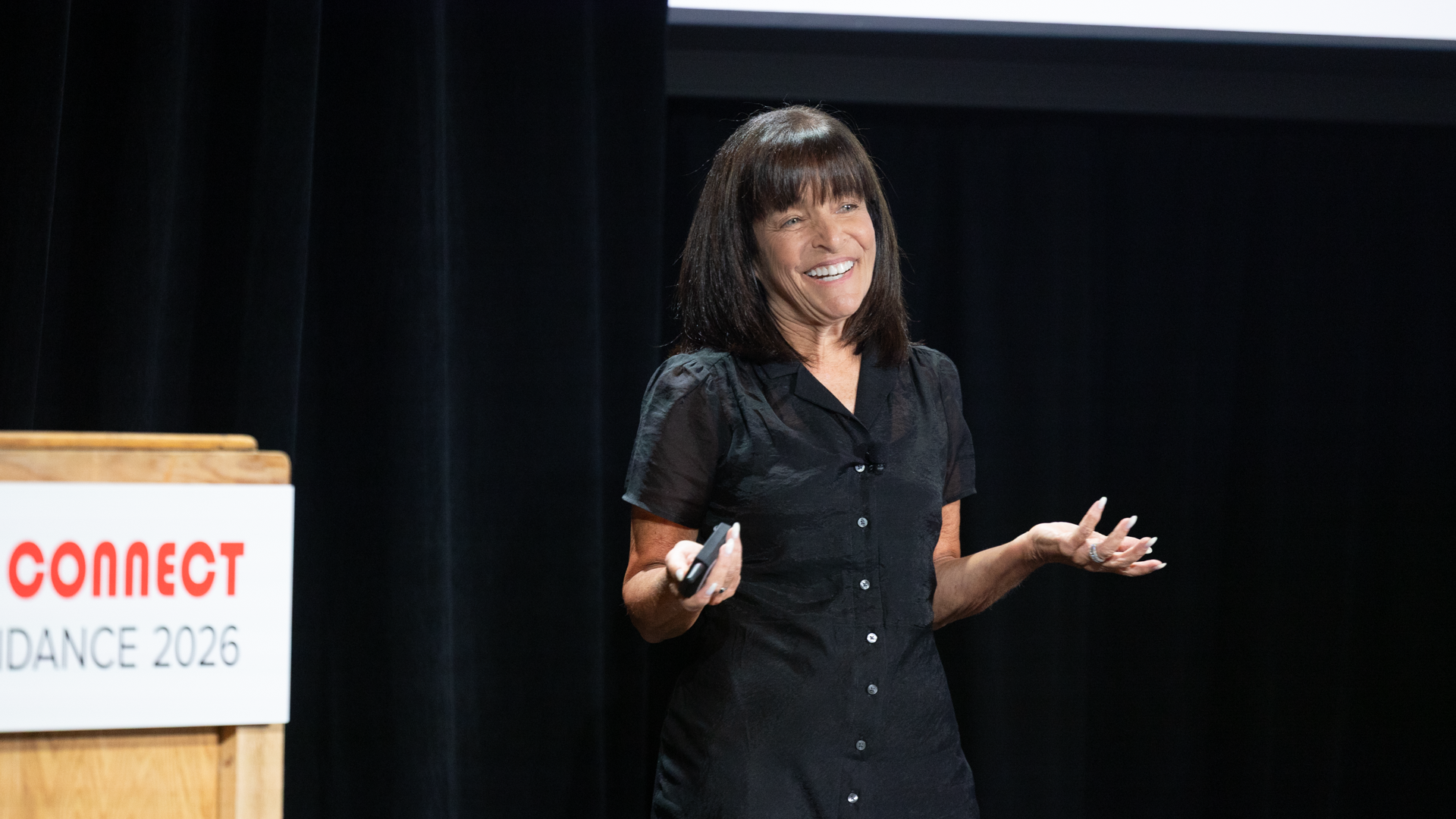
Nicole Chavas, Chief Operating Officer, Greenprint Partners
Talk Description
In this session, Nicole Chavas, Chief Operating Officer at Greenprint Partners, shares how her team is taking a clean-sheet approach to designing work in the AI era. At a 35-person firm without dedicated knowledge management or L&D teams, AI is becoming a core teammate embedded directly into how work gets done.
Rather than layering AI into existing processes, Nicole is rethinking those processes entirely, starting from a challenge most growing firms share: the people who hold the knowledge the firm needs are often not the same people doing the work that needs it. Institutional memory, market awareness, process expertise and client relationships live in different heads, and getting them into the right conversation at the right time is harder than it sounds.
Three principles are guiding Greenprint's approach: redesign the work instead of retrofitting what already exists, foster human connection where it matters most, and use AI to elevate implicit knowledge into repeatable processes.
Nicole will walk through two parallel efforts. The first reimagines the pursuit process — from how the firm surfaces and evaluates opportunities to how it develops the content that wins them — using AI to draw on institutional knowledge rather than reinvent it each time. The second builds a learning and development pipeline from scratch, capturing expertise through structured interviews with subject matter experts, then using AI to transform those conversations into scalable learning content.
She'll also explore what it takes to shift mindsets across a firm, and why the emerging KM function may sit at the intersection of strategy and operations, bridging the "why we do things" with the "how we do things" and making sure the organization's collective knowledge is greater than what any one person carries.
Speaker Bio
Nicole is President & COO of Greenprint Partners, a Chicago-based urban planning, civil engineering and landscape architecture firm. In leading all aspects of firm operations, she brings a passion for rallying resources, talent and partnerships to scale sustainable infrastructure—a passion that has informed her approach to team leadership and company growth since 2014. Nicole's love of learning is inherent in every initiative she leads. Whether it’s spearheading a proposal, accelerating adoption of a new knowledge management system or recruiting and onboarding employees, she is committed to transparency, collaboration and continuous learning every step of the way.
Timeline
00:00 Introduction: The Accidental Knowledge Manager
03:26 Origins of a KM Superpower: The Hot Gossip
05:56 New AI Tools Changed Everything
07:59 Slowing Down to Take Stock of Our Knowledge
11:01 What AI Reveals About Gaps in a Process
13:59 Project Management, an LMS Story
16:05 Rethinking Training Through Adult Learning
19:14 Results: A Training the Team Built Together
23:42 Proposal Development, an Agent Story
26:32 Defining Good Before Building Another Tool
28:37 A Better Agent: The Project Summary Updater
33:11 Lessons Learned From the Journey
Q+A
36:24 Q: How were the SME interview videos made?
37:38 Q: How do you find the simple thing to start?
38:43 Q: Did bringing in collaborators cause friction?
40:02 Q: Are we building agents, or just chatbots?
44:12 Q: How did you structure the training survey?
45:18 Q: How many people build their own agents now?
48:13 Q: How did people learn to build their own tools?
49:56 Q: What's happening with your intranet now?
52:29 Q: LMS content or intranet — how do you decide?
53:36 Q: What training do you require before building?
Transcript
This transcript has been lightly edited for clarity.
Introduction and an Accidental Knowledge Manager
Thank you so much for having me here, Chris, and the KA community. If you had told me just two years ago that I would be up on a stage talking about knowledge management and learning management systems and AI agents, I would've said, "I do not understand the words that are coming out of your mouth. What are you talking about?" I am not a technologist. I'm not a learning and development expert. I'm not an architect. I'm not an engineer. I'm really just an accidental knowledge manager who loves to build things and is really passionate about how we can make the built environment better for people, plants, and animals.
So, how did I get here? I actually started my career in investment management doing accounting and operations, which was not my passion. Then, in the early 2010s, my husband went back to grad school to get his master's degree in urban planning. And I love to learn, so I, of course, got my own master's in urban planning by proxy through him. I realized that is what I wanted to do — I wanted to work in the built environment, and I needed to find a way to get from investment management to urban planning and development. I realized the only way I was going to be able to make that career change was to start a company myself.
So, in 2014, I met my co-founder, April Mendez, who was our CEO, and together we started Greenprint, which at the time was focused on providing project management and community engagement services to municipalities for green infrastructure projects. I was in charge of building all of our operations. Through a lot of brute force and a lot of learning, Greenprint today is now a 30-person DBE firm — I think we're probably one of KA's smallest clients. We have three co-equal practices: urban planning, civil engineering, and landscape architecture. We serve mostly public clients in water resources, transportation, and site development. So, you can see, even though we're pretty small, we're quite complex.
I had to build everything — our systems, our team, our processes — from day one as we grew from three to 10 to 30 today. And throughout that process of building everything, I really became the holder of all of our firm's knowledge. I knew all of our processes because I designed them. I knew all of our team members because I interviewed and hired them. I knew where all of our documents were because I created the drive. I knew who all of our clients were because I led our proposals. I was our one-woman human knowledge management system. And if anybody wanted to get an answer to any question, the fastest way for them to do that was to ask me. And I loved it. I loved it.
I realized what my true superpower was that I had not been activating as an accountant in investment management, which was making connections. I loved connecting people to each other. I loved connecting people to knowledge. I loved finding two disparate pieces of knowledge and bringing them together to create new insights. I got just so much satisfaction from helping people get the right information at the right time and discover knowledge and insights that they hadn't been able to come to on their own.
Origins of a KM Superpower: The Hot Goss
So, whenever I run into people from my old career who ask me what I'm doing now and I tell them, they're like, "Where did you gain these skills? How did you learn how to do all this? You definitely weren't doing accounting" — which is 100% true. So, I'm going to tell you where I did learn all of my knowledge management skills, and it is through my lifelong love of hot gossip.
Ever since I was in high school, I have loved collecting people's stories, their experiences, their relationships, the on-again, the off-again. When I went to college, I got really into celebrity gossip thanks to my roommate's Us Weekly subscription. I would run into people from high school on the street and I'd be like, "Hey, Julie, it's so great to see you. Are you still majoring in business and dating Jim?" And they'd be like, "Who are you? I don't know who you are." I can still tell you to this day where I was and who I was with the day I learned that Britney Spears was divorcing Kevin Federline. I had built this really complex knowledge management system of Hot Goss in my head.
And you're probably wondering, "Why are you telling me this, Nicole?" Well, what is professional services but just a huge, complex web of people and stories and experiences and relationships that we use to win new business, to serve our clients, to grow in our careers? Think about it — how many times a month do you say things like, "Did you see on LinkedIn?" And you get that feeling in the pit of your stomach when you see one of your competitors marketing a project that you lost to them. Then you run into one of their subs at a networking event, and they tell you the project's going really badly and the client is super pissed, and you run home and you write in your diary — or in our industry speak, the CRM. I have been training for this my whole life, and little did I know that my love of the Hot Goss was going to train me so well for running the operations of an A/E firm.
New AI Tools Changed Everything
Now, I knew that being the one-woman knowledge management system was not going to be sustainable. So, I worked really hard to try to take all that knowledge and put it out there to be more accessible for my team. I documented everything. I created a Google Drive where I put all of our processes, our procedures, our training manuals — it was kind of a poor man's intranet. I sent out reminders, I led trainings, I recorded them, I put them on Slack, where they promptly disappeared into the ether. But there was still so much friction in our team getting the right information at the right time that the fastest way was still to come to me with questions. The weight of that system really started to fail as we hit 20 and then 30 people. I felt really stuck with the limited tools I had at my disposal and the limited time I had, given how many hats I was wearing at any given time.
And then everything changed, because out of the sky, out of nowhere, dropped these amazing tools, kind of all at once, and they have completely transformed the trajectory of our operations. All of a sudden, we had an amazing intranet that's super accessible and user-friendly, which we call the Commons. It came with an LMS, and we've gone all in on Claude, so AI.
I was jazzed, and as a builder, I immediately got to building. I onboarded and built out our intranet over my kids' winter break and rolled it out to my team in January. I have signed up for every single beta test that Synthesis could possibly offer — the LMS, AI agents, AI Search, all of it. I wanted to use it the minute it was available. I've gone all in on Claude. We have an enterprise subscription for anybody on our team who wants it. The minute Claude Cowork came out, I was using it, and I was building like crazy. I felt like Bradley Cooper from the movie Limitless, that I had been given a magical pill that had unlocked 100% of my brain, and suddenly I was able to do things I could never do before. I could conduct analysis. I could do research. I could create presentations. I could create reports at speeds that seemed superhuman. And I just kept sharing them out with my team, like, "Look at this. Isn't this cool? Oh my God, can you believe this?"
And I crashed. I crashed, and I went from Bradley Cooper in the movie Limitless to Bradley Cooper in The Hangover. I had experienced what's called AI brain fry, which is a cognitive exhaustion that comes from too much AI. My team had really gone for a ride with all of this. They were totally overwhelmed. They couldn't follow the journey I was on, and they were feeling a lot of whiplash. So, I knew I needed to slow down and set up some guardrails, both for myself and for my team, if I was going to be able to take advantage of these amazing new tools in a sustainable way.
Slowing Down to Take Stock of Our Knowledge
I knew that I needed to slow down to go fast and just really start by taking stock. First of all, what am I even trying to achieve with all this building? Building is so fun, but it needs to be in service of something that helps drive your business forward. So, before I built another tool, I wanted to really understand: where does our knowledge live now, and how can I access it in this new modern world? I kind of mapped out all of our knowledge — these are all of our tools now, which I know are a lot of the same tools you all use. We used to be at Google; we switched over to SharePoint, but our original core knowledge containers had historically been SharePoint, Deltek Vantagepoint, and OpenAsset. Again, it was really hard to get the right information to the right person at the right time with those tools alone.
Bringing in the Commons was such a game changer for us because now we had this super accessible system of record for our most valuable, most essential firm-wide knowledge: our processes, our policies, our best practices, our project directory. That made a huge difference for our team and made a huge difference for me, to finally be able to offload a lot of that to a place that was truly accessible.
But we still had a lot of knowledge that was happening really ephemerally in Slack, in email, in meetings. And that's really where all the good professional hot goss is, right? That's where we're talking about our projects, our clients, our proposals, our competitors. Once AI Search and meeting recordings and MCP connectors all came online, Claude could really become our sort of command center to access all of these. They all became true knowledge bases, and I could use Claude to help find organized knowledge across our knowledge bases, organize it, and get it into the Commons as more of our really curated source of knowledge for our team.
Looking at this — not even counting the fact that this also accesses the entire internet — I can see why I hit brain fry. With a snap of a finger, I had access to more data and knowledge and insights about Greenprint and about the world than I ever had before. I almost had, truly, 100% of Greenprint's collective brain. And even the one knowledge container we all know is the hardest to access is our team's brains, but being able to access them in their natural way of work, Slack and meetings, meant I could relieve some of the pressure of trying to get that information out of people, because I could capture it where they were working naturally and sharing their knowledge. We can do cool things, like what we heard from Brandon around how we can use structured interviews to actually capture and share more knowledge. So, truly, the world was my oyster.
What AI Reveals About Gaps in a Process
Now that I really understood where we were at, the next step was: all right, what next? How do I go back to all these amazing tools and start approaching using them in a way that is actually sustainable and moving our business forward?
As we know, when you start to use AI, it is not going to help fix a mediocre process. It is not going to make a bad training better, and it's definitely not going to help build trust and buy-in from your team. But what it does really do is help you see those gaps if you use it correctly. Once you actually start trying to build agents, you're trying to give it really detailed instructions, and you kind of start to see where, "Okay, my instructions are going beyond what we actually have taught our team to do." You also realize that the best way to get the most out of your AI agents is to give it an example of what good looks like. What is the standard? What is the best practice? What is an exemplar deliverable that this tool needs to help create for us?
In revisiting our processes and trying to create all of these tools, I realized we were really missing that for a lot of things. I had been so focused on process building that I hadn't really done this definitional work up front of, "This is actually what the Greenprint way of doing things is," and everyone was just using their own idea of what the Greenprint way is. We were seeing a lot of inconsistency. So, in order to move forward with any new tool building — and I know this is kind of my personal mantra for 2026, and I know it's a theme of the conference — it had to be grounded in "what good looks like" first.
In terms of where to focus next, I wanted to focus on what was most important for us as a small business. Where could creating a cool new tool actually help us meet our overall business goals? Of course, the two most important things to a 30-person company like us are project management and sales — how do we win more business, and how do we make sure that we're managing projects on time, on budget, to client satisfaction? Those are two huge categories in and of themselves. I wasn't going to try to have an AI agent figure out an entire project management process, but now I could think about all the subprocesses that roll up to these and try to pick one I could test out some things with — something that could be a lever that could really create some impact, show cool results to our team, start to get buy-in, and then figure out how to roll it out from there.
So, for project management, I decided we were going to focus on the LMS and how we could build some great training for our PMs that could help them do a better job managing their budgets, schedules, and client satisfaction. On the sales side, I wanted to figure out how to use AI agents — I think a lot of us in the marketing field have seen AI agents have the most power there. So where could I really focus on getting the biggest bang for my buck out of AI agents to help specifically with our proposal development process?
I'm going to walk you through my journey with each of these — how I started out too fast, hit a wall, built for building's sake, and then took a break, slowed down to go fast, really designed "what good looks like" first, and then rebuilt from there.
Project Management, an LMS Story
The first story I'm going to share is our project management, LMS story. As I mentioned, we had to focus on the part of project management that was going to have the most impact, so we wanted to do something where PMs are spending most of their time. For us, that was their monthly project maintenance work. The first week of every month, they're doing the invoicing, updating their budgets, updating their plans, updating their schedules, elevating project issues. Again, it was happening very inconsistently across project managers, but that monthly cadence is the engine of what keeps our projects on track. So, if we could train our team to do better, we would hopefully see a lot of results.
Of course, we wanted to set clear success factors for what those results are. First, we wanted to see that people are actually adhering to the new processes — they've not only taken the training, but now they actually understand the best practices and are doing the process we trained them on. We hoped for better quality data by actually updating Deltek in line with our best practices. We're going to see better insights into our projects, know which ones are on and off track, and be able to make better business decisions. And then, over the long term, we hope to see that our projects become more profitable and our clients are happier because they're better managed.
Now, I'm so excited about this LMS, and I'd actually created a bunch of on-demand, one-hour training videos before we had the LMS, and they were just kind of floating around the Commons. So, I was like, "Awesome, I've got this beautiful new LMS now. I can take my already pre-made trainings, chop them up into lessons, and now we've got this cool quiz thing, and I'm just going to put a quiz on it, and that's going to be an amazing training." This is a much better experience for a learner than it was just pressing play on a one-hour video, and I was like, "Cool, I'm going to do this. I'm just going to take all of our trainings — every training now is going to be in this mold. It's going to be one hour, a series of courses, and there's going to be a quiz at the end."
Rethinking Training: Adult Learning Principles
But as I started revisiting this training from the lens of what a learning management system can do, and from everything I was learning from this community, I started to have this feeling like it wasn't going to achieve what I'd set out to achieve with learning. It's because I alone, my one-woman band, had been designing, recording, and implementing these trainings for project managers, and I was not a project manager. So I was very much conveying information about how the process worked, but I wasn't really teaching to the audience. I once again needed to take a break and say, "I don't want to make a whole bunch of trainings in this mode, even though they look great on the surface, if they're not actually going to achieve the goals that I want."
That's when I took some time to learn myself from this community and started to learn about the idea of adult learning principles. Once I learned about that, I could see all the ways that my trainings were totally flying in the face of those principles. So, this is the adult learning foundation that we want our trainings to be built off of, and it's also all the guidance about how a training should look and feel and what the design should be.
From here, I also knew I was not going to be the right person to do this myself, because one of the core principles of adult learning principles is that they should be co-created with learners, not just delivered to them. And that had been a huge failure in how I've been approaching training in the past. So, it was time to start to build a band — I'm stealing Brandon's theme, but I love it, it's going to resonate with me. I've had to build my band for training.
We tapped first our planning principal, who we'd recently elevated to a practice operations leadership role where she now oversaw all three of our practices from an operations perspective, specifically with the goal of getting more consistency around how we manage projects firm-wide. She was already working on updating our monthly project management processes in this vein of "what good looks like." Then we tapped two emerging PMs who had just taken the PSMJ "Project Management Bootcamp," which is where many of our project management practices are built on. They were super jazzed — they had just taken this training, they were armed with all the best practices, itching to use them, and they saw a huge development opportunity for themselves to shape how Greenprint actually trains and onboards their peers on these practices.
From there, all I needed to do was show them how the LMS works and walk them through the principles so they had that playbook for how they should go about designing the training. And then I just got out of the way. I was there for advice, there to review and test, but it was really their project to lead.
Results: A Training the Team Built Together
And we are so, so happy with the results. It is built both on our new best practices for monthly project management and on learning development practices. As they were actually building it, they identified things my version 1.0 standards weren't really working with, so they were also given the ability to say, "Hey, I think we should change the standard because here's what I'm learning," which was really awesome, getting that real-time feedback. Now we have this training course that's about an hour and a half of content. The majority of the courses are five to seven minutes long, so very bite-size and digestible for our team. For every lesson, any resources or tools that are relevant are all embedded right there on the page, super accessible for the team taking the training.
There's a learning activity in the middle of the course that's time-bound, relevant, and built on the tools we're actually going to be using in operating these processes — in this case, a budget activity. We also had a mix of required and optional content, which I think gave the learners a bit of agency in how much and when to do the work. It made sure they got the core fundamentals of the practices, but also had opportunities to level up with some higher-learning opportunities as well.
The most popular part of this training was that it had three five-minute expert interviews. This was such an amazing opportunity to make it more engaging, to get to know some of our team members across every practice better, and to hear from them about higher-level project management challenges beyond, "Here's how you do the thing in Deltek." We heard from Hannah, a senior project manager on our civil engineering team who manages a $50 million program for the Milwaukee Metropolitan Sewerage District, talking about managing a complex project. We heard from Adam, our associate director of landscape architecture, known as the King of Add Services, talking about navigating change order conversations. And we heard from Katie, a project manager from our planning team, talking about how, when you're a subconsultant, to manage up to the prime.
Katie talked about one of the challenges of being a planning and engagement sub to a lot of the public projects we work on: we're reporting to a huge engineering firm, and we often have to really fight for our scope and the work we'd anticipated on the project. If they don't think about us, they're not going to give us the work. She talked about how she identifies opportunities for more work if she feels like the team isn't getting what was planned. In her words: "If you aren't getting what you planned, you want to identify opportunities for more work, like more scope. Your best tool really is listening, paying attention in meetings and one-on-one meetings with the prime. I would say that listening for areas where they're expressing frustration or uncertainty, and when they mention a recurring bottleneck or something like a persistent challenge, and you know your scope well enough to make that connection, you can tell them, 'Oh, what you're describing is directly what we're already doing in task 200. Here's how we could lend some more support.' That's a very different conversation than asking for more work. You're solving their problem, not adding to their plate."
What I love about that is it shows she is such an emotionally intelligent person, and that's what makes her such a good project manager — not just her ability to keep things organized, but that listening. It's such a core part of being a good project manager that might not normally show up in a "here's how you manage your budget" training. So, this was a nice way to get a little of that, "Oh, interesting, I hadn't thought about that." Now, if you ever have a question about how to manage up to the client or to a prime, go to Katie, because she's going to give you the best advice possible.
The last thing we did around this training was survey the PMs before they took it and then after they'd taken it and done one month of the new processes. The feedback showed significant improvements across their feelings of clarity on the expectations for their monthly activities, their confidence in using Deltek, their ability to assess their budgets effectively, and their knowledge of how to elevate challenges to the right people. Huge success. We're so proud of this, and this is now basically my template for how I'm going to approach training going forward.
Proposal Development, a Failed Agent Story
So, if that was an LMS story about our project management efforts, now this is an agent story around proposal development. Similarly, proposal development is a whole bunch of subprocesses that go along the way, and I had to figure out which one I wanted to try to tackle with an agent — opportunity identification, go/no-go processes, proposal strategy, proposal writing, project selection. And I chose poorly. That was a missed opportunity for an Indiana Jones reference.
I picked proposal strategy because, to me, we had a huge gap there. Ideally, before you even get to writing a proposal, you're spending time with your pursuit team thinking about what the client's needs and challenges are. What are their hot-button issues? How can we add the most value? How well do we know them? What do we know about them? How have we engaged with them? What are our win themes? All the things that set up how you write the proposal. With everyone being so busy, we just had a tendency to jump right into the proposal, start writing it, and then try to think about the strategy along the way, and it's just not as effective a way to do that.
So, me, of course, being the person who's like, "Well, I'm just going to make this easy for everybody, and figure out how to do that all myself so I can just give everybody a magical brief" — I created an agent that was going to take all that external client research from the web, pull up all of our internal client intel, match it up against the RFP, and the output was going to be this killer strategy brief.
And of course, it totally failed. Here's my monster of an agent in Claude, and it didn't fail because it didn't work — it worked perfectly well when I used it. And that makes sense, because the way I designed it was not just, "Here are instructions for how you build a proposal or a strategy brief." I embedded a standard into all of it. And it was not the company's standard for how to do a strategy brief — it was Nicole's idea of what Greenprint's best practice should be for how to do a strategy brief. I had embedded both instructions and a standard into this agent and then thought it was going to work for everybody.
That real moment of truth for me was when I asked our marketing coordinator to try to test it. She was totally game — our marketing team is the most forward of anybody in the company around using AI, and she really wanted it to work. She just couldn't even use it, because she had never been trained on this new standard. She wasn't part of building the standard together, and she couldn't even see it — it wasn't visible.
Defining Good Before Building Another Tool
So, I once again realized I tried to do too much, and I needed to slow down and really think about what we are actually trying to achieve here by building these agents. And so, again, that "aha" of: I forgot to define what good looks like. Before I touch another marketing AI tool, we actually needed to go through a process of defining "what good looks like" across the proposal development process, because every phase really builds on each other. So, now we're working together to build a BD playbook that is basically a one-page, simple set of best practices for how we approach each phase, all rolling up to the three basic phases of our business development process.
What was fun about this effort was that I got to, once again, use close to 100% of Greenprint's brain, because this was not a blank-page exercise where we were starting from scratch. We'd been talking about business development all year, strategizing — we had strategy docs, presentations, we were talking about it in meetings and on Slack, and we kind of kept going in circles, and no one had stopped to say, "Let's take all of this and create some standards around it that we can all agree on." It took this crazy agent for me to realize we have to do that, and we have to do it right now before we build another thing. So I worked with Claude, pulled all the thinking we'd already done as a company, benchmarked it against best practices in the industry, and produced this playbook, and shared it with the team. From there we could really see where we were already on the same page, and where we still had some misalignment to work on. Really, we were 80% of the way there — it was, "Yes, that's right," we just hadn't done that last step of writing down the standards.
Now I feel like I really understand what the process is for redesigning the work for any workflow. First, we've got to define "what good looks like" — for us, that's a BD playbook, and it's our learning and development standards from the previous story. Then you can refresh your processes in service of that "what good looks like," those standards, those best practices. And then you can build the trainings to train the team on the standards and the processes, and also the agents that are hopefully going to help make the processes work better and create higher-quality output.
A Better Agent: The Project Summary Updater
So, this is an agent story, and I want to show you a better agent that we have, since I've been working on that, that is much simpler and much better. It's tackling a problem I think you're all very familiar with. Raise your hand if one of your favorite things about your job is trying to nag architects and engineers for project data. Yes, I know, we love it. We just love nagging architects and engineers to give us the project data. We know what a struggle it is — they are busy, this is not their priority, and when it comes to marketing copy, they're not the people to write it, the marketers are, and this is just this constant battle. I really wanted to see if there was any way an agent could help solve this problem.
We got a huge boost in our ability to do this in the last month because KA gave us access to the MCP connector between Claude and the Commons. That had always been the missing part of our brain. When I had been trying to create agents before, I had to copy and paste our standards from the Commons into Claude, and I knew that was not going to work — you want a single source of truth. So now I had it. I had connected to our command center — all of our processes, all of our standards, and our project directory.
So this is what I'm calling a "project summary updater." All of us who use Synthesis have the project directory — it has a project summary, it has project data in it. My hope is that eventually I can use this to cover all of that, but I wanted to start simple, because that's not my strength, and just focus on the project summaries.
What this agent does is, first, it benchmarks against our standards for what a good project summary looks like by checking against the Commons, so it knows how we write summaries. Then it reviews all of the projects in the Commons and finds gaps — maybe there's a new project that was added that doesn't have a summary yet. It can check against a proposal library to see if there's a proposal it could use to create an initial draft for that summary. Then it scans our Greenprint brain — it checks our SharePoint folders for project files, checks Slack for project discussion, and sees if it can elevate some new information that's now relevant for a project summary that may be missing. Then it creates a Word document, organized by PM, with any recommended changes to that project summary shown in track changes. So it's done all the work of "let me scrape the Greenprint brain before I bother one PM to see what I can find." Now marketing can review this and, instead of nagging architects and engineers, use their judgment to say, "Oh, I'm going to rewrite this like this," or it comes with a link so they can see the source — what Slack message or project file this came from — so they can verify the accuracy before handing it off to the PM to say, "Hey, is this accurate?"
Here's an example: for one project, the prior summary used the words "projects are now being brought to life," because when we wrote the summary, they weren't constructed yet. Well, now they're constructed, and Claude has given our marketing team the information about when these projects were constructed, and they can now go ahead and verify it, update it, and make sure it's accurate.
Here's one more example of something the agent shot out — this was a project where it actually pulled from a blog post we had written, an interview with the PM on this project, where she had talked about how, on this project, we saved the client money with a more sustainable solution — which is, "Yes, we need to be screaming that story from the mountaintops," but it hadn't been in our project summary because the summary was really just talking about what the project was. So now we were able to pull that from an interview she did, and marketing can figure out how to weave that into the project summary and make sure the PM is okay with how we've talked about it.
What I love about this is it's really simple to design, really easy to follow. It solves a friction problem between two teams that makes it so much easier. Marketing stays in the driver's seat, so they're in full control and get to use their judgment and skills instead of focusing on nagging. And the PMs still get that final expert review for accuracy at the end. I'm really excited about how this is developing and all the ways we've been able to leverage now having the Commons as part of our overall command center.
Lessons Learned From the Journey
So, just to wrap up, I want to review some of the lessons I've learned from this crazy journey I've been on over the last few months.
The first is to redesign the work. Every time I brought a new tool to a workflow, thinking it was just going to be some sort of simple add-on that would make it better, I'd pull the thread, and I'd keep pulling and pulling, and it would just take me all the way back to the beginning. I realized that anytime I'm going to start trying to meaningfully incorporate AI into my work, I have to be ready for that whole process, because it's not a one-stop, easy fix. Really, it just taught me that I need to almost revisit every process — the right ones, the important and urgent, not the unimportant and un-urgent, which can be really fun to build too — but I need to really rethink the entirety of how I approach building our workflows at Greenprint.
And then, of course, the mantra, the theme of the week: define what good looks like. This applies whether it's an AI-enabled process or a human one. We should have been doing this all along, and it took trying to break things with AI to realize we've never been doing this in the first place. It's been interesting to me how AI has really put a mirror onto our organization and made me think about it in ways I hadn't been thinking about it, when you actually have to try to talk about what you do to this robot. This is really the core outcome for me — for everything we do, we've got to define "what good looks like" first, and it's going to totally change the way we approach everything that comes after that.
Match the tool to the problem. Does that really need an AI agent, as fun as they are to build? Maybe it needs a standard. Maybe it needs a different person at the helm. Maybe we should have communicated it better. I love a shiny new tool that I get to apply to things, but they're not always the right tool, and I could have saved a lot of time and heartache by being a little more thoughtful about which tool is the right tool for the need.
And then, lastly, we have to make change with people. That is engaging learners in the creation of training content. That is bringing people along to collaboratively define "what good looks like" instead of creating it and just telling them what it is. Our team is so burned out on change. We do employee engagement surveys and upward feedback, and the number one challenge of every employee has been, "There's been too much change this year." Unfortunately, that is not going away, and I cannot promise them fewer changes — that's just not going to happen.
In preparing for this talk, I was really trying to think about what the themes of what I'm sharing here are. It's an AI story, a learning development story, a knowledge management story, but really the recurring theme through all of it is that it's a change management story. And the answer is not fewer changes, it's only going to be more changes. But I think the real takeaway for me is that what we have to do better is just get better at change itself.
So, thank you very much.
Q+A
Chris: Actually, I have no questions. You guys have any questions?
Thanks, Nicole. Can we talk about those subject matter expert, the little three-to-five-minute videos? How did those happen? Were they scripted? How did you choose the questions? How'd you choose the topics?
Nicole: Yeah, so they were scripted. We wanted every practice to be represented — someone from engineering, someone from landscape architecture, someone from planning. There were themes that had been coming up, like challenges we'd been seeing and observing with our project managers — the add services one, the change orders. We're a very low-ego team, and actually it's a problem for both managing up to the prime and the change orders: we're a very low-ego team, and people have a really hard time advocating for themselves. We were seeing people going over budget on a lot of projects because they were too afraid to ask for more budget or to advocate for themselves. So, I think that was a theme for us this year — how can we teach our team, in a way that feels authentic to them, how they can advocate for themselves? I think both of those came out of those observations, as something we wanted to be a takeaway of this training: how can you advocate for yourself in your work?
Chris: Kind of toward the end, you were talking about doing the simple thing first isn't your forte. Have you learned any techniques for figuring out what the simple thing is and where to start before overblowing it?
Nicole: Yeah, it's definitely breaking down the process. I think it's just inherent in us as operations people — we just want to take all the admin off of everybody's plate and let them focus, and I want to solve everything at once. I want to solve big problems, and now I've learned why that doesn't work, and why my team's asking for slower change. Part of that doesn't mean less change — it means a little more focused change that they can follow along with. So now I think it's just breaking down the problem: "I want to solve proposal development. Okay, no, I'm going to break it down. Now which of these is actually most important?" I'm going to bring my team along on that — "What do we think is most important?" So, breaking it down and being more intentional about bringing in more voices is kind of key to that.
Chris: That's cool. Do we have questions from the audience?
Attendee: When you bring more people in, did you ever have an incident where you brought someone in to help you, and then they had either completely different, opposite ideas, or they tried to take over?
Nicole: So, that all, I think, goes back to culture, and the Greenprint culture is very much collaborative, low ego, we're all in it together. So it's almost like we have the opposite problem, where they're like, "What do you think? What do you think?" And I'm like, "No, this is yours, I trust you, I need you to lead this because, frankly..." Honestly, that training — I can't believe what they came up with. They came up with things I wouldn't even have thought of, and it's because I just really got out of the way. So, for us, it was actually the opposite problem: letting people actually feel the agency to own something at Greenprint. For so long it was Nicole and April, the COO and the CEO, who build all the things, and I want to change that. I want people to feel like they can be builders too, because they're building way cooler things than I am. I think that was a perfect example of really giving people that agency, empowering them, celebrating the results, and seeing how good the outcomes could be.
Attendee: I'm a little bit like you in the sense that I've been working in Claude and standing up things like you've been showing there. I kind of have two questions, and Chris, maybe you can answer this. I wear a hat of innovation, and I have C-suite members that listen to all the AI marketing, and they say, "I need agents, I want agents to operate autonomously." I'm seeing a lot today in this conference that these are really context-aware chatbots that we're building — they react to an input, they're not operating independently. It doesn't sound like you're quite in that situation, but how do we all deal with situations where we're building these things which are hugely effective as context-aware chatbots, but they're not truly agents, even though we call them agents?
Chris: So, yesterday afternoon I shared something I wrote about earlier in the year called "The Agentic Spectrum." I borrowed the idea from the self-driving car industry, which built a similar spectrum where hands on the wheel is level zero and full autonomy is level four. There are steps along the way — supervised driving, and so on. I think the same thing is true with agents. You've got informational agents, which is your chatbot, but then you have ones that can create things, ones that can execute processes. The next step past that is semi-autonomous agents — you still have a human in the loop, so it can create a draft but can't actually publish something, and then you get to the point where they can publish, and on and on. So, I think you are seeing agents, it's just a matter of — I named a piece I wrote "Agents, It's One Word, Multiple Meanings," trying to disambiguate some of that. I also wrote a piece about why leaders should build agents, and this is with Nicole in mind — because getting in there is useful on two things. First, people get the actual challenges, opportunities, and limitations of the tools today, but they also have the most context of how the business runs. This is why it's great that Nicole is the COO who's building — she has a huge viewpoint and understands a lot of how the business runs. So, getting leadership into actually building even a simple agent would go miles toward helping them understand both the challenges and limitations, but also, "Oh my gosh, this is what this can unlock, oh my gosh, we haven't defined what good looks like, we don't have the data necessary to make this agent run."
Nicole: Yeah, I agree — agents are a spectrum. We're using the Synthesis Knowledge Agents as well, and they're really great for the helper agents — for stuff that's in the Commons content, it's really easy, and we use it to audit our content and produce Word documents; we have ones that run every month. Claude has the ability to be a totally autonomous thing, where you could have something run automatically and then send an email — I'm not ready for that, I've turned all that off, but it's at our disposal if we wanted it. I have stopped reading all AI marketing, I'm done. My personal board of directors for AI is this community, and then some thinkers with a variety of viewpoints that I'm following on Substack who are not A/E people, helping me think through philosophically what AI means and how I want to think about it — neuroscientists, design thinkers. I've decided this is my community for AI, people who are doing it and thinking about it, and I cannot handle another webinar from somebody telling me about AI in the AEC industry. I'm kind of done with that.
Chris: But you should attend our webinar next week.
Nicole: Only this community.
Chris: I'm curious about the survey you did, pre- and post-development. Can you talk a little more about how you actually executed that? Is that done inside the course, or outside?
Nicole: It was done outside the course — a Microsoft Forms survey to the PMs in advance. This is when I think one thing that's really special about us is that all three of the PMs who ran that are actually on the planning team. They bring their own skills of facilitation, translating complex concepts to diverse audiences — they do community surveys, so they're able to bring a lot of their skills from our client work to this effort. It makes me think too about any other of these operational things: where do people have skills in their day-to-day work that they can bring to operations without impacting billable time? They just knew how to do good survey design, how to stage it out, and how to engage the staff in the process, and everyone felt so brought along. So, it was really a win-win-win.
Chris: Speaking of outside voices that are really good to pay attention to, signal versus noise, there's a guy named Benedict Evans — some of you might know him, he has a podcast and a newsletter. His second-to-most-recent episode was called "Most People Aren't Tool Builders." The idea was that most people aren't going to build agents — there's this idea that everyone can do it now, it's super easy, but there's a lot more to building agents in terms of being a systems thinker, having access to the whole process so you can see all the pieces, being interested in doing that kind of thing, and having occurred to you that you can actually design a better solution. I'm curious — you have a Claude Enterprise license — how many people at Greenprint today are building agents besides you? How many do you think will be, should be?
Nicole: Yeah, so it's been really interesting. When we started using AI, I'm obviously very much at the head of wanting to use new tools, and they come to me if they can make our work better. Once you see it, you can't unsee it. But our team was very skeptical, and I was very nervous — this was a year or two ago, I can't even remember, what is time? People were skeptical, and they started to see people using ChatGPT, they could see it coming through in how we were talking, and there was a lot of skepticism and even some fear. So, we had a one-day retreat where we brought everybody together to talk about AI, to hear about people's hopes and fears — were they using it already on their own, what would they like to see — and then used that to create our responsible AI policy. I think that was really good, because people felt heard and listened to, so even the skeptics felt like they were part of the conversation. The responsible AI policy was very much built on trust, laid out guidelines, and acknowledged this is a vastly, quickly changing area, but that the human will always be the center. So, people felt heard and felt a sense of trust, and that made me feel okay saying, "Okay, I'm now going to open this up to anybody who wants it — you can have a Claude Enterprise license, the one thing you must do is take this training and follow the responsible AI policy." We've got 30 people, and about 15 so far have signed up for their own Claude Enterprise, and they're all building tools. Most of it, I think, is a lot of research, but our landscape team, one of our designers, is building an interactive plant library. It's really cool seeing all the things they're doing, and I want to find more ways for them to share that with each other and inspire each other. This is also where I've been the primary builder, and I'm really trying to find ways to step back and let other people build and showcase their work, and turn into more of the person facilitating all of that. I couldn't even tell you how to make a plant library — they're bringing different skills to the table, and it's really cool to see.
Chris: How did people learn how to build tools?
Nicole: So, at first, I had this vision that I was going to build all the training for everything, train everybody about how to use Claude, even though it was changing so fast. I think it's kind of like the Oxford story — "Here's what you can do, go figure it out yourself, you're all smart people, we're all learning together. I'm not actually the person who knows the most, I can give you the basics and the foundation, and I think we just all need to learn together. I don't have the capacity, it's changing too fast, I don't know that I have the right idea of what good looks like for agents yet." So, I think it's been better, actually, to not force a "this is what good looks like" and let people experiment, with that openness and trust where they feel comfortable sharing it with me, sharing it with others, and the confidence that we're all following our policy. It's been nice to have this feeling of experimentation across the firm, not just in my little office.
Chris I like where you were going with bringing an old-school knowledge management technique of communities of practice — I think a community of practice around people building would go a long way. We actually have a Slack channel called "The Agency" internally where we're just showing somebody something cool, or we see some new ideas. When something's moving so fast, a community of practice is oftentimes the fastest way to disperse that knowledge, for sure.
Attendee: Nicole, thank you so much — you just said, "What is time?" and I don't think time is the same for me as it is for you. I'd like to jump back to one of the first things you mentioned, that you built your intranet during your kids' vacation. From that point in time to what you've learned, what is happening with your intranet now? What is being rebuilt? Are you doing it, or passing it to someone else? I'm wondering how you're structuring that, because you have the knowledge and the ability to get stuff like this done, but now it's like, how do you hand that off and trust and make sure it looks good?
Nicole: Yeah, that's been the story for me for the last couple of years — I experiment and figure something out, and then I need to pass it off. When I hired a finance director, I got to do that; when I hired a marketing director, I got to do that; when I hired an HR director, I got to do that. And now I'm starting to see that even this conference has really opened my eyes to that — what do I need to hand off now that I'm here? I've kind of hit this point, and it's so interesting for me to hear from everybody where knowledge management sits with all of you — some people it's in IT, in marketing, in HR. Now I have people with those hats — what can I pass off to them to give them ownership of, and what is their role? Who should really be taking learning development over? Because I can do so much, I'm an inch deep, mile wide, but I can never go deep in one thing. So, I've gotten to this point with the LMS, I've gotten to this point with the intranet, and it's got to go deeper. Our intranet right now really is — I think it's like when I had that energy burst to get it built and got as much as I could in there, and it's been kind of static since then. I hear from all of you how deep the knowledge is on your intranet, and for us, it's mostly focused on business information — it's a place of essential knowledge firm-wide, but it's coming from my vantage point. I haven't yet gotten the practices themselves to use it as their core place for knowledge, and I want to get there next, but that's a people problem, and I need to figure that one out. So, I'm coming away from this really thinking about who do I tap to own that, who can now have that excitement of building something new on their own and taking it to that next level. I'm getting a ton of ideas from here.
Chris: It's interesting, you're in a class of companies that — I'm kind of faking my question, but let's just pretend it's true — who come to an era of Synthesis where there was both an LMS and an intranet at the same time. Are you thinking about, "Do I build this on the intranet side, as capturing what good looks like as a standard? Is this actually going to be a course? Is it going to be both?" How are you thinking about that breakdown?
Nicole: Yeah, right now I really like the truly structured learning content that we currently have in the LMS. We don't really use the wall — I think because we came to Synthesis so late, that social part of it had passed, like Slack, that's what Slack is for us, our social intranet. But I can see that wall being the place for more podcast-y, more informal stuff — I want to do more of that too. So, I guess right now I'm kind of seeing the LMS as true structured learning paths and content, and maybe that wall can be more informal, video-type stuff, or that can still teach, but in less structured ways.
Attendee: Thank you, I love what you were saying about giving people a little bit of freedom and flexibility to try and test things out on AI. I was curious to hear a little more about what kind of training you require and what you show them off the bat before you let them loose.
Nicole: Yeah, so Claude actually has really good, ready-to-go trainings, like "Claude 101" and "How to Use Cowork," that are just as good as anything I could show them — they really show the fundamentals. With the LMS, you can bring in outside training, just link to it, so you can make it look like it's in your system, but then, when you click on it, it takes you to Claude Academy. That was the requirement for anyone using Claude — they have to take "Claude 101," and it gives them a really nice overview of all the elements of Claude, just as good as anything I could have tried to design myself. They also have some higher-level ones that I'm going to add in for people who want to go deeper. So, I figure, let's just have the people who built the system, who've made their own learning academy for Claude, let me just leverage that instead of trying to create it myself. And then I can be there as, "If you want some office hours" — informal office hours, I am here, I will jump into Claude with anybody to talk about how I can help you or share my feedback, but I don't need to actually do formal training on how to use the tools. It'll be kind of like learning by doing.
Chris: Amazing. Nicole, that was awesome, thank you so much.
More KA Connect 2026 Talks