Designing Modern Learning Organizations: Rethinking AEC Learning & Development in the Age of AI
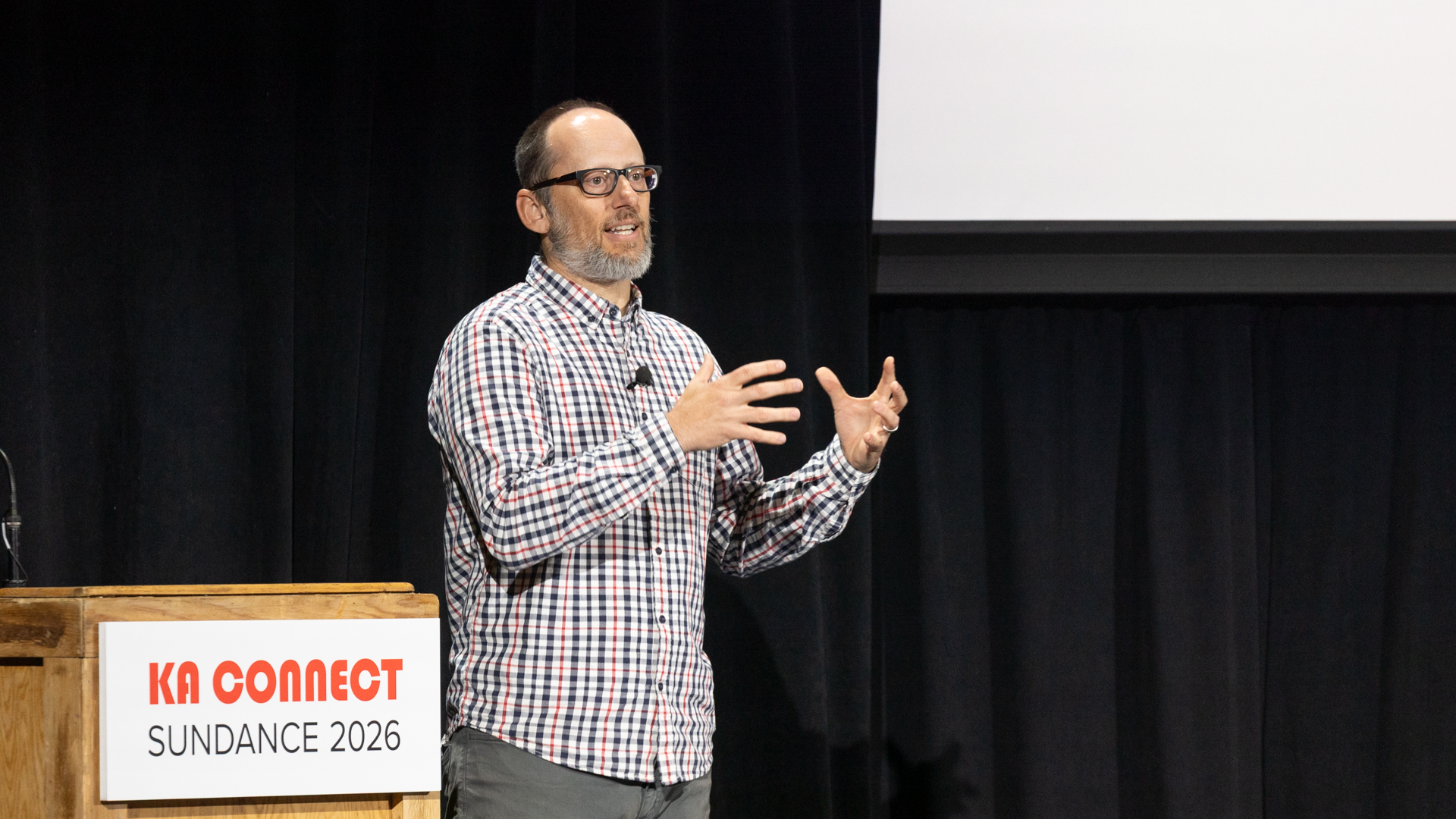
Christopher Parsons, Founder + CEO, Knowledge Architecture
Talk Description
This session offers a vision for transforming your AEC firm into a Modern Learning Organization—one that continuously captures, shares, and scales expertise even as projects grow more complex, experienced professionals retire, and AI reshapes the field.
At its core, this session explores a fundamental shift: from learning that happens organically and unevenly across projects, to learning that is intentionally designed, scaled, and continuously improved.
Drawing on a practical maturity model, we look at how firms evolve from learning through experience and shared conversations into more structured, scalable approaches—including codified knowledge, on-demand learning, hybrid learning models, and AI-powered systems that deliver knowledge in the flow of work. Rather than replacing traditional approaches, these capabilities build on them by strengthening apprenticeship, making expertise more accessible, and enabling firms to learn faster and more consistently.
We explore real-world examples of how leading AEC firms are designing learning ecosystems by combining curated learning paths, modular on-demand content, expert-led instruction, hybrid learning experiences, and AI-powered knowledge delivery into a cohesive whole that connects people to the right knowledge at the right time.
We close by helping leaders reflect on what this means for their own firms, identifying where they are today, where it matters most to invest, and how to take the next step, one domain of knowledge at a time.
Whether you're facing a wave of retirements, struggling with siloed expertise, trying to meet the learning expectations of a new generation of AEC professionals, or wondering how AI will change your firm, this session will help you take concrete next steps toward building a Modern Learning Organization.
Speaker Bio
As Founder and CEO of Knowledge Architecture, Christopher is responsible for product design, marketing strategy, and organizational health. He is the host of the Smarter by Design podcast and the author of Smarter by Design, a bi-weekly newsletter exploring how leading AEC firms manage information, share knowledge, and build learning organizations. He is also the executive producer of KA Connect, Knowledge Architecture’s annual knowledge and learning management conference for the AEC industry.
Timeline
00:00 Introduction to the Modern Learning Organization Maturity Model
05:09 Level 1: Learning by Doing
09:11 Level 2: Vicarious Learning
11:38 Level 3: Codified Knowledge + Processes
14:17 Level 4: Structured Live Learning
17:24 Why It's Time to Level Up Learning
18:55 Level 5: On-Demand Native Learning
21:59 Level 6: Hybrid Learning
25:33 Level 7: AI-Powered Just-in-Time Learning
26:54 AI-Powered Knowledge Agents
30:16 Codifying Tacit Knowledge for Humans + AI
31:43 Applying the Model: Assess by Knowledge Domain
34:03 Learning by Doing, Revisited
Q+A
38:03 Q: What was your biggest LMS pivot?
42:46 Q: Where do firms get stuck in the model?
45:39 Q: How do you get frontline buy-in?
48:47 Q: What's the impact of resources on learners?
51:42 Q: How do you balance standards and innovation?
54:14 Q: Admin or design content first?
56:25 Q: Can one firm-wide way still allow innovation?
58:06 Q: Firm-wide vs individual domain maturity levels?
Transcript
This transcript was lightly edited for clarity.
Introduction to the Modern Learning Organization Maturity Model
Chris: I've been thinking a lot about modern learning organizations over the last year, and this is the way I've come to break down what that means. Modern learning organizations in AEC primarily do two things: they accelerate learning and they scale expertise. They do that by aligning people, process, culture, and technology. Technology has been the catalyst stirring the drink over the last few years, but as we've all learned from working with AI and in learning and development, technology is only 5, 10, maybe 15 percent of it. The rest is people, process, culture, and strategy — how do we actually do this work?
This matters now because we're in a rapidly changing environment — technology, codes, regulations, all of it. Modern learning organizations are realizing that the approach they took to learning and development in the past isn't going to get them where they want to go.
This became really apparent to me after a listening tour I did in 2023. We had just finished the transition to Synthesis 6 — a four-year rebuild of our platform from the ground up — and afterward I spent two months talking with 80 of our clients, asking what we should work on next, what their hopes and concerns were, and what they were excited about. Two things kept coming up. One was AI — this was spring of 2023, just months after ChatGPT had launched, and people knew it was going to be a big deal even if they didn't know exactly how. The second was learning and development: firms told us the technology they had wasn't getting them where they wanted to go, and their programs weren't as effective as they could be.
So we took that back and decided we needed to expand our scope. We'd been a social intranet platform since the beginning, and we wanted to integrate knowledge, learning, and AI into one approach, because it seemed strange that learning and development had been siloed from knowledge management, software, teams, and processes. That's what led to Synthesis LMS. Almost as soon as we went into beta last summer, our clients and our own team building it started realizing this wasn't a technology project — the way we organize learning, prioritize what we teach, decide who teaches it and how, all of that needed to be rethought. I kept hearing some version of "we need to level up, we need to go to the next level," and that's where the idea for this maturity model came from.
That experience led me to a conviction I've shared with some of you over the past year: AEC learning and development will change more in the next five years than it has over the previous twenty-five.
I like to ask how many firms explicitly call themselves "learning organizations." Usually it's about half the room. But I think you all are, whether you use that term or not. Any firm that's grown from a founder or a group of partners — adding employees, taking on new market sectors and technologies, opening offices — has had to learn at every step, or it wouldn't have survived. The real question isn't whether you're a learning organization; it's whether that learning has been ad hoc and reactive, or intentional and aligned with strategy.
The way I want to walk through this is with a maturity model with seven levels. We'll go through all seven, but the point I hope you take away is that this works best as an integrated stack — you want to be doing all seven, not picking one. This isn't the only way to frame it, but I think it captures what the firms pushing the edge on being modern learning organizations are actually doing. We'll go from the traditional model to where we are today, talk about what's getting added to make it modern, cover how to apply the model, and close with what's next.
Level 1: Learning by Doing
This is the apprenticeship and mentorship model — the foundation of how we've learned in AEC for decades, if not centuries. Someone with more experience takes someone who hasn't done the work before, mentors them, gives them challenges they can't completely destroy a project on, and is there to catch them when they fall. A firm shared a photo with us from around 1953 that could just as easily be from today, technology aside — someone sitting side by side with someone else, giving instruction and building confidence.
Think about learning to become a baker. You can read a book, take a class, watch cooking shows, even ask AI for tips — but you won't become a baker until you actually put your hands in the dough. You have to feel what a dough that's too wet or too dry is like, burn a few loaves, underbake a few more. It's the same with becoming a project manager: you can read the guide, take a learning path, go to community-of-practice meetings, ask AI questions, even use knowledge agents — but you have to apply what you know on real projects with real clients and real consequences, with mentorship to help you learn along the way. This is a craft. It takes a long time to learn, and I don't think learning by doing is going anywhere — it's the foundation and I expect it will stay that way.
This is the process by which knowledge becomes capability, capability becomes confidence, and over time that becomes judgment. There's a certain amount of time that has to pass. But as Dan Hodgers of WDR said on this stage eight years ago — and I think it's truer than ever — we don't have twenty years to build a twenty-year architect anymore. Learning one project at a time isn't fast enough, and it leads to what I've always thought of as a kind of Swiss cheese knowledge of the craft: you start with a lot of holes, and slowly fill some of them in as you work on more projects. The trouble is that this depends heavily on what projects you happen to get assigned, whether you're getting enough variety, and who your project manager is — whether they're a good mentor who takes time to nurture and push you. It's highly reliant on serendipity, and that makes people's development jagged and uneven.
Level 2: Vicarious Learning
To address that unevenness, firms layer on a second level: vicarious learning, or learning through others. You still learn one project at a time, but this lets you learn across the different projects happening in the office — project spotlights, lessons learned, site tours, guest speakers, communities of practice, Q&A sessions with experts. In the more modern version of this, those sessions get recorded and made available through Teams, Slack, or Synthesis, so people can learn both synchronously and asynchronously.
The benefits are real: people get exposed to challenges and solutions more quickly than they would working on just one project, it builds culture and curiosity, it's a way people connect with each other, and it's relatively easy to program — you just need a slot and someone willing to share what they're working on. The downside is that it's ad hoc. What gets shared depends entirely on what the presenter happens to be working on at the time, not necessarily what the firm most needs people to learn right now. Quality is variable, and it's still overly reliant on serendipity — some of our clients call it "random acts of learning." That's not necessarily bad, but hope isn't a strategy if it's all a firm is doing.
Level 3: Codified Knowledge and Processes
As firms evolve past learning by doing and vicarious learning, the next step is codifying knowledge and processes — establishing "the firm way." After enough projects, you develop a point of view about what good looks like for how you set up a given type of project.
Codifying knowledge lets a company scale with better consistency, efficiency, and quality, and it means the organization is learning from mistakes and breakthroughs at the project level, not just individuals. This is a big step for firms to take. What we're really doing here is taking tacit knowledge — knowledge that's silent inside all of us (the word comes from the same Latin root as "taciturn") — and making it explicit, taking it above the waterline so it's visible to everybody. You can't do that with all knowledge; some of it is deeply compressed intuition that only comes from reps. But you can do it with a lot: how you start up a project, standard levels of detail, standard calculations, quality assurance, worksite safety, standards libraries.
This has become clear to me as the crux of becoming a modern learning organization: you can only advance as far into higher levels of learning and development — and into taking advantage of AI — as your codified knowledge and processes allow. You have to define what good looks like in order to scale it. Otherwise you're just scaling what your two most senior people happen to think, which might be fine, but probably isn't what you actually want. The good news is that these newer technologies act like a magnet, pulling knowledge out of people, because they're realizing that contributing their knowledge makes them and their teams more effective.
Level 4: Structured Live Learning
Before getting further into technology, there's one more traditional level: structured live learning, or synchronous learning. This is where the serendipity from levels one and two starts becoming intentional, because you've codified what good looks like and can build instructional materials that scale it across the organization. That could be firm-wide onboarding, vision, mission, values, technology training, and safety; role-based training for first-time project managers or first-time people managers; or situational training like project-typology 101s, market-sector training, or project-phase training for someone doing construction administration for the first time.
Structured live learning can be high-fidelity: you have an instructor, real-time interaction, and it builds connection and trust, sometimes leading to deep discussion and a good cohort experience — people meet people they end up building a bond and trust with. But it's hard to schedule, especially when you're asking the same person to teach it five or ten times a year. It doesn't scale well across offices, and everyone gets the same one-size-fits-all pacing regardless of what they specifically need. Because we get so excited to have someone's attention, we tend to fire-hose them with everything we know, and if they don't apply it within a few weeks, it's often gone for good — weak long-term recall. It's also hard to go back and pull just the one piece you need later. And something that surprised me when I heard it from our community: instructor burnout. People who've taught the same 101 year after year are simply tired of it.
That's traditional learning, and it's been roughly the same model for decades. It got us here, but our community kept telling me, in different ways, that it isn't sufficient to get us where we need to go.
Why It's Time to Level Up Learning
We're dealing with greater business complexity and a faster pace of change, talent shortages alongside a wave of retirements, and that combination is creating bottlenecks in technical ability and real business-continuity concerns. We're trying to move people into roles faster than ever — what used to take fifteen years, we're now trying to do in five, seven, or eight. At the same time, people's technology outside the office — AI, YouTube, TikTok — has improved so much that they expect the same kind of on-demand access to knowledge inside the company. The traditional model is slow, inconsistent, resource-intensive, and too reliant on serendipity. It served us to get here, but to go to the next level, we're going to need a bigger boat.
Level 5: On-Demand Native Learning
To be clear, on-demand native learning doesn't mean recorded live learning — it isn't taking an hour-long Teams session and putting it on the intranet. That's better than nothing, but it was built for a live audience: long intros, digressions, Q&A, an hour that's hard to navigate for recall, and hard to update if something changes. If you're watching it after the fact, it's a second-class experience — it wasn't designed for you.
What firms are doing instead — and I'm showing Synthesis examples, but we're far from the only company doing this — is breaking content into modular lessons, adding quizzes for recall, and even role-plays, alongside links to other resources people should read. For a learner, this is a very different proposition: you can go at your own pace, pause and rewind, consume information the way you actually consume it, and easily return to just the piece you need in the flow of work rather than sitting through a whole course again. For an instructor, you can record a gold-standard version, do multiple takes, edit your script down, and be concise. Because it's modular, it's easier to maintain and update, and there's better long-term ROI on the time you invest, since people can keep using it. It also lets project managers and leaders point people to exactly what they need in the moment.
Level 6: Hybrid Learning
Level six puts asynchronous and synchronous learning together — best of both worlds. On-demand native learning teaches the foundations and concepts; you pair that with live discussion, application, and group reflection. As a learner, you can master the material at your own pace and then get real-time clarification and practice with peers — you also learn vicariously from the problems your peers are running into. As an instructor, you still get the gold-standard, scalable delivery, but you also get to spend your time on the part instructors tend to enjoy most: the questions, the edge cases, turning the light bulbs on. I think hybrid learning is going to be very prevalent in our industry for exactly this reason — it's more scalable and it's more fun, and those two reinforce each other.
So what happens to structured live learning? I think firms will rebalance their learning portfolios. Some things move fully to on-demand — introductory concepts, technology basics, awareness courses, how to fill out a timecard, most onboarding. Some things get upgraded to hybrid — project management bootcamps, discipline-specific upskilling, safety, construction administration. And some things stay live, possibly even in-person, forever — leadership development is the canonical example. Getting a group of ten or twelve people in a room to talk honestly about their hopes and fears as leaders isn't something I think will ever move on-demand. It's a spectrum of approaches.
Level 7: AI-Powered Just-in-Time Learning
The top of the model ties everything together: AI-powered just-in-time learning, which personalizes and synthesizes what you need in the moment. Everything I've described — codifying a sustainability guide, a short video on mass timber basics, tips and tricks shared from a new plugin, lessons learned using reclaimed steel, a standards library, a course catalog, sustainability data tracked in your project directory — builds a digital knowledge foundation that AI can draw on to power just-in-time learning. Someone can ask "why use mass timber" and get an answer grounded in everything the firm has actually codified.
That foundation doesn't just power search — it powers intelligent agents.
AI-Powered Knowledge Agents
I'll boil the word agent down to three types, though there are more than three.
Informational agents let you retrieve information from a subset of the firm's knowledge for targeted, curated use cases — like a sustainability advisor grounded in the firm's own codified sustainability knowledge, able to help with 101- and 201-level questions so experts aren't fielding the same basic questions over and over.
Creation-based agents use the firm's digital knowledge foundation to help develop and write new things in the moment — a healthcare proposal assistant, for example, grounded in the firm's past healthcare project descriptions and boilerplate, that can help draft approach statements. The reason an agent can write a good approach narrative is that someone took the time to define what a good one looks like at the firm and paired that with past experience.
Process-based agents execute structured, repeatable work by tapping into a firm's standard operating procedures. One of our clients in Australia, a practice manager, used to personally review every fee proposal that went out the door. He built a fee-proposal assistant so his project managers could upload a draft and get feedback against a checklist he wrote down, doing quality assurance before he does the final check.
Building that agent forced him to write down a real fee-proposal checklist — something he might never have gotten around to otherwise, and something more useful than a bare-bones version he might have kept just for himself, because an agent needs more detail than "make sure client scope is well defined" to actually be useful. In defining what good looks like for the agent, you're also defining it for humans — you're capturing knowledge that used to live only in one person's head and making it available to both AI and people. That's the real work behind the technology.
Applying the Model for Your Firm: Assess by Knowledge Domain
Once you've seen all seven levels, the natural next question is how to apply this to your own firm. You can do a firm-wide assessment — are we a four, are we really doing some five but not six — and that has its uses. But I think a more powerful way to apply it is by knowledge domain: maybe you're a level seven in sustainability, a level two in healthcare, a level three in project management, and a level five in onboarding. That gives you a much more granular read on where the firm stands, and it helps you decide what to do next.
It depends, though. If healthcare comes out as a two, that might mean you should invest there — or it might mean you just started that practice and don't have enough volume yet to justify going deeper, or that you're intentionally exiting that market and shouldn't spend effort there at all. Scoring this way lets you weigh gaps against your actual strategy: are we moving into a new market and do we have the knowledge and learning we need to support it? Are a lot of our project managers retiring, and do we need to get serious about developing the next generation? You can't manage all the knowledge in your firm — there's too much, and it's changing too fast — so you have to be intentional about where you place your bets.
Learning by Doing, Revisited
I want to close by going back to where we started, because I still believe learning by doing is the foundation. That doesn't go away just because we have new technology — if anything, it's still essential. You still have to put your hands in the dough to learn the craft of being an architect or an engineer.
Some people say the apprenticeship model is dead, and that COVID killed it. I think there's some truth to that — being on Teams, Slack, and Zoom, with less ability to walk over and look over someone's shoulder, has changed it. But I don't think we should give up on it; I think it has to evolve.
When I was in college, I spent a semester at Oxford through a study-abroad program, and they have a tutorial system there: instruction one-on-one or one-on-two with a dedicated tutor. As a history major, I studied English and Irish history that way — meeting every two weeks with an expert, talking for an hour or so, and then getting an assignment that was really just "come prepared to discuss the topic next time," with no books or syllabus telling me what to read. That took getting used to, coming from an American education that tends to spell out exactly what will be on the test. I had to go find my own sources, and I got lucky enough to travel to see some of the history firsthand. When I met with my tutor afterward, I could draw on that experience, and he could clarify what I'd missed or misunderstood — but I learned far more because I had to find my own path and apply it myself.
That's where I think this technology and this modern-learning-organization approach is heading. If someone on your team needs to learn to do a door schedule this week, I think the better path is pointing them to a course and some exercises, having them struggle through a first attempt, and then meeting to go over what they missed. That struggle is what learning scientists call desirable difficulty — it encodes what you're learning more deeply. Subject-matter experts are stretched thin, and I hear over and over that they'd like to put more time into mentorship but can't, between client demands and business development. If we can help someone learn more on their own first, with AI as a knowledge agent, and bring the expert in at high-leverage moments as a reviewer instead of a first-pass teacher, that feels like something that actually meets the moment we're in.
That's what I've been thinking about lately. If you're not already following the Smarter by Design podcast or newsletter, I'd encourage you to subscribe — this is where I've been working these ideas out loud, on my own and with members of our community, over the past year. With that, we've got time for questions.
Q+A
Attendee: Thank you for that, Chris — that was amazing. One of my questions would be: when you started thinking about the LMS versus where you are with it today, what would you say your biggest pivot was, from what you thought you were going to be building to this whole maturity model and what you're currently building?
Chris: That's a great question — nobody's asked me that before. When we did the research, back around 2024, there were a lot of questions about whether we should build an LMS focused on tracking live learning, or focused more on on-demand. When we asked people, it was very clear we should focus on on-demand — firms had an okay-if-imperfect way of tracking live learning already, but no good way of doing on-demand. So that's where we focused, assuming we'd circle back to live learning fairly quickly. So far, that hasn't been true at all — people aren't banging down our door to optimize in-person learning and tracking; there are other things they want us to work on.
One thing that's on the horizon, though we haven't put it on the roadmap yet — I think it's inevitable — is bringing AI more directly into the learning experience itself. That could be as simple as an AI-driven quiz instead of multiple choice or true/false, or something closer to the tutor example I mentioned: an agent grounded in the knowledge of a specific course that you can actually have a conversation with, or practice a difficult conversation with, the way one of our clients has built. That's part of the learning experience — applying what you're learning — and it's something that wasn't on our radar when we started but has been really interesting to watch emerge.
Attendee: No coffee this time. We'll be talking about this a bit tomorrow, but how are you finding your community's ability to really focus on producing native content — specially produced content — to make levels six and seven work? How are they finding the time to do it? Are you seeing success?
Chris: Sure, yeah, definitely. A couple of things help. One is deciding what quality level something actually needs — does it need to be pro-level production, lighting, and sound, does it need to be entertaining? That can slow things down. For evergreen content about your mission and values, that investment might be worth it; for something like how to fill out a timecard, or a fast-moving software feature, it probably doesn't need that production value — if you spend too long polishing it, you miss the window to actually teach someone something.
The other thing is that it's gotten a lot easier to capture knowledge than it's ever been, through recording and transcription tools that let you analyze what someone says very quickly. Surrounding a subject-matter expert with people who can interview them, tease out what they know, and produce the video for them — rather than asking the expert to do it all themselves, which is how we used to do it — has helped people move a lot faster.
Attendee: Maybe to bridge off that last question a bit — are you starting to see patterns of where firms get in their own way, beyond levels of quality? Is there a certain level in the maturity model that tends to be a hang-up or an obstacle? Are there patterns of difficulty you're noticing?
Chris: Yeah. I wrote about this in issue 20 of the newsletter — I called it the passion budget. For as long as we've been having this conversation in this community, my point of view has generally been that you don't need a dedicated knowledge manager or learning-and-development team to do this work, and I still mostly think that's true. But my view has shifted a bit over the last few years: if you want to really execute at this level, it can't be somebody's ninth item on their to-do list. Someone has to come to work every day thinking about how to move the firm's knowledge and learning program forward. I don't think you can do that on the cheap — though I also don't think rushing out to hire a whole team is the right first move either.
That's why the passion-budget idea is useful: you run small experiments, find out what creates value, and once you've shown value, you have an argument for more investment. If you can show an executive that a dollar in gets three dollars back, they want to give you more dollars. That passion budget will hit a limit eventually, and at some point you do need to invest further — and the good news is I've seen that trend moving in the right direction across our community. I think it started with AI search as a catalyst: firms realized how much value there was in being able to find their own knowledge, which only reinforced that we need to take knowledge and learning as seriously as we take finance or HR. We're a knowledge-based business; not having someone who wakes up every day thinking about knowledge and learning management increasingly doesn't make sense to me.
Attendee: I am that person — the one who wakes up every day thinking about learning and development. I understand the advice to look at the different areas of your business and figure out where you stand. What I'm curious about is change management, which is rough. I don't think I need to convince the people holding the budget — they already have buy-in, or they wouldn't have hired me. But the flip side is the people on the ground who are already working their tails off. How do I get their buy-in to make it okay to spend time learning something new?
Chris: That's a great question — I wish Cory Squire from Boora were here, because he has a great five minutes on this that I'll try to steal. He has a stock photo of an apple with two bites taken out of it: leadership is bought in, and emerging professionals are bought in, but the people in between — the ones leading the actual projects — are the tricky piece. They're the ones who have to apply new ways of working, and they're often the busiest and most overloaded. What he realized is that he had to go back and do a second wave of change specifically aimed at that group, because he hadn't done a good enough job answering "what's in it for me, and how does this make my day-to-day better" at that level of the organization. That's arguably the most important, and the hardest, level to flip.
We also had someone named Rose Hollister speak at one of our events a few years ago who put it well: people like change done with them, not to them. You may have to go a little slower, but the more you can bring the people in the middle into the change early, the more likely their teams are to follow when they do.
Attendee: I have kind of a philosophical question about the role this kind of work plays in the larger question of finding meaning in work, especially given how much apathy there is toward corporate work generally. Is there a risk of assuming that because you're interested in doing this kind of thing, other people will be equally on board?
Chris: Who's the "you" in that question — the knowledge and learning person, the subject-matter expert, or the learner?
Attendee: The learner. What does it mean to you as a learner if the resources you're given aren't good enough, versus if they are — what does that mean for you as a person, and for your relationship to work?
Chris: I'll take a swing at it. Gallup has an employee-engagement tool called the Q12, and one of the twelve questions is "I have the tools I need to do my job" — which can mean the technology, the information, or the learning you need. It's a strong predictor of whether people are engaged at work, because being asked to do something without the tools to do it is demoralizing right away. On the flip side, being surrounded by good resources — AI, human, material — is more like being handed an Iron Man suit: you can do more, move faster in your career, and feel more capable. Assuming you actually want to be a good architect or engineer and care about the work, being well-resourced is a great feeling, and the alternative — figuring it all out yourself on YouTube — can work for a while if your coworkers are good and the project is meaningful, but it will eventually burn people out.
Attendee: We've been talking about wanting a more structured, consistent learning environment across our organization. How have you seen firms that are further along keep room open for innovation once they've built something more structured? If everyone goes to the same university and learns a discipline from the same professor, the whole group ends up only knowing one way. How do you preserve that innovative, entrepreneurial spirit while still investing in structure?
Chris: That's a great question, and one I've seen firms wrestle with. The most common answer I've seen is the idea of non-negotiables. In some areas — maybe contract negotiation, maybe project management — you don't need much innovation; there's a level of quality and responsiveness that's simply expected. In other areas that are more ripe for creativity, you set the non-negotiables and let people innovate on top of them. The opposite of the Iron Man suit is the straightjacket — you don't want to build something so rigid that people just check a box and stop thinking. As you get into more creative territory, there does need to be some shared sense of how you work together as a company, but you shouldn't let that eliminate the room to innovate.
Attendee: This is exciting. For us, the question is where to focus first to get the most adoption — admin-type training, or opportunities that speak more to our designers, whether that's sustainability or project management. For firms already further along in the beta, does it matter which one you start with, or does it come out about the same either way?
Chris: It depends — but looking across the 80-plus firms in our LMS beta, by and large the first successes have been onboarding and design-technology content. Partly that's because there's usually already something there to build on, and it's typically owned by people who aren't billable on projects, so they have the time to build the first prototypes and show what an integrated mix of on-demand and native learning, tied together with AI, can look like. Once other groups see those results, it's easier to imagine doing the same thing for project management or a specific market sector. That said, we've also seen firms drive adoption through a specific initiative — access to AI tools gated behind completing AI courses on the LMS, for example, or a course built around a rebrand or a merger. In that case it becomes more of a companion to internal communications: a big change happening at the firm becomes the reason a course gets built around it.
Attendee: Just to add onto the earlier question about leaving the door open for innovation —
Chris: Sure — you'd still have "the firm way," for instance.
Attendee: Right. I think it's mostly about acknowledging openly that the one way can evolve, as long as everyone is evolving together in the same direction. We want to hear the creativity and the suggestions, but we want to go in that direction together, rather than someone quietly building a shadow way of doing things off to the side.
Chris: Right — and then later saying, "this was our way, and we've learned more together since then, so now this is our new way," and continuing to learn together. There's a real creative tension there: on one hand, there are multiple ways to solve a problem, and a new way might genuinely be better than the existing one. On the other, you want people across offices and project teams working consistently enough that it doesn't drive everyone crazy or hurt efficiency. You end up needing continuous improvement and consistency at the same time — it's a tricky puzzle.
Attendee: Right, and maybe what that really comes down to is having a good feedback loop: this is the best way we know today, and we expect it to change as we learn more, so let's keep our minds open instead of getting tunnel vision on one way.
Chris: Totally. Some knowledge-management people call these "best known practices" instead of "best practices" for exactly that reason.
Attendee: I love this visual, and I've been turning it over in my head. If I put it in front of my organization and asked, "where are we as a firm?" — at the firm-wide level, I think most people would say we're at least a level three or four; we touch elements of all of these things in day-to-day practice. I also love the idea of breaking that same question apart by knowledge domain. But if we did that — broke our firm into every knowledge domain I can think of and asked the same question of each one — I think we'd struggle to rate any single domain higher than level two. Which begs the question: how can we be a three or four at the firm-wide level, when no individual domain is?
Chris: That's history-major math for you. We overstate our maturity at the firm-wide level, and as soon as we look at the details, we have to admit that's not really true. I think firm-wide level three is probably the first big hump most firms need to get over.
Attendee: Something I've experienced personally is asking, in a dozen different ways, "do we have a process for this?" I've been chewing on the difference between need and capacity. The moments when we most need a well-documented process tend to be when something's on fire and we're trying to put it out — and right then, nobody has the capacity to actually write the process down. In the reverse moment, when people do have the capacity, there's no urgent need, so it's easy to put off. And the honest answer I get from people across our firm, when I ask "do we have a process for this," is really "do we need a process for this?" I think the answer is yes, essentially always — so how do I get past that objection?
Chris: To be fair, in the same way you can't manage all the knowledge in your firm, I don't think you can manage every process either — and I don't think the answer is always "yes, we need a process for this." I'd go back to a real business problem: are we bottlenecked on capacity, so a streamlined process would let us do more with what we have? Is quality slipping? Are we losing money on projects that a more intentional process would fix? Starting from a real problem and then validating that a process is the right solution to it means an objection is actually a gift — it forces you to confirm you actually need to do the thing you want to do.
On the "on fire versus not on fire" half of your question: I talk a lot about the Eisenhower Matrix — urgent versus not urgent, important versus not important. We rightly work on urgent-and-important things first, but what we tend to do second is urgent-but-not-important things, because they feel like a crisis. The real magic in knowledge and learning management happens in important-but-not-urgent work — doing the thing before it's on fire, moving out of firefighting mode and into building capacity. So: validate that the thing is genuinely important, and then the firms that do this well find a way to work on those important-but-not-urgent things anyway, so they're prepared before the fire starts.
More KA Connect 2026 Talks