Human in the Loop? Testing Our Assumptions About Where People Add Value in Learning
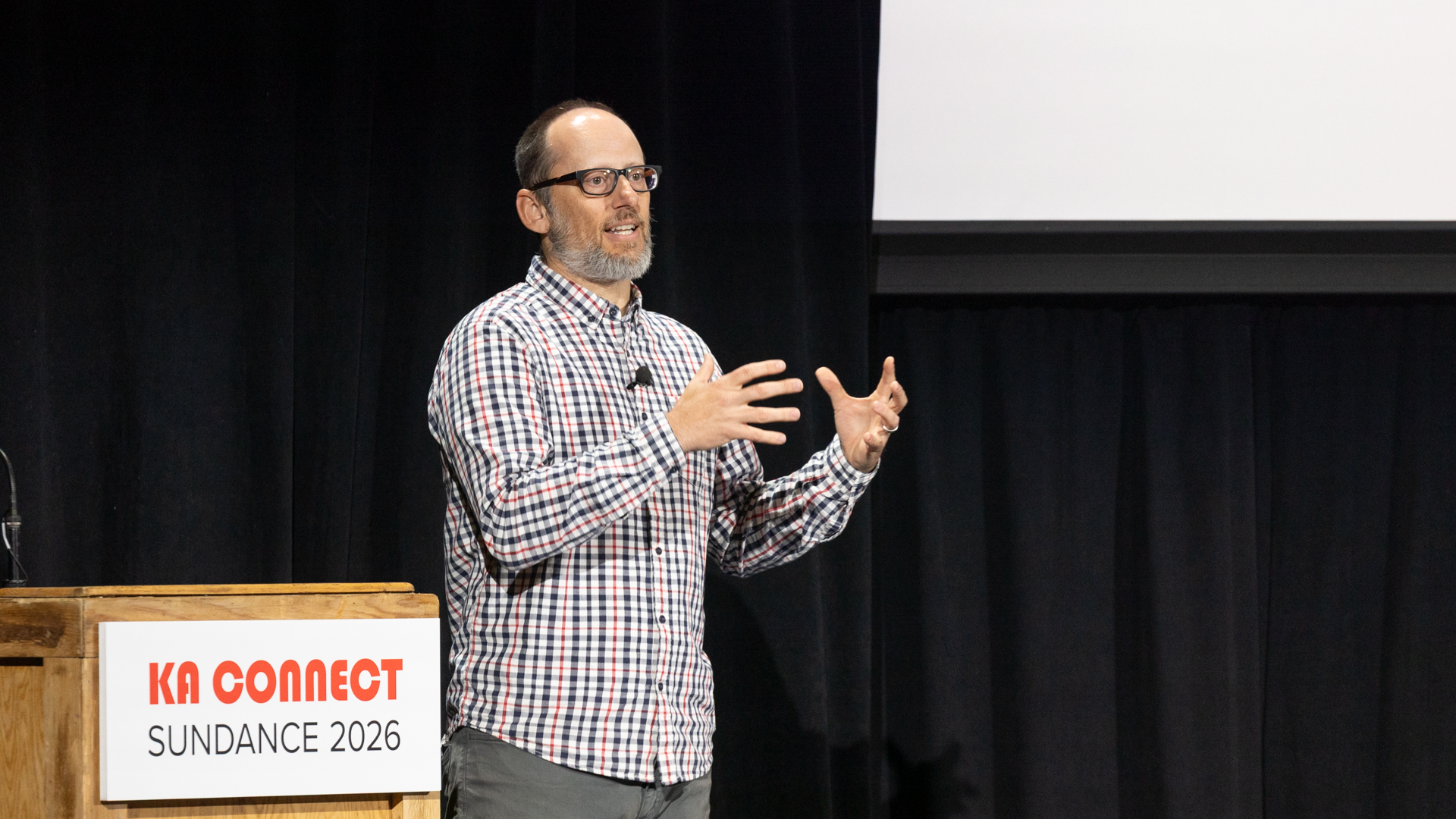
Todd Henderson, Director of Practice Improvement, BA
Talk Description
Most of us assume more human involvement in learning is better. A human voice. A live trainer. A community. Todd Henderson spent the past year testing that assumption … and kept getting answers he didn't expect.
He tried distilling live training recordings into short, polished on-demand content, then asked people to weigh in. He joined a 90-minute live session he found nearly unbearable, then discovered it was among the highest-rated content in his onboarding program. Along the way, he's also been facilitating a video series where the most interesting question turned out to be who the real beneficiary is. Finally, he’s cultivating a community of practice with minimal technology – just people talking. Taken together, these efforts span a surprising range: from purely synthetic content to purely human interaction, with a lot of complicated middle ground in between.
Each experiment nudged the same question: when does the human actually make a difference? And a few of them landed as a reminder that UX practitioners figured out a long time ago: you are not the user. Our intuitions about what learners value are worth testing.
Speaker Bio
Todd Henderson is a principal at BA, where he serves as Director of Practice Improvement. After two decades designing healthcare environments, Todd shifted his focus to the operational backbone of practice—leading initiatives in knowledge management, onboarding, quality assurance, and firmwide change management. He rebuilt the firm’s corporate university and led the revamp of its intranet to support better learning and collaboration. A longtime process nerd, Todd applies systems thinking with lean and agile methods to untangle complex problems and drive lasting change.
Timeline
00:00 Introduction
01:29 Onboarding and the Set Flip
03:18 The Onboarding Survey and a New Lesson Rubric
07:55 An AI Distillation Test
12:12 What Is Good? Quality vs. Value
13:37 Is More People-y More Better? Human vs AI Narration
18:41 The Kate Effect: Meet the Understudy
24:36 Building a PM Community of Practice
30:47 Humans Matter Where Someone Cared
Q+A
34:02 Q: Did Jody knowing it was a test skew results?
37:34 Q: Did Yingce design her own presentation?
38:49 Q: When is it time to use a nexpert vs. expert?
41:35 Q: Do we need video at all, or something else?
43:24 Q: Does the red-line video work like Nicole's?
45:04 Q: Is there a subtext to low-effort content?
48:39 Q: When is creating content worth it vs. curating existing resources?
54:04 Q: Can AI pull your own photos into a video?
56:22 Q: Should production quality be more consistent?
58:20 Q: Does an hour of live training still add value?
1:02:43 Q: What's magic about a live, shared moment?
Transcript
This transcript has been lightly edited for clarity.
Introduction
Todd: I'm Todd. I'm going to talk about some explorations I've been doing into where we fit in learning — in the cycle of creating and curating it. It's standard to start with a little context: I'm from a company that's like a lot of yours, in size and in distribution. Even if you're bigger or smaller, what I know for sure is that we all have the same damn problems — I see that every year, consistently.
A bit about me: Chris mentioned my title. What it means is that I get pointed at thorny problems, and I try to understand them, pick them apart, and make them better. What makes a problem thorny is that it crosses silos and usually points upwind, against the cultural headwinds. We tend to talk about culture as a positive thing, but sometimes it's the thing that holds us back.
My presentation is four pokes at the same bear — this notion of where we belong in learning. We're in this age of AI. What's left for us?
Onboarding and The Set Flip
First: everybody's favorite meeting. This is our onboarding program in a glance — 90 days long, with an annual performance-improvement cycle that I'll come back to in a couple of slides. But first, check this out. This is the "set flip" — a meeting we do with new technical hires, our architects, interior designers, anyone who's going to be in Revit or producing drawings. It goes through a set of our drawings: how did we get here, what are our standards, what tools and scripts do we use. It's important. It's also two hours long. I joined one of these meetings just to see what goes on, and ladies and gentlemen, I wanted to throw myself out the window. I'm not kidding. The first 45 minutes is an unbroken monologue. I have a pretty big vocabulary and I still can't quite find the word for how that felt — it'll come to me, but it wasn't good.
What would you do? Me, with confidence: "We should absolutely make this on-demand." It may as well be an awful video you watch instead of an awful meeting you sit through, since it's the same every time — there's no interaction, and it's a big waste of our BIM trainer's time. Reality had a different idea.
The Onboarding Survey and New Lesson Rubric
So, back to continuous improvement. This is part of onboarding, and I developed a survey — I thought I was so clever. That's foreshadowing. For each group of content, I asked two questions: which of these was especially high-value to you as a learner, and which didn't provide much value? It went out to the previous year's new hires, anonymous, open text. There's no reason to lie or fib.
God damn it — the first grouping's results made me want to give up before I'd even finished the analysis. Then I looked at the other three groupings, and the things that got top billing in all four shared one characteristic the others didn't: live human presence. Not even interaction — the bar is that low. Live human presence swamped careful instructional design, swamped any kind of give-a-crap about how learning works, swamped everything. I was left going, "How can this be?"
This brings me to a section I like to call uncomfortable takeaways. It's almost a mantra among us that you are not the user — we can't judge the value of the learning content we create. The uncomfortable part is that neither can our learners.
So, what do we do with that? First of all, my survey sucked — you have to question the instrument. It returned a signal, but who can measure the value of something they witnessed up to twelve months ago, or even right now? I don't think that's a valid question, so that's on me. I think it measured recall, or some kind of impact — and that's still a measurement, because a measurement is anything that reduces uncertainty. I know something now I didn't know before. So I think there's a signal here that needs to be respected. You can question the explanation, or whether it was a literal response to the question asked, but if the signal means anything, human presence matters.
Here's how I'm trying to act on that. We're lifting our onboarding content and putting it into our Synthesis LMS, and along the way I'm building a standard rubric for a lesson: something that wakens the desire to learn — why does this matter — then the actual learning, which is almost always a "biscuit-net" page, then live interaction — go have a conversation about what you just learned, which does a lot educationally — and then an asynchronous interaction as well. But it raises a question: we matter, this story says humans matter, but where? The rest of my stories are trying to poke at an answer.
An AI Distillation Test
Show of hands — who still has hour-long recorded live video that you push out as learning content? Yeah, we all hang our heads in shame. I'm right there with you, and I thought I'd found the solution. My colleague Jody gave me six and a half hours of recorded footage from a lean fundamentals workshop. I've wanted an intro-to-lean course since I was a little boy, I mean really — and this was the goldmine. I know the ore I want is in there, I've got AI tools that can get it out, and I've got a hungry LMS ready to receive it. Someone else used the term AI distillation, and I think that's right: you take a whole bunch of dilute material, apply energy, and ring out a concentrated syrup of the thing you want.
Here's the pipeline — I won't get into the picks and clicks, call me if you want to talk through that. What I'll share is that I typed in a query, uploaded all the videos, and said: here's a lesson plan, here's what I want, make me lessons, make the video, narrate it, illustrate it, spit it out. Fifteen minutes later I was watching the first lesson and angels were singing. I had to get up and stomp around the room — I'd found it. So immediately I grabbed our "introduction to workplace market sector" footage and ran the exact same pipeline on it. I hated the result. Same pipeline, same quality input, and I didn't like what came out the other end.
Some reflection revealed why: I'm really into lean — it's kind of my operating system, if you cut me open you'd just see lean inside. Workplace design is cool, but it's not my happy place. If you had a yardstick that changed length depending on how much it liked the thing it was measuring, you'd throw it away — that's not a good instrument. So again: I am not the user. I need other people to see past my own bias about what's worthy.
And what I'd made was a completely synthetic video — AI wrote the script, AI narrated it, AI made the keyframe illustrations. We've all gotten sensitive to AI slop, for good reason, and some people have adopted the heuristic that if they can detect it's AI, that's it, it's crap. I don't fully buy that, but it's out there. So here's the experiment: is purely synthetic content acceptable, even if it comes from solid intellectual roots? Is it good? And would it be made better by adding a person, since we know something about people really makes content stick?
What is Good? Quality vs Value
That question of "is it good" begs the question of what good even means. Quick diversion, because I like to cook: here are two eight-inch chef's knives. A chef's knife is your daily driver — the thing you reach for to chop things. Which one's good? Good has at least two pieces: quality and value. Quality is how well a thing fits its intended purpose — it's intrinsic to the product. Both of these knives are meant to chop; one is just lower quality than the other. Value is in the user — it's the alignment of the thing with what you actually need from it. If you cook a lot, you'll get real value from a much nicer knife: more comfortable, holds an edge longer. If you just need something sharp to open Amazon packages, the eight-dollar knife does the job fine. So quality is a delivery mechanism for value, and you don't need more quality than you need. Good enough quality is good enough — more than that is waste. We'll come back to that.
Is More People-y More Better? Human vs AI Narration
So here's the experiment: is a more people-y video actually better? Same pipeline as before, but I brought in my friend Jody — one of our lean coaches, and she's awesome. She edited the script throughout until she was happy with it, then did a voiceover. I produced two videos, identical word for word, except one is pure AI and the other has Jody's voiceover with her video feed in the corner. My hypothesis was that more people-y is more better.
Todd played the first minute of both versions for the room. Jody's version opens with her on camera:
"Hi, my name is Jody Douglas. I'm a lean coach at Boulder Associates. I partner with organizations and teams to develop cultures centered on respect for people and continuous improvement. In this lesson, we're exploring psychological safety and why it's the secret ingredient that transforms good teams into great ones. Let's start with a scenario you've probably experienced. You're in a meeting and you notice something that doesn't seem right."
The AI-narrated version continues with the identical script:
"Maybe it's a design decision that could cause problems down the road. Maybe it's a schedule that seems unrealistic. Do you speak up, or do you stay quiet, thinking someone else will catch it, or worried about looking foolish? If you stayed quiet, you're not alone — and that silence is exactly what psychological safety addresses."
I showed the full lesson to about two dozen people, going back and forth between the two versions. Several people told me it took a moment for their opinion to settle, and a lot of people changed their minds along the way. Here's the gist of what I learned: on quality, people said it was about the same, no big difference. Same with value — if anything, value delivery was maybe a shade lower for Jody's version, possibly because her video feed was distracting. Hypothesis busted. And about three-quarters of the room reacted with, "Oh, crap" — because Jody's version took three times as long to make. Not my time, nobody cares about my time — subject matter expert time. Precious SME time, three times over. There's not even a business decision to make there.
Uncomfortable takeaways: more humanness didn't help, but it did waste real time. Human-colored pixels aren't human presence — we're not fooled, and we're not impressed. I think that's how this connects to the last story. Is this a sad trombone moment? Hell no — this is our license to buy the eight-dollar knife. Good enough is good enough. We don't have to over-polish something, especially when polishing it doesn't even help. If the content is good, it's good — get it done, move fast, respect your SMEs.
Here's how I'm leaning into that. We're piloting a piece of software; the vendor ran one set of training meetings, which I recorded, and I need to onboard four teams over the course of the pilot. In a day, I put together a very adequate learning path for setting up and using the software. It's scrappy, it's cut-up video, not synthetic the way the lean piece was — but honestly, it's fine. And the beauty of it is that if we don't end up adopting the software, I don't care, because I didn't put much effort into it.
So we have a clue to the big question: humans matter, but not in the pixels, not in the waveforms.
The Kate Effect: Meet the Understudy
Last year I talked about a phenomenon we discovered in our medical planning group called the Kate Effect. We have a Kate — she's an incredible medical planner, so good there's almost a gravitational pull around her. If you have a question about medical planning, you call Kate, and she jumps on a plane. You can imagine what Kate's life is like. There's a thread of respect running through this whole presentation, and I hope you can see it here too — if we respect this expert, we need to give her a life worth living.
But there's more to it: it's also a structural weakness in our firm. It's a vulnerability. If Kate wins the lottery next week, we're hosed. So — what if learning could be the lever that gives us some leverage on a structural problem like this?
Our medical planners have produced seven tools to help the firm, but we'd never explained how to use them, so we set out to make a video per tool. This is Yingce — she's a rock star, and most of our folks don't know her yet, but they're getting to.
Todd played a clip of Yingce introducing her tool:
"Hello, everyone. My name is Yingce Huang, and I am a medical planner based in our Sacramento office. I'm really happy to talk about something that's very important to healthcare projects: user group meetings, and a tool we can use. User group meetings aren't very exciting on the outside, but they're where decisions are made — where teams get aligned, or don't. Today I'll talk about what user group meetings are, why they matter, and how we can run them better. We use a tool our medical planning community of practice helped develop. First, let's talk about the word 'user' — it's actually a little bit weird. We don't hear this word much outside healthcare."
Here's the thing: Yingce had never done anything like this before, and it took some coaxing and support to get her there. But now, would you go ask her a question about this tool? Here's a peek behind the curtain — to solve the Kate Effect, I made a rule that we need to make these videos, but Kate can't be in them. The one person in the firm who knows the tool best is exactly the person who can't be the teacher, because that means someone else has to reach a Kate-level understanding of the tool in order to teach it. And we know teaching is the best learning.
Kate's other role is what I call strategic bragging — she's the one who posts these videos, giving them her imprimatur, letting the shine from her halo illuminate the other person: "Wow, look at her, she's incredible — go ask her your follow-up questions." We're trying to build a virtuous cycle that funnels questions on a narrow topic over to Yingce, so she becomes more visible and gets more experience. That was exactly by design, and it's working.
What I didn't expect was my own role. I ended up in conversations — we've done two of these now — telling Yingce, "You have a great voice, your intelligence shines through when you talk, you have so much knowledge, people are going to love this." And, "I'm going to take out every 'hmm' and 'uh' so you sound awesome, and we're not going to publish anything until you're proud of it." That wasn't in my job description as instigator, but it turned out to be necessary, and I was happy to provide it.
What's really going on is that the video isn't the important part — it's the byproduct. We do need to explain these tools, but what's actually happening is getting the "nexpert" and Kate to interact, transferring knowledge and softening this structural problem we have. Tools work at both ends. So where do we belong in learning? Not in the pixels — in conversations. I think we're narrowing in on an answer.
Building a PM Community of Practice
I mentioned this briefly last year too: I did a big project to understand the state, and really the culture, of project management at our firm. Long story short, we're doing some good things — we have scrappy, resilient, strong project managers — but we also have some challenges, and the one that broke my heart was isolated heroes. Isolation sucks; it's got to be one of the worst feelings. And once you know that, the answer is obvious: the opposite of isolation is a large room of wonderful people. Community turns out to be the answer to most of the other challenges too.
So how do you start a community of practice from an absolute vacuum, in a firm that doesn't really have one? Here's how I rolled it out: nothing to see here, just a phone booth — unless you're a PM, come on in. It's all about building connections. The thing I most want to tackle is the isolation; unless we make progress on that, we're not going to have a community. So we build it through the avenue of discussing urgent PM problems, occasionally rolling out a tool, that kind of thing.
The structure of a get-together — and I don't call it a meeting, because nobody wants another meeting — is that I come up with a topic that's a pressing concern for project managers, circulate it back-channel, and make sure there are a few ringers in the room who can speak to it if needed. At the actual event, I take a page from the Susan Strom facilitation guidebook: two minutes of quiet reflection on a prompt about the topic, and then the important part — breakouts in twos and threes where people talk about the prompt. Honestly, I hope they end up talking about their dog, or their kid's first day of school, because what I want is for people to get to know each other as people. That's how we build community.
The first time we did this, the topic was gritty: "Why is it so freaking hard to make a damn project schedule?" If you've ever used Microsoft Project, it's trash — expensive, but garbage, not that I have an opinion. We came out of the breakout groups into the whole-group discussion, and someone said, "The prompt was kind of funny, because I just used the Gantt chart tool in Miro and it's awesome." Turned out we were all a bunch of secret Miro savants — nobody else knew this thing was hiding in plain sight. That's beautiful. That's a network flexing its power, because you don't know what your colleague doesn't know.
If you know me at all, at some point I'm going to bring up a certain book — one that flips learning and development upside down, arguing that we don't actually care about learning, we care about people being able to do their jobs. The author is a little strident, and he actually closes the book with a manifesto. Some of his points ping directly against community: how are you going to build a culture of communication and collaboration if people can't talk to each other? A community needs a leader in the sense of a facilitator, not a commander — which is a note to self, because when someone asked if we could record these get-togethers, my first instinct was, "Sure, I could mine that for insights." Then I realized: no, it's not my community, I'm facilitating their community, and I need to do what's good for them.
So building a community from scratch has to be done really carefully — it's like taking a soufflé out of the oven; bang it, and it collapses. Systems-thinking diversion: when you push on a system, and our companies are systems, it pushes back. Systems seek homeostasis; they don't want change. My job is to lean into the cultural headwinds — it's why my hair's swept back. And the system pushes back with things like "utilization, utilization." So part of my job is building a campfire for our PMs to sit around and tell stories, and sheltering it from the cultural headwinds long enough for it to actually ignite.
So — where do we matter? Not in the pixels. In the conversations. And what's the content in this last story? There isn't any. No internet page, no guide — they wouldn't even let me record it. So maybe content isn't necessarily where we matter in learning. That's an open question.
Humans Matter Where Someone Cared
I've told four small stories, each with its own local lesson, but there's a bigger question looming underneath them. You might, as I largely have, come away thinking that a lot of what we do in the name of learning isn't working. That's an uncomfortable takeaway, and it burns — I love optimizing a process, optimizing anything, and I'm left with the nagging feeling that maybe I've been optimizing the wrong end.
But as much as that burns, I think I have a salve, and I think it's the through-line connecting all four stories — and honestly, I think it connects to every other presentation I've heard at KA Connect this year too. I'm just going to say the same thing everyone else has said, a little sharper: where do we matter? It's wherever someone cared. That even explains the no-good, low-down, awful set flip from the start of this talk — because while it wasn't good learning design, and it wasn't effective, those BIM trainers who gave up their time for it cared about our new hires. That registers. It leaves an impression, even when the format is bad.
I think giving a damn is maybe the thing we should be optimizing for. It's the one thing software can't do — it's an indelible, irrevocable thing that has to come from a being with a heart. I talked earlier about lighting a campfire for our project managers to sit around and tell stories, and I have to reflect that most of what I know about what community means, and how it works, came from right here, at this conference. This is a hell of a campfire, you guys. Thank you.
Q+A
Chris: Todd, if you'd have given a damn when you wrote that talk, people would have enjoyed it.
Todd: I was kind of wishy-washy on the whole thing, really.
Chris: You're right about the community piece, though — I don't know how to ask this without sounding like I'm dismissing what Jody did, but I've seen your A/B test before. I voted on the AI version — I felt like I got less distracted by visual stuff, so I could focus on the message. But with Yingce's video, I didn't feel that way, even though it was the same setup: a person in the bottom right talking about something she cares about. I don't know why I felt differently about the two. Do you think it's partly that Jody knew it was an experiment — this wasn't her project, her slides, or the way she'd have put it together herself?
Todd: I've got about eight answers, let me try to get them out. First: a measurement is anything that reduces uncertainty, but that doesn't mean it tells you everything — it just means the uncertainty was this, and now it's that. So I don't want to overstate the scientific-ness of what I found. There are a hundred confounding factors — Jody's video is a bit milky, not a great camera, and the AI has a really silky voice; those are all things one could test separately.
That said, I do stand behind the narrow claim that, in that case, adding more people-y-ness didn't move the needle in any meaningful way, and I'd expect that to replicate. Where it connects to Yingce's video, I think, is this: I'll assert — though I'm not sure I'll believe it once it's out in the world — that Yingce's video could have been just as effective at teaching the tool, which wasn't really the primary point, even if it had been purely synthetic.
Chris: Right, we didn't see that counterfactual.
Todd: True, we didn't. What I was really trying to do with that one was: here's Yingce, get to know her a little. She was the learner in that video, in a sense.
Chris: Did Yingce design her own presentation?
Todd: She did — she made the PowerPoint she showed, she wrote the script, and we workshopped it together. She had a real goal in mind for what she wanted to achieve with it. Jody, by contrast, was part of a team that designed the six-and-a-half-hour lean workshop, but for this experiment she was reading a script somebody else had written. She edited it to make sure she didn't disagree with anything in it, but it wasn't an expression of her own intellect or passion the way Yingce's was.
Chris: So to your closing point — Yingce has more points on the give-a-damn scale. Not that Jody doesn't give a damn about lean, but for that specific piece.
Todd: Right, that's fair — and that's another experiment we didn't run. We also never saw the AI version of the tool video.
Chris: How do you think about when it's time to bring in the nexpert to teach an intro course versus when you want the actual expert doing it?
Todd: You used the word "teaching," and here's the thing — I have wanted an intro-to-lean course forever, but our lean people are always too busy; it took six and a half hours in Sacramento just to run the original workshop. So the real question was whether getting them to do it was even an option. The reason I reached for AI was that I could get it done. I still feel okay about the takeaway that if the intellectual input is solid, AI can grind out the pixels and waveforms to communicate concepts to an interested brain, and that's fine — you get it done in fifteen minutes, and then you spend the precious SME time on the interaction, going further with that person.
Chris: What if the SME sees the ten-minute AI video and says, "Thanks for summarizing my thing, but I'll take it from here"?
Todd: I've had that thought. It's possible this version one serves as a catalyst — it lowers the activation energy for them to make their own version, because now they're not starting from a blank page. The other thing worth putting out there is that the AI version is really easy to maintain. A Jody-style version, we'd effectively never touch again until we wanted to throw it away and redo it from scratch.
Chris: You only showed us the upfront costs — not the recurring ones.
Todd: Right. We didn't get into the recurring cost of maintaining something like the red-line course.
Chris: So do we even need a video at all — when do we use video versus text or some other format?
Todd: I'll explain the red-line course, since I was being mindful of time earlier. That PowerPoint started three miles long, and we did a lot of subtractive improvement. The first lesson is a five-minute video of one of our PMs — a really charming guy — answering questions about his experience learning architecture as both a red-line picker-upper and a red-line putter-downer, and why that matters, both in learning and in teaching. That's meant to answer "why do you care, new hire." The actual belly of the lesson is a written, biscuit-net page — no video at all. The follow-up is a live meeting: if you're a picker-upper, go talk to whoever's giving you red lines, talk about what you learned, how it fits with how they like to do it, their pet peeves — get the local flavor. Then there's an asynchronous piece: a Teams channel with just their peer coach, to jot down reflections on what stuck. So the only video in that whole path is that opening piece, where I'm trying to charm them.
Chris: That reminds me of Nicole's project management course, with the short case studies — one of the learning objectives there is introducing people to the humans they can go to, especially in a multi-office firm. It sounds like your red-line video does something similar: this is a person you can go to.
Todd: I hadn't thought of it that way, but I think it works, and it would probably do that naturally. We're big enough that someone in Charlotte might not think they can reach out to a colleague in Boulder, and that feels like a foundational thing — the person giving you red lines is exactly who you should talk to. But I think it depends on context. If something's about our values, or it's really specific to a domain — sustainability, say — I'd absolutely want you to get to know the actual person, Christie, in that case. So it depends.
Chris: One thing we haven't talked about with hour-long recorded video: is there a subtext, as the person consuming it, that somebody didn't care enough to make something worth watching in this format? Have you deployed the lean AI-generated video yet, and are you worried someone will say, "Did somebody not care enough to make this themselves, for me?" Back to the give-a-damn thing — I think that's a lot of why content doesn't stick: it feels like someone knocked it out the most efficient way possible.
Todd: That's a great question, and I don't have a perfectly ready answer — though maybe I do. I think it comes back to that rubric I backed into: the content itself can be whatever's needed to be an effective vehicle for the right level of information. The give-a-damn comes in through the live interaction. If you get twenty or thirty minutes with Jody to talk through your specific questions, she clearly made time for you. She's not repeating the same thing to everyone — she can talk to you about what you're actually interested in, almost like an Oxford tutor: "What did you get out of that? What do you think? Where does that go?" That's where the give-a-damn comes in. So maybe the real question is whether people will even get there — whether they'll tolerate the video long enough to reach the conversation.
Chris: Well, if they know they have to meet with somebody afterward — Ellen talked about meet with me a week later, you know, that with Christina's new onboarding, meet with me afterwards. There's a kind of a, yeah, so I can answer questions. There's also an accountability piece to that that nobody has said out loud, especially if you wait a week, because then it's kinda like, "Oh man, I'm gonna have to watch this twice 'cause I watched it now, and then like a week later I might have to kind of repeat it."
Todd: How often did you show up to your Oxford tutor having not done the reading?
Chris: Zero times.
Todd: Right.
Chris: So there's also giving a damn about the instructor, or the SME, not just the learner — the happy zone is finding solutions that give a damn about both.
Todd: Yes. I don't know if everyone here knows what lean actually is, and I won't try to explain it fully now, except to say it's founded on a concept called respect for people. Everything else in that mode of thought rests on that foundation — and that's not just respect for the learner, it's respect for the teacher, and the teacher's teacher too.
Chris: Let's see if we've got questions from the room.
Attendee: I didn't know what lean was, so I searched it, and there's clearly a lot of content about it already out there. We've had a roofing workshop come up in a similar way — before taking an intern out on site, my colleague sends over some YouTube videos from roofing manufacturers in Iowa that do a great job explaining the layers, and then they talk through it together. If it's vetted by someone you trust, that's often good enough. But there's also, of course, a time when it's worth layering in your own company's know-how — the spice of what you actually do. I didn't see all of your lean content, so maybe it's specific enough to Boulder Associates, but if it was truly just an intro, how do you know when it's worth putting in that effort versus pulling something generic off the internet, especially if you're taking a human out of the visual anyway?
Todd: I'll always pull something in from the internet if I can — that's me channeling Clark Quinn, who's basically said, "Don't make your own stuff, curate it, why would you do otherwise, that's crazy." Take Bluebeam — everyone use Bluebeam? Bluebeam University's Fundamentals course is fantastic. There's no universe in which I make my own Bluebeam content; let them maintain it, they know it better. Lean Construction Institute is a great resource too, but the "C" in LCI is construction, and a lot of what's out there on lean actually comes from manufacturing, from Toyota — and designing a building isn't quite building a car, so there's some translation needed. In my judgment, this particular topic was different enough in how we'd want to communicate it, and core enough to who we are, that it was worth owning ourselves. Your mileage may vary.
The other part of your question — and I love getting in the weeds on this — was about pulling in real photos and drawings from our own recorded content, rather than generic AI visuals. I should be honest about the conceit of that experiment: it was "how far can I get with so little effort it's embarrassing." I got further than I expected, to something that was actually not terrible. I haven't published it — if we're really going to do this, I'd probably put more give-a-damn into it, and you're right that the visuals are probably the most cringe part. I did try to fix that — the tool was giving me photorealistic hero shots of people sitting around tables, and I didn't like that; there's something off about fake photorealistic people. I'd rather do something that's self-evidently a cartoon, that doesn't take itself too seriously. But yes — real examples would always be better.
Attendee: It feels like you're pushing the Overton window a bit — the range of what's considered reasonable on a topic — using these new technologies to challenge some fundamental assumptions about what we're doing.
Todd: Yeah.
Attendee: On that last question about pulling in your own images: we've actually been experimenting with this. I don't remember the name of the tool offhand, but we upload the video and also print the PowerPoint to a PDF and upload that, and it will pull images from the deck and try to match the script up with them. So it is possible.
Todd: The example I showed at the end, from the pilot software project, worked a bit differently — it sliced up the live video into an order that made more sense for the lessons, using the actual input footage rather than generating new visuals. The input there was a Teams call with an external trainer, Maggie, walking us through the software while the four of us asked questions and she answered them. She went through it in a somewhat unusual order, and she didn't know our context — she's with a Canadian company, and in Canada what we call something is called "Part Three" over there, which took some minimal translation and contextualizing. So it made more sense to mince the footage up a bit rather than just hand over the raw video.
Chris: I think what I liked about that example is that it's another way to think about quality: speed. You had a window of opportunity to deliver a learning experience, and if you'd spent all your time doing it some other way, you'd have missed that window.
Todd: Right — the quality of a thing that didn't get done is zero.
Attendee: Both of your narrated-video examples had pretty different production quality and look. Have you considered leveling the playing field — matching lighting, sound, equipment — to take that variable out of it?
Todd: Says the guy with the recording studio, which apparently doesn't cost very much money. So — I'm pushing on the Overton window here, and I'm genuinely questioning how much that matters, or at least interested in testing when it matters, given that I'm a one-man band with eight hats at a distributed company. We could afford a green-screen setup, but it'd live in Boulder, and most of the company isn't in Boulder. I don't think it matters as much as we assume — though I do think a good microphone probably matters, since that's really how the content comes through. I'm less sure about camera quality.
Chris: I agree. When we started our podcast, we hired Evan Troxel from the TRXL podcast to distill his lessons for us, and one of the big ones was: don't skimp on the microphone, get great audio. The video should be good, maybe very good, but it doesn't have to be Hollywood quality.
Attendee: Thanks for the presentation, Todd. Going back a bit to the philosophy of it — you have that hour-long training recorded, and you're going to distill it, but if the human interaction isn't necessarily what's valued, I'm thinking about cases where we run an hour-long recorded training for a curated but large live audience, and we know it won't get repurposed well as a straight recording — someone who missed it probably won't sit through the whole thing. There's a lot of value in distilling it into smaller pieces. But should we also be asking whether that hour-long session was actually valuable to the people who experienced it live?
Chris: Should we stop doing live training to large groups altogether? Is the value in the live session itself, or in being able to consume it later in smaller, relevant pieces?
Todd: I think it's a great question. I think we can say the paradigm — where "training" automatically means an hour-long recorded live presentation that we then foist on people afterward — doesn't have to hold. I don't think that means we stop doing live events, but I'm not sure what it does mean yet.
Chris: To be fair to the hour-long presentation, it's taken a lot of abuse this week. Sometimes hour-long presentations are great — the problem is more that they end up an hour long whether they need to be or not, like gas filling the volume of its container. Maybe it all traces back to continuing-education units that need to be an hour, and that's how we ended up in this hellscape. I don't know what to do about that, but there's someone in our community who has people deliver the in-person version live first — forty-five minutes, seventy-five minutes, whatever it takes — and only afterward go make a recorded version. That gives them reps and a good live experience, while they understand the live delivery isn't the final product. It's easier to figure out what to cut once you've done it live first — maybe that's a way to serve both audiences and give a damn for both.
Todd: What I love about that is it leverages the social pressure of not wanting to let your colleagues down in the room — you've done the hard work, so re-recording it in a better setting afterward is a quarter of the effort. If you just tell someone, "make an hour-long presentation, let me know when it's ready," they'll never finish it.
Chris: And while we're passing the mic — to your earlier point that teaching is the best learning, it's also part of your own writing and thinking process to figure out what you actually want to say.
Todd: A hundred percent. I didn't know what I wanted to say today until about fifteen minutes before I got up here.
Attendee: I think it's the magic of live music — I'll go to a concert as much as I'll listen to a recording, but the human collective is the magic of the live session. It's the synergy, the vibe of everyone being in the room together. I don't watch a lot of cell-phone concert videos, because it's just not the same — like videos of fireworks. Something's lost. But then there's also the studio-produced version, which has its own level of perfection and polish, and gets appreciated on its own terms. I think that's a different kind of give-a-damn: going out into a sweaty, hot amphitheater with ten thousand people for magic in a bottle, versus listening on headphones to something mastered and leveled so every component comes through exactly as intended.
Todd: They're both an expression of give-a-damn. I really like where you went with that — you helped me see something I think I already agreed with. I've been in a bit of a funk about that stupid set-flip meeting — my slide was tongue-in-cheek about just recording it and playing it back, but I know that would be worse. And yet you're on a screen either way — same pixels, same waveforms coming through. What's actually different? There is something different, and I think it's that even in that no-good, dirty, low-down version, it's still a version of sitting around a campfire. We just have that hardwired into us. That might be the synthesis of how to make sense of all of this.
Chris: I feel really good about the name of the product for 2026.
Todd: We didn't get everything right this year, but that one, we got right. Maybe it's all campfires.
Chris: Campfires all the way down.
Todd: Campfires all the way down. Thank you, everybody.
More KA Connect 2026 Talks