
Learning at the Speed of Change: Adapting L&D to Your New AEC Workforce
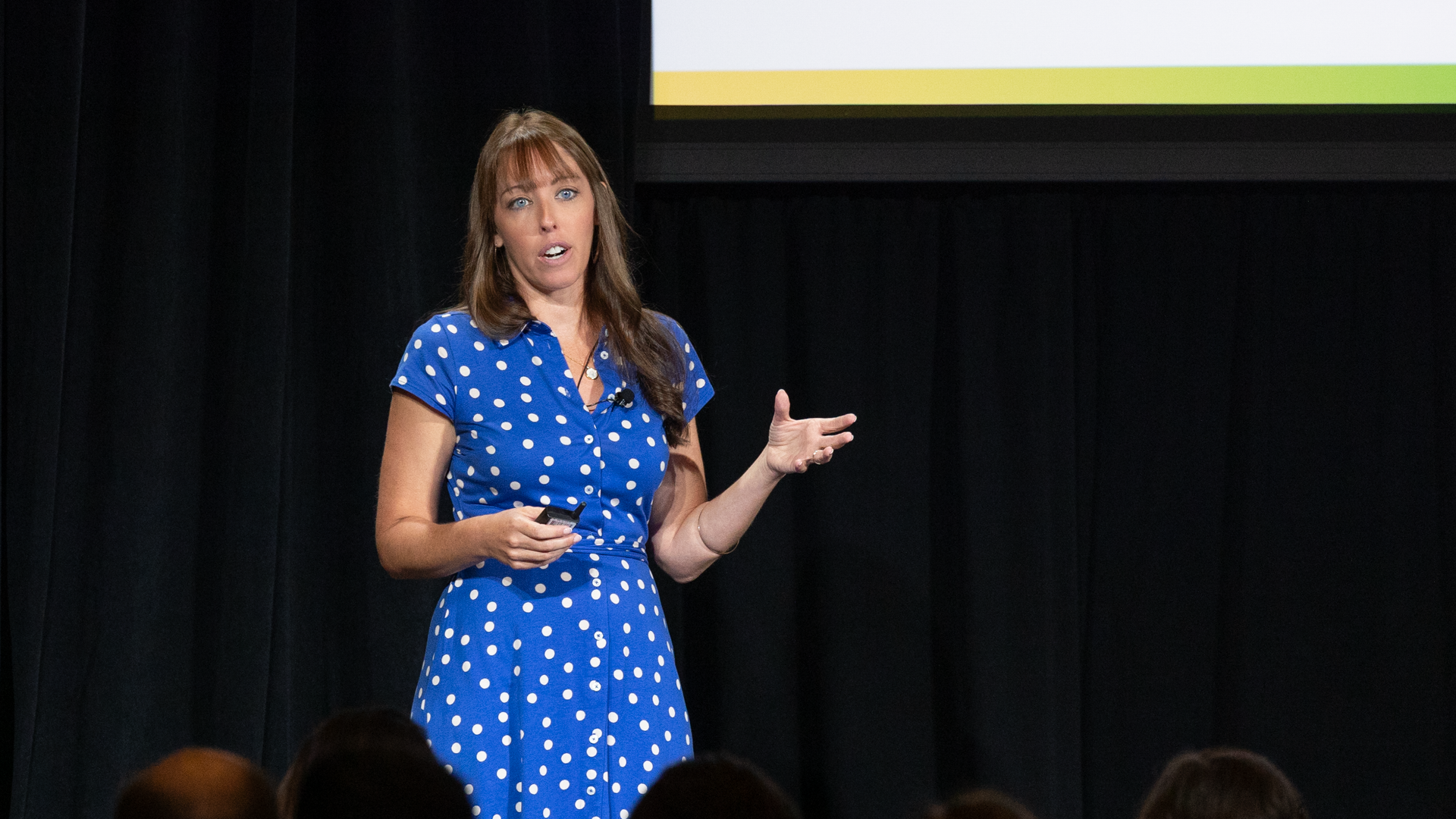
Kristina Williams of Lionakis at KA Connect 2026.
57:35
Kristina Williams, Director of Knowledge and Digital Strategy, Lionakis
Talk Description
What's the smartest format for upskilling your AEC firm's talent? Architecture, engineering, and interiors firm Lionakis has spent years refining how it helps people learn new tools, workflows, and ways of thinking. What began as hands-on, instructor-led training has steadily expanded into a more balanced learning ecosystem, one that blends in-person instruction, peer-supported learning, on-demand resources, and hybrid formats designed around how adults actually learn.
Kristina will share how Lionakis is evolving this ecosystem to keep pace with a changing practice, with a new emphasis on on-demand content, simplification and clarity of materials, and the development of structured learning paths that help employees understand what comes next.
She also shares the firm’s early experiments with AI—tools with the potential to guide employees through software questions, reinforce concepts outside the classroom, and provide real-time support during project work. Finally, she reveals how lessons emerging from Design Technology’s learning efforts are beginning to influence the broader firm, contributing to a cohesive, intentional, and modern approach to knowledge and learning management.
You’ll learn practical ideas for designing flexible, scalable learning experiences tailored for AEC talent that meets people where they are—especially during periods of rapid change.
Speaker Bio
Kristina Williams is the Director of Knowledge and Digital Strategy at Lionakis, where she focuses on integrating design technology and knowledge management to better connect people, ideas, and information. She began her career at Lionakis as a Revit Specialist and brings 17 years of experience in design technology. Over that time, she has continuously refined how she teaches and supports teams, shaping her approach to how knowledge is shared, adopted, and applied across the firm. She has carried this perspective into her current role leading knowledge management efforts, where she works to improve how information flows and how teams learn from one another.
Timeline
00:00 Introduction to Lionakis and DT Bootcamp
04:03 The Evolution of Bootcamp Over the Years
07:09 Synthesis LMS: A New Era
16:14 Benefits of Hybrid Learning for Instructors + Learners
19:05 Piloting the Hybrid Format on the Practice Side
24:17 The Instructor Experience
28:26 Why Live Training Still Matters
32:49 What's Next: Onboarding, Knowledge Agents, Learning Design
Q+A
39:58 Q: Will Lionakis keep or re-record your videos?
41:34 Q: How did you script, edit, and pace videos?
46:37 Q: Did you consider AI-generated video scripts?
48:34 Q: Where does Core end and Deep Dive begin?
50:36 Q: How's feedback been on hybrid onboarding?
53:01 Q: Will others adopt your onboarding approach?
53:37 Q: Is your content mostly video or written?
55:41 Q: How do you measure and track learning impact?
Transcript
The transcript has been lightly edited for clarity.
Introduction to Lionakis and DT Bootcamp
Kristina: I'm very honored to be here on the KA Connect stage and happy to share our experience with all of you today. A little bit of context for you: we're Lionakis. We were that photo that you saw in Chris's presentation. We've been around for a while, even before that photo. Actually, our founder was the first state architect in California in response to the great earthquake in 1906. We've got 240-ish employees across six offices, all in California. We serve the core markets of education, healthcare, and civic, and we do architecture, structural engineering, interior design, and so much more.
I've been with Lionakis for 14 years. I started as a Revit specialist, and as Chris mentioned, I had been a director of design technology for many years. And just up until very recently, two months ago, I went into a full-time knowledge management role. So I'm very excited about that — still have yet to see what this all means. But today, I'm going to share with you why we felt compelled, and crazy enough, to create over 230 and counting short-format videos from scratch, despite having hours and hours and hours of past live recordings for those same topics. Most of them had many versions of live recordings for the same topics.
So, some background on why we did that. Much of that content was created for an annual training program that we hold, our design technology bootcamp training. This is something we've held annually for over 12 years, and it's a leadership-selected opportunity for a small group of individuals. Those individuals are representative of each market, service, and office that we have. We tend to have somewhere between 3 and up to 10, but not often do we have that many. We cover intermediate to advanced topics like model management and design technology stuff, visualization, coordination, production and standards. And these individuals are in studios — they're not on track to be in design technology. They're designers, architects, structural BIM technicians.
When they go through the bootcamp program and graduate, they're all the while still embedded in their studios, but they have the opportunity to become a design technology support specialist, or DTSS, as we call it. So it's an added role for them. These individuals help with tech support, peer-to-peer support on their projects. They help test and advocate for technology that we're implementing in DT. And by doing this, we can grow our collective intelligence around design technology across the firm. We can scale support without scaling headcount. We can put DT expertise closer to the work because they're working on projects, whereas us in DT, we're overhead completely. And then we can start to recognize emerging leaders from this too, because they're seen as go-to people in their studios.
We started bootcamp in 2013 with just a handful of people in Sacramento, and we've been holding it nearly every year since, always growing and adapting how we deliver it, to today where we have 30 DTSS across all offices, and we're hoping to add nine more from this year's cohort. And all of these individuals — we've spent, on the low end, around 50 hours of training with each of them. And that doesn't even count all the people who have been through it and are no longer at Lionakis. So all of this is really just to say that we've spent a lot of time not just delivering this program, but thinking about how we're delivering it and whether we're being effective when we do so.
The Evolution of Bootcamp Over The Years
So just a little bit of a glimpse of how things have adapted over the years — the things we've tried, things that have worked and haven't. Our very first bootcamp was a lot of hours. I still look back and think it's incredible that we even got buy-in for this. It was full days of training, which nowadays seems pretty uncommon, but back then was pretty common, especially for Revit training. Those full days were sandwiched between full days of project work, and everybody traveled to Sacramento to do this in person. We felt like with the curriculum then, maybe the outcome really wasn't the best outcome we were going for. I think we were trying to dump everything we knew into their heads and then put them out in the studios and expect that we've just got more DT members out in the studios, which isn't realistic. And I think because of that, we dialed in on the curriculum a little bit, and it was hard to get buy-in on that program.
We also felt like the full days in-person were really great. I kind of miss those days 'cause they were really immersive and we bonded a lot. But also, the mix of project work and training — we thought maybe we could just focus all in one month, all-in on training, and we could have better retention of the topics that way. So we tried that. We reduced the curriculum a little bit more. With technology training, I started to feel like there was a lot of mimicry going on, meaning we had them follow along hands-on in the course — we're doing something on the screen and then they're following, and we're doing something on the screen and they're following. And I had that experience myself along the way when I was learning Dynamo, and it wasn't sticking, 'cause I was doing the same thing. I was at a conference, watching, doing, watching, doing, and it just wasn't sticking. It wasn't until I struggled through it on my own, doing something fully immersed, that I started to learn it.
So that's where it occurred to us that we needed to introduce that struggle for them to be able to do it on their own, iterate, think about what they did, and then go back to more learning. That's where we introduced these exercises. The exercises are just little handouts that they follow, that they do individually or in small groups, which gets them to do the struggle — or the "desirable difficulty" is a much better way of saying it. And this we've been doing ever since, and I think it was a step in the right direction for sure.
Then, of course, the pandemic came, and we were forced to do everything virtually, which was a blessing in disguise, because though it was really nice to be in person, we were taking advantage of everybody's time and their presence traveling. So we had to cram everything into those full days. Now we could do everything virtually, hybrid — you all know the drill 'cause we're all doing the same thing — but it allowed us to spread out the sessions and shorten the sessions. And we've been actually doing a similar schedule ever since, with about 50-ish hours of training, one- to two-hour sessions.
Synthesis LMS: A New Era
And then, Synthesis LMS came about, Chris had asked me: how might bootcamp look different now that we have tools like Synthesis LMS and technology like AI available to us? And maybe we would have gotten to this pondering eventually, but that question really just opened up our eyes to a new vision, and we went back to the drawing board and completely revamped bootcamp for this year's bootcamp. This was going on in late last year and early this year, when we were planning all of this. And enter a new era of bootcamp. At the time we were really hopeful of our approach here, and now that we've done it, we're really happy with how it's turned out. This is a new era, not just for bootcamp, but for a lot of different learning opportunities at our firm.
So going back to the title of this talk, "Learning at the Speed of Change," I want to address what we're reacting to with the change. Chris has addressed a lot of it here too — that with social media, you kind of wonder, are our attention spans shortening? I don't know, because we're all able to watch long movies and listen to long podcasts; things that are relevant and interesting to us, we give our full attention, right? So again, Chris had put it really nicely at one point — a new perspective — that maybe our attention spans aren't shortening, but that we have a lower tolerance for information that isn't useful to us at that time. And especially when you're learning something at work — yes, it's useful for your job, but you've got to find when it's relevant. And with AI especially, it's able to distill a lot of information into one answer for us when we're looking for it. So in a way, the learner expectation is changing for how we want to receive information.
And then, of course, doing more with less — the more codes, more documentation we have to do, more litigation, we're all subject to this pressure of doing so much. I heard recently that to deliver a $50 million project, you're now expected to do so in half the time compared to 10 years ago. So we're all being crammed into this, where we have a lot less time to squeeze in that important information along the way.
So here's what we set out to do, and have accomplished so far. Like I said, we recorded these short-format videos, and these were intended for a future audience. Again, back to those live recordings — they're unpleasant to watch, hard to go back to, and no one ever really wants to. So those were not meant for a future audience. Those were meant for the people attending at that time. And even then, was it really great for the people at that time? I don't know. So we recorded a series of videos and, of course, included our exercises as well. This is a course on our learning center, and you'll see more about that in a bit.
With those short videos, we had a choice. We knew that if we sent them off and assigned them these short videos, and then wanted to reconvene to do some exercises together, what's the likelihood that half of them would show up not having watched the courses? Some didn't have time, some forgot, some feel guilty — whatever the reason, no matter what, we're starting the session getting people up to speed, getting people on the same page, and we've now lost time we could have maximized for exercises. So we decided to do a live watch party — just watch them all together. And yeah, it's weird, because I'm the instructor, I'm the one who recorded this, and I'm right here in the room just playing it for you. At first I was worried it would seem lazy in some way — like I didn't feel like coming and talking to you. It was weird at first, but then I got really comfortable with it, and it's been a pleasant experience. So we watch them together, and then we know right then and there that we're all ready to start on the same page with the exercises at that point. And they know they can access them on demand later, because they're recorded.
When we set out to do these recordings, we aimed to say it short, say it clear, be as concise as possible. When I was watching the past live recordings — even watching myself — I would think, "Man, I really have a tendency to tell them a lot of just-in-case things." And I knew that about myself, in the back of my head, thinking, "I don't want them to think I didn't warn them about this thing, so I'm going to tell them all the just-in-case scenarios." That's who I was as an instructor, and I think that really added to the noise they were hearing and prevented them from retaining the truly important information. So watching those, and then recording these, helped me be a better instructor. And I've been teaching these same topics for 10 years — Revit hasn't changed all that much.
Also, when watching the recordings, I felt like, "Man, this is really slow." How many of you watch your YouTube videos on 1.5 speed? I'm pretty sure we're all at that level, right? I figured we can process information faster than we can say it, and some quick searches led me to believe that's true — that we can process a lot faster than we can talk, and it's generally safe to increase your videos to 1.5 speed. So we're conservative, and in our editing we do 1.25, 1.2, sometimes a bit higher, so that when you're playing our videos at normal speed, you're hearing them at about 1.2 speed. We just wanted to, by default, save people time, and then they can slow it down if they'd like.
When we created the recordings, we also had AI search retrieval in mind. In design technology, we're used to it — when we're creating tutorial pages, we know, "Okay, I want to be able to send this URL to somebody when a tech support question comes up." Same thing with these videos: I want to be able to send a URL of a video, and have AI search retrieval pull that same video up. We could do the same with longer videos and chapters that it could pull up. What I like about this is you can also update the videos a lot more easily — if you need to change something, you just swap out certain portions rather than a full course with chapters. So this is an example of a Revit course on linking in a DWG file — more about the case where somebody may have linked in drawings in Revit a bunch of times but forgets the little settings in that dialogue box. Now there's a video we can just send them, or that can come up in search retrieval too. So we went to town creating all of these videos.
And speaking of quality of production — we did not aim for high-quality production. We just turned our cameras on, talked, and went for it. Part of that was keeping in mind the sustainability of this method for other instructors. Everything we were testing, even the recording software, we wanted to be really simple for anybody to use, knowing we wanted to extend this format across the firm. So our general plan was to turn on the camera for a few seconds at the beginning and then turn it off, and we edit it so we're in the lower corner of the screen, not big on the screen. I think if you're asking someone else to record a video and they know they're going to be huge on screen, it's really intimidating. And once you turn off your camera after those few seconds, you're a little more at ease doing the rest of the video. That was our goal, and the quality for us was in the clarity and conciseness of our messaging.
Those videos and exercises came together as a course — this is our course catalog on the learning center, Synthesis LMS. A collection of courses comes together as a learning path. This year we held two bootcamps entirely in this new process: the live watch party, hands-on exercises, and then availability on the learning center afterward. So our regular DT bootcamp program is about 50-ish hours of training, and new this year to us as a firm was a visualization bootcamp training. I have been a little out of touch myself in my role, even as director of design technology, with the visualization process — we have a visualization team, and I was just thinking how we had a new design media specialist on board who recorded these. I thought, if I needed to get up to speed on this, this would be my favorite way — I would actually look forward to watching these, and I'm so glad we captured the knowledge from this individual in this format.
Benefits of Hybrid Learning for Instructors + Learners
And speaking of instructor burnout — like I mentioned, I've been teaching these classes for 10-plus years. Even though I could teach them in my sleep, every year I would still have to prepare my dataset files, make sure everything's working properly, refresh my memory. We would spend a lot of time preparing for these courses, and I had always wished I had more time to focus on the more enhanced parts of it — the exercises and assessing what's working and what's not. But I'd find I wouldn't end up having time to do that because I had to prep so much. That led to a lot of burnout, teaching the same topic over and over again. So we're hoping these videos have a decent shelf life, so we can start to realize the benefits over years of not having to prepare for those at all, and then focus on the next-level tasks.
What we found, which we should have expected, is that we would deliver the message in the live watch party, and then when they set out to do their exercise, they'd be watching the videos again right away. That was actually my experience in live training in past years too — I'd say something, then they'd start their exercise and ask me questions about what I just said, and I'd always think, "Was it me? Did I say something? How do I explain this in a better way?" But it's just the way we all learn — we need repetition, we need it to sink in, and then we need to do it and go through that cycle. It was actually really cool to see them put their headphones on and just start the videos and do their exercise. They went into the exercise feeling a lot more confident that they could achieve it themselves, and there was way less burnout for us, since we weren't repeating ourselves right away. And now they know, because they're in the habit of going to the learning center, that once it comes up on their project, they can go right back to it again. That was really cool to see.
We really enjoyed this hybrid version, because we could use video for what it's best for — clear, concise messaging that's easily re-watched — and live interaction for what it's best for, which is the engagement between humans, talking through and working through the challenges of the exercises. Some people, I think at first, will think that learning through video takes away from the human experience. I'm now starting to see that it actually enhances the human experience, because it takes away that repetitive, robotic talk — the fundamentals we're kind of repeating over and over again — and allows us to spend our energy talking to each other and problem-solving. That really is where, as an instructor, I feel the most energy: working through those problems. So when we were talking with our president about what we were doing in DT, she was really supportive and opened the doors to carrying this format into other areas of the business. I truly believe that executive sponsorship, as it always is, is just so critical in this situation.
Piloting the Format on the Practice Side
Getting into the practice side, we're addressing different changes and challenges. We've got hybrid work environments and dispersed teams. Project leaders or mentors are subject to the doing-more-with-less pressure, and as Chris said, they're having a harder time finding time for mentorship even if they really want to — the apprenticeship model isn't dead, but it's eroding a little bit. We want to keep it alive, we just need to adapt it. We also have growth on our mind: when we're acquiring a new firm, how do we onboard an entire office more efficiently, and how do we make sure they're not getting disparate voices — is it Brent's way of doing things, or Jennifer's way? How do we clear that up into one message?
So when we were going through our firm calendar of learning events for the year, we thought about where we could apply this new format. It turns out we can apply it in all sorts of areas, even on the practice side, even though some of the tacit knowledge in those areas is a little harder to turn into explicit knowledge. We sat in a room with a lot of our project leaders and started with pain points — in that room, it was more about our gut check of pain points. Since then, I've heard from other firms using RFIs and items that come up in quality checks as tangible pain points to determine where to focus their learning time — if you're going to invest time in creating these recordings, let's make it count. So we came up with some topics for our pain points, and most importantly, what was feasible. On the design technology side, it was easier for us to create a large volume of content because we've been doing it a lot; not as feasible on the practice side, for all the reasons we know. So we just started small — four courses, four topics, one each quarter, and then four on the business side for project management workshops as well. Different teams, so let's go for four. I think it's important to start small here.
We did the same thing — held a live watch party, did hands-on exercises. The watch party was a little different here, because it was a big Zoom call with everybody on the practice side together, versus the smaller cohort in bootcamp. The first one we held was a cartooning course, recorded by one of our busiest and most experienced architects. It was a very engaging training session — when people left it, they were messaging us afterward about how awesome it was and how they had never thought of cartooning that way. It was nice to see people jazzed after a training instead of drained. We held it the same way — videos, breakout rooms for exercises, back to the main room to watch more videos. In the breakout rooms, we had those with less experience share their screen and drive, so we could still have that struggle and not have the more experienced people just chime in and answer it. We did want the more experienced people to attend the course too, because we wanted everyone to get to that same message, not the disparate voices — by attending, they're seeing the documented message and that this is the Lionakis way of doing things, and that's how they should be directing their team. And now it's packaged up nicely, so I can just send them there.
So it's important for everybody to know what's there and to attend the course for that. And in doing so, the person creating the recording is responsible for understanding the Lionakis way and getting the perspective of their peers in different markets, to make sure that when we're documenting and codifying it, it's truly our current best-known practice. So getting on the same page, we can hopefully grow together from there. Similarly on the practice side — I know it's harder to take that tacit knowledge and turn it into explicit knowledge, but I think we can pull down a lot of those pieces and turn them into videos, so we cover the foundation and the energy of the mentor is better spent on the project specifics and the more challenging parts of the topic.
The Instructor Experience
We were really sensitive to the instructor experience at this point, because we know our busiest practitioners — this is going to be difficult. We want to extract the knowledge, but we don't want to drain them in the process. That architect who did the cartooning course — this was definitely a new process for him. He was a little apprehensive at first, it was unfamiliar, but when he talks about it in hindsight, he says it was way better for him to create a few short videos than to prepare for a 45- to 60-minute presentation. He's actually become a good spokesperson for us with others we're trying to get to do the same process.
We also offer part of a knowledge coordinator's role to facilitate this experience for practitioners. If you're looking to do this, I don't think it needs to be a full-time person — it depends on how many you're tackling. With the eight courses this year, this was very manageable as a part-time role. Using AI, the coordinator would take a bullet-point list or a brain dump from the practitioner and put it into our PowerPoint template to start developing the slides. I was even thinking, in the last session, that maybe when they're brainstorming their outline — we had two practitioners recording for the same class — we could record that brainstorm and put the transcript in to help create the outline; use AI to help get their content out. They don't need to sit there and spend time creating slides. So the knowledge coordinator also gets them comfortable with recording, edits the recordings, uploads the courses, and facilitates the live training. I think that was one of the most rewarding parts for our instructors: showing up on the day of training and just answering questions. I really loved being able to see that for them.
What we're trying to do next is come up with templates or prompts that get instructors thinking about their recordings and how to outline them. One of the most challenging things has been getting them out of the mindset of the one-hour presentation. A lot of times, if I'm working with someone early on, they'll think, "Okay, I'm going to take my 60 minutes and turn it into 10 five-minute videos plus some time for Q&A" — which really just gives you the same long course, broken up by videos. What I've found is that letting them brain-dump their whole story first helps, and then we pull out the pieces of what they really need in the training session. Then we start with the exercises — what do we want people to struggle through and do themselves? — and figure out what videos we need to support that. If we want more videos on the learning center for context later, sure, we can create those too, so when somebody comes across them in the flow of work, they can see more content at that time. But the focus is on what we're really trying to do in the live training. This is what we're doing with our specifications training, trying to recreate their "Specs 101" in short videos.
A little bonus that came out of this was that the course was so nicely packaged that anybody could take it on the road. That happened with the cartooning course — a whole office wasn't able to attend, and one of our engineers happened to be going to that office the next week. He'd had enough experience with cartooning and with architectural sets working with our teams, so he just went down there and delivered the same exact course, facilitated the exercises, and answered the questions — he didn't have to prepare a single thing. It was the same single, concise message about how we do cartooning.
Why Live Training Still Matters
About live training more broadly — there was definitely a period in this process where I wondered why we were even doing live training at all. I'm talking about the broadcasted kind — not the leadership training or things around culture and trust, but "here's a topic you're probably not going to come across in the next few months" kind of live training. It made me think about the debate you always hear between universities and firms in our industry, questioning how come when somebody graduates, they don't know how to put a set together. The university's answer is that their job is to teach critical thinking and expose students to topics, but it's really on the job that people learn how to do the work. So I figured there are a lot more outcomes to live training than just skill competency.
Here's what I think some of those outcomes are. One is that it's the firm saying this is an important topic — "we have a way of doing this, a Lionakis way, and we want you to know about it." We reinforce that message through repetition, not just saying it once but carrying it through other trainings and studio meetings. It's also about the single, concise messaging — getting away from disparate voices — because live training gets everybody to attend and see what content's available. It fills in gaps, taking people from what they don't know they don't know to what they know they don't know — once they know they don't know it, they're more likely to go seek it out, because they know there's a way. It gives them a bit of a roadmap. We have a document that helps guide people to what's important for the Lionakis way across all the stages of a project, and I envision we'll be adding some of our learning center content to that too. I really see the learning center and live training as together contributing to that broad knowledge and roadmap of what's important, with the learning center also fulfilling deep learning — when somebody comes across it on their project, they can go off and dive deeper into courses, watch them again — and that, paired with mentorship, time, and experience, can start to get to the skill competency we're looking for.
Bootcamp has its own purpose for live training too. If we'd just had all the Revit users come across the content in their flow of work, we would never have had somebody go through and see the big picture from start to finish, someone who has really connected with us in DT and formed an appreciation for best practices. There's the power of the cohort, the cross-market collaboration and camaraderie among bootcamp-year members, the sense of belonging with DT, the emerging leaders — there are so many reasons to still hold live training in a cohort model. So going back to live training in this format and these topics — it's really just to plant the seed of knowledge, to provide awareness, to touch on skill competency, but not necessarily to achieve it, depending on the topic.
On our learner experience — I touched on how people were kind of raving about the format of the cartooning course. We had somebody message us saying they feel so grateful to work at a place with so many thoughtfully put-together resources. I think that gets at the apathy question someone asked earlier — if you don't have the right resources, how do you feel about your job? I do think it matters to show that you care about the learner's experience too. The learning center is accessible; the content is the Lionakis way, but it's easy to navigate, like YouTube.
What's Next: Onboarding, Knowledge Agents, Learning Design
As for what's next for us — we hope to take some of our onboarding content and put it into the learning center in the same format, along with reboarding of existing employees, which is everything I've been talking about: getting everybody on the same page. When we created these courses, we had in mind not only search retrieval and updating, but also that we didn't want to repeat courses or duplicate videos across several courses depending on the audience. So we broke up our courses into three topics: Big Picture, Core, and Deep Dive. Big Picture is the what and the why — here's our Lionakis way of doing something generally, and why we do it. Core is how to do something from point A to point B in as few steps as possible, in the clearest way — for somebody doing it for the first or second time. Deep Dive is where we dump everything else — the just-in-case stuff I always wanted to say, the nuance, the project-specific scenarios — so that when somebody's experiencing it in the flow of work and actually seeking that knowledge, they can find a ton of it if they need it. A new hire would just see the Big Picture stuff — they don't need to know how to do it yet, just that it's there when they need it. A bootcamper would watch both Big Picture, since we still need them to know the why, and Core too.
I had the pleasure of delivering our first new-employee orientation, just the DT portion. What we do, and probably a lot of you do something similar, is have a new hire meet with a lot of our department leads to get an orientation to that department, while in the meantime they're meeting with their market leads and supervisors to get to work on their projects. I had been used to doing the DT orientation for every single new hire who came through the firm — talk about bootcamp courses I've been doing for 10 years, I don't know how many new hires I've said the same exact thing to over that time. So I really wanted to package that up. Nowadays, because I've participated in so many of these recordings, anytime I have to show somebody something, I immediately want to record it first and then show them, because I know it'll be worth it later.
So I recorded these, and then had three new hires start last week for our regularly scheduled one-hour DT orientation. What I did was break that hour into 15 minutes of meet-and-greet — my favorite part, where we just get to know each other and I understand their background — then had them go back to their desks and watch the videos. If we'd assigned them a bunch of videos across all of onboarding, that would seem like an overwhelming task, but here, we do it in the hour we already had scheduled, and I know exactly how long it'll take, so when they're done, they come back and we do Q&A. What they were really grateful for was knowing it was available to them on demand on the learning center, because how many people are drinking from a fire hose when they first start and don't retain half of what we tell them — which is totally understandable. Now they can go back to the learning center once they need to.
My favorite part was that the meet-and-greet — which I guess never needed to happen in a conference room — because the videos make it so accessible, I turned it into a walk-and-talk, since we were lucky to all be in the same office. That was so refreshing; the human interaction was actually enhanced, because I had the videos to send them afterward, and I could get more work done and wasn't drained. A lot of times I come to onboarding meetings a little drained, knowing I have to say the same thing again, even though I try my best because I'm so excited to meet them. So I was really excited for this meeting, and it was great. I can't wait for others doing this to follow a similar process.
Another thing we want to get into is what Chris mentioned — knowledge agents. I really feel like knowledge agents can supplement the learning experience by continuing beyond the course: the course gets you the foundational information, and then you can dive into discussing with an agent or assistant how to apply it to your project-specific content. This was just a small example, but in the cartooning course, the first video was about drawing organization — how to break out a building into multiple areas. So with the Sheet Numbering & Naming Assistant, you can give it your project details, and it works with our standards for sheet numbering and naming — it'll ask how many stories, levels, and buildings, and start working with you on your actual project task beyond the course. The ultimate goal is ubiquity around this, so everybody's saying, "There's something on the learning center for that — go check that out first, then we'll talk." And when you're sending someone there, you know it's an experience they can trust and would enjoy — you're not sending them to a one-hour recording just to get five minutes of information. Building that culture of knowledge-seeking is what we want, so it becomes natural for people not only to know they should, but to want to seek out that information.
My last thought to share with you: no matter who you are — you don't have to be a learning and development expert, though I wish we had one on our team, I think we'd have rapidly gone through this whole process — but if you consider yourself a designer of learning experiences, whether you're developing or delivering training, you'll really start to put yourself in the shoes of the people learning from you or from others. The same way our designers consider the user experience for the built environment we're designing, we can consider our own people and their learning experience too. Thank you.
Q+A
Chris: Awesome. So, you have a new job — you're no longer the director of design technology, but there's all these videos with you on them.
Kristina: Yes. I thought about that even for the onboarding. I actually have to explain in the onboarding that I have a video saying, "You're hearing from me, and this is who I am," but really you're going to be working with this new person, because that's where we are right now, and I'd rather just get into it, 'cause I'm going to be saying that same thing to them anyway.
Chris: Yeah, so you're okay with that? You have all those videos — do you think your team will re-record them all next year, or will they leave some of them with you in it?
Kristina: No, leave them all. We talked about that in the beginning, even thinking, what if this is somebody who isn't here with us in a few years? I think back to design technology members who are no longer here with us, and if I would've minded if one of the videos was from them — no, I don't think I would. If the message is still what we want, and it's clear and concise, then does it matter? I would imagine we'd just preface it with something like, "Hey, this was so-and-so — they were part of the DT team at one point, and they were really great and had a lot of knowledge to share." It's okay that people aren't here anymore. With the bootcamp content, it was a little bit of a bummer, because I'll actually not reap the benefit of this next year. But I think of it as a gift that I gave, and that I'm still around — so when they're hearing that voice, they'll be like, "Oh, Kristina knows Revit."
Chris: How did you, in making the short videos and making them clear and concise — did you script them? Did you edit them heavily? Did you do multiple takes?
Kristina: Part of it was because we've been doing these topics for so long, but we did have outlines from before, from what we went through in the full one- to two-hour course. So we'd look at those and try to piece together what a new hire would need to know — for instance, we have a production standards document, and the new hire just needs to know that we have this and generally what it's about. Then we'd look at the steps and figure out what could fit into a recording — just kind of rearrange the outline. If I were starting from scratch and didn't have that outline, I'd do something similar to what I was doing with the practitioners — put the whole story out there and then think about what you want them to do first.
Chris: But start with the exercise and work backwards.
Kristina: Start with the exercise.
Chris: How did they like that approach, of starting with the exercise and working backwards?
Kristina: They like it. Definitely something clicks with them when I say that, but then they're like, "Wait, how do I do an exercise? What exercise? Can we just do a quiz?" And I'm like, I think really you want them to struggle through something, so let's think of something fun that they can do — and we can use AI for that too, thinking through what are some fun exercises or games. They like that, especially when we can offer help with the exercises. And once you tell them the exercises or bounce ideas off them, they get really excited, because they think, "People are going to love doing that." And it's actually going to get them to start thinking about the things we need them to think about, rather than just what we're telling them to think about.
Chris: And then they can work backwards — this is then the content I need to create to set them up to be able to do the exercise.
Kristina: Mm-hm. Plus, usually you need more than just that — you're not just teaching to the exercises and the videos, but you want enough context to do that.
Chris: That busy architect you talked about, who did the cartooning — he went first, and ended up thinking it was a good experience. How did you convince him to be first?
Kristina: This is where executive sponsorship comes into play, and I'm glad you asked, because I wanted to elaborate on that. In bootcamp, in our last session a couple of weeks ago, we usually rely on some of our past DTSS to record some of the topics, and I had a hard time with that, honestly, because it's just coming from us in DT — they're really busy, and there's not that executive sponsor or leader in the room saying they have to do it. So that was rough, and I realized how important it was. Brian, the one who did the cartooning, this came from Laura, our president — he was in the room determining the pain points, in the room deciding we were going to do four courses. We were all talking about, "Okay, you're going to be the first one," and we were all committed at that point, so he felt more accountability to the whole firm that way. It was a lot easier from our perspective to get it — it was more us helping him through than getting him to do it, really. So that executive sponsorship is really key. Can't stress it enough.
Chris: When you were watching yourself for the first time, did you kind of want to do the — but you know, this other thing might come up — did you want to do some of those just-in-case digressions, or was it more, "No, I've got it"?
Kristina: Oh, yeah. Yes, and I edited them out, or I noticed I was about to do them, and then — the way I do my editing, and I tell other people this too — I'll just go through, and if I mess up a sentence, I just pause and keep going, so you don't feel like you have to redo the whole thing every time you mess up. Then you edit that stuff out later; you can do the transcript editing, so you're just deleting words, and that's really fast — Camtasia has a nice Audiate feature for that. But yeah, I would find myself doing that, and I'd stop and go back to what I was saying and not do that, and then edit it out.
Chris: So in making the video, and then watching it with the other folks in the room, did you have that same instinct, or were you like, "We don't have time for this now, Kristina"?
Kristina: I did have that same instinct. I think a lot of times we would end the videos and I would want to tell them "just in case." And I did, many times, but you get used to it, and it's okay, because it's not in the content for later. Part of that is the exercise, where you get into some of the nuance.
Chris: It's cool. We have questions.
Attendee: Hopefully a quick and easy question. You're in all the videos, or someone's in all of them — did you consider using any of the AI training-creation tools where you write a script and it talks for you?
Kristina: We did consider that, and we talked about it a lot in our LMS beta cohort, about how many people were attempting that or not. I think we just wanted to try it ourselves, and we weren't sure how we felt about it, but we knew we could do it, so we haven't dabbled in that yet. I do feel like, if we're concerned about taking away from the human interaction, that would do that a little bit more — it is more efficient. So I'm not sure where we stand on it yet, but we haven't tried it.
Attendee: Regarding those just-in-case topics — is that something you would put in a more Deep Dive video?
Kristina: Definitely, yeah. I thought we would do a lot more Deep Dive in bootcamp, but we ended up not — we focused on the Core, and our plan is to record more Deep Dives later, and actually to crowdsource them more, because I think the Deep Dives are a lot easier to capture. I can go to any of my DTSS and say, "Here's the Core and the Big Picture we recorded — is there anything you'd want to add, because you're doing this on projects, or you have a more market-specific angle?" And they can just say, "Oh, sure." I tell them it can be a minute, it doesn't even matter — just brain dump. You don't have to intro, you don't have to explain all the fundamentals. So that's kind of our plan next, to start curating some of the deeper dives.
Attendee: What's an example of where the Core would drop off and a Deep Dive would pick up?
Kristina: Let's see, I'm trying to think — I think of design options in Revit. Design options are something where you show them how to set up different options, and even though a lot of Revit users should know that, they often don't. So we cover that in bootcamp to make sure they know to do that and not just make a bunch of copies of their stuff, getting on the same page. But design options can be pretty challenging and complex, and people don't want to use them because of that. We actually have a past recording — short — from a DTSS who's not here anymore, where he was able to work design options really well, doing an entire building in design options.
Attendee: Almost like a little case study.
Kristina: It was like a little case study, yeah — case studies is where I feel like a lot of the Deep Dive will be. Even though he's not here anymore, and it wasn't a pre-recorded course, because it's short and very concise, and it's just him flying through how he uses design options, I feel like that serves well as a Deep Dive as it is right now. We might re-record it, but no one does design options the way he does, so I don't know if I could recreate it that way — he was so skilled at it. So I see a lot more flexibility in the Deep Dive, because that's where people are looking for that information — they may be like, "Okay, I'll take anything I can get, I'm going to sift through everything you're putting here."
Attendee: Would those ever be assigned, or would that just be something you discover via search, so you'd know to send it to them?
Kristina: I thought they'd be assigned to at least the bootcampers, but now I think they're just more flow-of-work stuff.
Jess: So I feel like one of the things people are hesitant about, in moving onboarding to video, is losing that in-person connection. So I love the sandwiching on either side of it. Have you gotten feedback yet on how people feel about that, the in-the-middle videos?
Kristina: Yes. I asked them specifically — I told them they're the first people we've ever done this with, and how excited I was about it, and told them why we're doing this, so they were filled in on the whole process. I think they appreciated understanding all of it, so for a while I'll just explain, and almost over-explain, their experience here, so they know this isn't just us sending them to go watch videos — this is something because we care about their experience and care that they may want to re-watch this later. And then I did ask them for feedback — I told them, "I want to know exactly how this is, you can say you hated it, just tell me." And they loved it, they were like, "This was great." They loved going on a walk with me and it felt great.
One thing I noticed, and I was going to mention it on the speed slide, is that we had someone who was an English-as-a-second-language speaker, and I think the speed is a bit of an issue there, which is totally understandable — I can't imagine watching an Italian video at 1.25 speed. So I've asked them to try slowing it down and see if it's better, and I'll get feedback and rethink the speed if that becomes an issue.
When we did the Q&A, I think I want to enhance that part a little more — I want to do an assessment to make sure they understood it, but I don't want it to feel like I'm quizzing them at the same time. It felt like a little of that, and there weren't really any questions, maybe one general question, so you can't really tell how much they got out of the videos — but because they knew they were part of this process, they seemed pretty invested in it with me.
Chris: So in the same way that you pioneered the hybrid learning and the practice side took it, do you think other people might take your onboarding approach?
Kristina: I sure hope so. That's what I'm going to work on next — I know they're going to love, especially the ones repeating it like I am, being able to record and not have to say the same thing again, and to put more energy into that human-interaction side of things. I think they'll really want to. If anybody doesn't really want to, then I'll dig into why and we'll figure out how to make it better.
Attendee: With a lot of focus on videos, curious what proportion of your content is video versus written down. What made me question this was the point about all the stuff you're self-editing out of your videos — all the little details and corner cases and oddities — that feels like a great bullet list on a page. Is that what you're doing, or is it all video?
Kristina: So it's all video currently, and I'm glad you asked, because we've had this on our mind — what do we do with all of the written tutorial pages we have, since currently they're off in "tutorial page land," and this is on the learning center, and how do people know which one is more relevant? So we want to maybe transport those over, underneath the videos. As far as proportion, it's all videos and lessons currently in this new format, but I want to consolidate our written stuff, since we do have that. As for the just-in-case stuff I'm editing out, I don't end up getting far enough into it to actually take it and use it — I stop myself and don't do that, or I've gotten better at not doing it at all. Those are the ones we plan to do next — maybe that's what happens next year for bootcamp, the DT team recording the Deep Dives and showing them what's available. There are some topics where maybe half of them already know it, so I feel bad going over the Core stuff again, and maybe we can do some sort of mix-and-match based on where their level is at that time — half of them looking through Deep Dive stuff and half going through the Core content.
Attendee: We're actually really curious about how you're assessing the knowledge people are gaining from these training sessions. I love the idea of these bootcamp sessions getting people up to a certain level and then transitioning into more integrated DT leadership — but how are you actually assessing the widespread knowledge people are gaining from these sessions, and being able to leverage that?
Kristina: That has been on my mind this entire time through bootcamp. It felt like we were always spending so much time preparing, and had all this other stuff to do, so assessments always fell by the wayside, even though they shouldn't. This year we spent so much time recording that we again couldn't do the assessments. So that's the next-level stuff we can focus on in upcoming years, and assessments are one of them — I really want to dig into that, because currently we don't have a real method of verifying comprehension.
Attendee: So curious — you do the live sessions and then there's the on-demand version. Are you beginning to measure who's going back and revisiting the content, or reaffirming later on, like, "Hey, go back to this"?
Kristina: That's another thing I want to get into — I'm excited about it too. We just delivered this: we finished the courses in February or March and then delivered bootcamp all the way through the last couple of weeks. So that'll be something we'll be curious to dig into the analytics on at some point too.
Chris: Awesome. Okay, Kristina.
Kristina: Okay.
Chris: Thank you so much for sharing. That's an awesome, inspiring story.
Kristina: Thank you for having me. Thank you for listening everybody.
More KA Connect 2026 Talks
From Tame to Wicked Problems: Rethinking Learning and Development in a VUCA World
Ellen Bensky of Turner Fleischer at KA Connect 2026.
55:36
Ellen Bensky, Principal, CEO, CFO, Turner Fleischer
Talk Description
For more than 16 years, Turner Fleischer’s Academy has provided structured learning to support professional growth across the studio. What began as an in-person program has expanded into a broader learning ecosystem, shaped by changes in practice, technology, and how adults learn. Today, that evolution is more important than ever, as firms navigate an increasingly volatile, uncertain, complex, and ambiguous (VUCA) environment.
CEO Ellen Bensky shares how Turner Fleischer approaches learning as an ongoing practice rather than a finished product. Central to this work is a Learning + Development team of three professionals with formal backgrounds in adult education, grounding programs in adult learning principles and a deep understanding of how professionals engage with learning over time.
The session explores how learning programs are continually assessed through feedback, retrospectives, and ongoing dialogue with studio members. Rather than assuming programs remain effective, learning at Turner Fleischer is treated as a living system—regularly reviewed, refined, and adapted as needs shift.
Ellen also reflects on how the learning ecosystem continues to evolve. In 2025, two new programs were introduced alongside the Academy, continuing a long-standing approach of expanding learning to meet emerging needs. Looking ahead to 2026, the focus turns to defining an overarching learning framework—bringing greater structure and intention to how learning is designed and experienced. This includes more intentional learning pathways, spanning leadership development, digital learning through an LMS, and other targeted programs aligned with the evolving needs of the studio. This direction is shaped by the growing complexity of our work, and the recognition that not all challenges are the same—some are tame, with clearer paths to resolution, while others are wicked: hard to define, with no single right answer, and shaped by multiple, often competing demands.
Speaker Bio
Ellen Bensky is a transformative leader at Turner Fleischer, guiding the Toronto-based firm’s growth into a dynamic Studio specializing in Architecture, Interior Design, and Experiential Graphic Design. Her unique 35-year journey as a non-architect to becoming Principal, CEO, and CFO is a testament to her exceptional leadership and vision. Her innovative approach has redefined the traditional business model of the industry, emphasizing that operational teams are the foundation of a successful AEC practice rather than an overhead burden, allowing designers to focus on design. She has strengthened the Studio’s technological capabilities by developing a Digital Practice team with deep expertise, integrating advanced tools and systems to digitize both the practice and their projects.
Timeline
00:00 Introduction and About Turner Fleischer
03:15 Building a Learning Organization
07:29 Tame vs. Wicked Problems
11:09 Reimagining Existing Programs: TF Academy
13:36 New TF Academy Courses and Workshops
18:23 Practice Electives and Wellness
22:46 Project Site Visits with Kojo
26:11 Feedback, Communications, Leadership
29:44 What's Next: Learning Framework and eLearning Centre
34:14 AI: Wyatt ERP Financial Dashboards
37:55 AI: Synthesis Knowledge Agents
Q+A
42:30 Q: How are you communicating the pace of change?
44:09 Q: What changed after hiring an L&D manager?
45:26 Q: Why aren't you ready to measure learning yet?
45:48 Q: How will the framework change your approach?
46:53 Q: How was cutting TF Academy by a third received?
48:05 Q: How do you balance consistency with new ideas?
49:18 Q: Why build Wyatt as a custom platform?
51:09 Q: How do you afford this in a billable industry?
53:20 Q: How do you measure growth in judgment?
Transcript
This transcript was lightly edited for clarity.
Introduction and About Turner Fleischer
Ellen: We're going to be talking about tame and wicked problems, and rethinking, as Chris said, learning and development in a VUCA world.
Turner Fleischer is 52 years old. We have about 240 talented professionals, with our main office in Toronto and a smaller office in Halifax. We practice architecture, interior design, and experiential graphic design across multiple sectors.
I always like to show a few slides about our culture, because it's something I'm really proud of. We do a lot of things together, both inside and outside of work, and we give back to our community together. Those are the two things I'm most proud of in our studio, other than building a learning organization.
I like quotes, and I thought this one from Peter Senge, who wrote it in 1990, was worth sharing: "The organizations that will truly excel in the future will be the organizations that discover how to tap people's commitment and capacity to learn at all levels in an organization." That speaks to what Chris was talking about, and I really believe it's true. He also said something else I thought was really cool — and if you haven't read The Fifth Discipline, it's an incredible book — that the rate at which organizations learn may become the only sustainable source of competitive advantage. He wrote that in 1990, and here we are in 2026.
A bit about our organizational structure, which is a little different from a lot of studios: our operational departments — finance, digital practice, marketing and communications, people and culture, knowledge management, and learning and development — actually formed the foundation of our studio. Those are the people who support our practice professionals in doing the amazing creative work they do. Today we're going to dive into my learning and development team.
If any of you have heard me talk before, I start small and might get a little big — but you don't have to feel like, "If I don't have all these people Ellen has, I can't do this." All you have to do is start with one. Nihar joined me as our L&D manager; I knew I needed someone with a Master's in Adult Education, because I'd been winging it for years, and while I think I know what people want to learn, it's not my area of expertise. Niki joined us recently as a learning and development specialist, Olivia joined as a learning and development coordinator, and Sherry is also a learning and development coordinator. We've built a deep team of people with real education in learning and development to help us do everything we do.
Building a Learning Organization
I want to share why I felt strongly that we needed to become a learning organization. One reason was growth. Around 2014, we were about 60 people — big enough that we'd outgrown the "just ask someone" model. Since then we've grown to about 256 people, which is a lot of growth to manage without really thinking about learning and development.
Another reason is our demographics. I like to talk about the greens and the grays: the greens are the younger people who are going to teach us grays all the cool things they know, and the grays are the ones who pass along tacit knowledge to the greens. We're a lot more green than gray, so we knew we needed to become a learning organization to bring those two groups together.
Here's something else I'm really proud of: we believe that if you have architecture or interior design education anywhere in the world, you should be given an opportunity in Canada, even without Canadian experience. As a result, we have people educated all over the world who, when they arrive, might not know our building codes or how we construct with different materials. That became another impetus to invest in learning.
Then there are industry disruptions. Turner Fleischer was founded in 1974, and for 28 years we were doing fine — there wasn't much technological disruption. My digital team likes to say CAD wasn't really a disruption; it was just a different way of doing 2D work. But in 2002, Autodesk acquired Revit, and four years later we were considered an early adopter. In 2010, the Revit API became a stable platform. In 2012, we got photorealistic rendering, which blew our minds. Then came visual programming and scripting in 2014. And after that, I can't even describe it — you all know what's happening now, and how quickly. That was another real impetus for becoming a learning organization.
So we built out learning and development pathways: learning programs, learning events, self-directed learning, onboarding, peer-to-peer learning, and intern accreditation. We were hitting all of these pathways and creating really great content.
But then the world changed. There's a quote I really like from Jensen Huang, the president and CEO of NVIDIA, who's pretty well-spoken on technology: "The pace of change has never been this fast, yet it will never be this slow again." That concept blew my mind. It's time to rethink how we look at learning and development when the pace is this fast — and this isn't a moment in time we need to manage through. It's never going back.
So, what is VUCA? I asked my studio at a town hall how many people knew what VUCA stood for, and not many hands went up. We're in a world that's extremely volatile, uncertain, complex, and ambiguous. So how do we lead? How do we work? And how do we learn in a VUCA world — what do we need to learn to be successful in it?
Tame vs. Wicked Problems
In a VUCA world, the problems change. We used to have tame problems; now we also have to think about wicked problems. Tame problems are clearly defined challenges with known solutions in stable conditions. Examples that have impacted our studio: applying evolving building code requirements, developing master details and Revit templates, leveraging BIM for coordination and model management, building proficiency in project delivery standards, creating consistent onboarding processes, and defining clear project roles and responsibilities. When we were in the middle of them, those problems felt pretty big.
But wicked problems are complex challenges with no single right answer, shaped by changing conditions, interdependencies, and uncertainty. A few that our studio has been experiencing over the last year or two: balancing client vision, budget, and constructability in unstable market conditions; aligning clients, consultants, municipalities, and project teams around competing priorities at the same time; making critical decisions with incomplete information and compressed timelines; navigating the accelerating impact of AI and technological change; delivering greater project complexity with tighter fees and shortened schedules; and supporting our studio members through uncertainty, change, and rising expectations. Those are tame and wicked problems as we see them through our lens at Turner Fleischer.
When you have a problem, you have to navigate a solution. With tame problems, you build capacity — developing technical skills and applied knowledge, building proficiency through practice and repetition, and executing work consistently using established methods and standards. But with wicked problems, you have to strengthen judgment: how are people thinking in order to solve a problem that has no clear answer? We need to help them connect decisions to real-world outcomes, navigate competing perspectives and priorities, and adapt their thinking through experience, discussion, and reflection. That's a different kind of learning experience than simply building capacity.
Our philosophy is that learning and development moving forward has to combine building capacity and strengthening judgment. There's no going back — this isn't a moment in time where we help everyone think more critically once and move on. It's the forever moving forward.
Once we'd digested all of that, we looked at our existing programs and asked how we could readjust them through this new VUCA lens.
Reimagining Existing Programs: TF Academy
TF Academy started in 2015, and I'm proud to say we just finished our 30th term and are getting ready for our 31st. One of the things we realized, as we developed new learning programs, was that TF Academy had gotten pretty intensive — we used to run three semesters (winter, spring, and fall), which was kind of crazy, so we changed it to two terms with breaks in between. Simple, but it took some living and learning. In 2024, we had 122 learning opportunities during the year; in 2026, we've brought that down to 81 — from 26 courses to 15, from 16 workshops to 12, and so on. Less intensive focus on TF Academy has allowed for more focus on other programming.
Anybody in the studio can be an instructor in the Academy — all it takes is the passion and desire to share your expertise. In term one, we bring in external instructors, which is something we've really leaned into: if you think about the complexity of solving wicked problems alongside others in the AEC industry, bringing outside experts into the Academy helps our studio members understand and learn from those perspectives. Courses run 12 to 16 students, four to six sessions, in person and on Zoom.
New TF Academy Courses and Workshops
I want to give an example of how we changed one of our longstanding courses — understanding risk management. We now have an associate, three principals, and a senior project coordinator all participating as instructors, which broadens the perspective students get. In sessions one and two, we cover what we call the five fundamentals of risk: professional liability insurance, governance, our risk process, and what happens if you end up in a claim. Then we added something new: a fishbowl exercise, a facilitated discussion where a small group works through a real-world scenario while others observe, listen, and reflect, jumping in and out as the scenario evolves. It supports critical thinking, communication, and problem-solving through collaborative discussion and diverse perspectives — right in the moment, they get to help solve a risk situation as it's presented to them. In session four, they go through four case studies with different paths to resolution — some pending trial, some settled — and hear firsthand from colleagues about their experiences living through a claim or potential claim. Learning outcomes: understanding our approach to risk management, governance, insurance, and claims; recognizing how communication, documentation, and decision-making influence project risk; exploring risk management principles through real-world scenarios; and applying critical thinking through case studies and discussion.
Another course is our WELL certification course — designing for human health and wellbeing. Session one covers WELL principles, session two goes through global case studies, and session three covers how a project can become WELL certified. We added a fourth session: a walking tour of an actual WELL certified building, to connect what we teach with how it's applied in the real world.
One of our workshops is practice advisor drawings and details, led by Kojo, our practice advisor director, Jeremy, one of my partners, and Tab, one of our practice advisors — the people who review drawings before they go out. Workshops are smaller groups, so people get real hands-on learning: they watch Jeremy draw a detail, then everyone gets a chance to draw one themselves, while talking through construction sequencing, constructability, coordination with structure, and building control layers.
Pencil and Pixel is a new course, and it's a really amazing one — run by Michele, our design director, and Calvin, a design lead. Sessions one through three are all about the pencil: before you bring AI into your design, you have to design it yourself. We're not looking to AI to produce our first-draft designs; we want it to provide iterative enhancements to designs we've already created. In sessions four and five, they get into the pixel — illustrating design ideas through hand-drawn sketches, breaking down complex forms into simple geometric shapes, using shading techniques to turn sketches into rendered 3D forms, and exploring AI-generated variations that build on those original concepts.
Practice Electives and Wellness
Practice electives happen once or twice a semester, unlimited attendance, in person and on Zoom — this is where we bring in external voices. One coming up this term is a panel discussion called Navigating Complexity Together, with a developer, a couple of builders, and my partner Steve, identifying how developers, owners, and builders are responding to changing market conditions, describing key trends shaping the industry, and identifying strategies organizations are using to navigate uncertainty across procurement, staffing, financing, and project delivery. It really helps our studio members understand what's happening on the other side of the table — sometimes they think we're not doing a good enough job managing timelines on their behalf, and hearing directly from these people helps build the knowledge they need when they're facing a wicked problem themselves.
Another practice elective is led by Daniel, our lead software developer. We believe AI isn't going anywhere — it's absolutely going to be part of our practice — but if we want our studio members to use it well, they need foundational knowledge of what AI actually is. Daniel differentiates between artificial intelligence and machine learning, explains how platforms like ChatGPT and Copilot actually work, teaches effective prompting techniques, and covers our studio's expectations for safe, secure, and ethical AI use under our AI policy.
Our wellness electives are an area of the Academy I'm especially proud of, because if we're thinking about learning and development, we have to think about the whole human — if people feel better, they can think better. One example is sound healing, where we bring in a sound healer during the studio day to help people understand how sound and vibration support stress reduction and focus. Another is communication, since so much of navigating a VUCA world depends on people's ability to communicate through complex, difficult conversations. We work with Jordan Scholl of the Toronto Adult Speech Clinic, an expert in communication, on electives like Communicate to Motivate — recognizing how communication influences motivation and engagement, and identifying strategies that build trust and openness in team interactions.
Project Site Visits with Kojo
We also have a program called Site Visits with Kojo, which has been around for what feels like forever — Kojo's been with us about 35 years. He used to just ask, "Who wants to come to site with me?" and people would jump in his car. At 240 people, that doesn't scale, so my L&D team turned it into an actual program. It now runs quarterly, four students at a time, and participants need a defined learning goal and their manager's approval. Kojo tailors each visit to the four participants' goals over a three-month arc: a kickoff, visits to four different buildings at different stages of construction (rather than returning to the same site), a presentation back to their team, a post on Newton, our Synthesis platform, and a debrief on what went well and what could be better.
Over the last two years we've also created project site visits, because we heard loud and clear that people wanted to see what they were drawing actually being built — especially designers, who don't typically get that chance. Anyone from job captain to principal can lead one, as long as they've worked on the project, and any studio member can sign up with a defined learning goal and manager approval. It follows the same three-month structure: kickoff, a three-hour site visit, a team presentation, and a Newton post.
Feedback, Communications, Leadership
We also heard, through engagement surveys and general conversation, that giving and receiving feedback was an area we needed to strengthen — especially living in a VUCA world where communication matters so much. So we built a new multi-phase learning experience for studio members across all roles, combining workshops, coaching, and real-world practice. Every single member of our studio went through it: a three-hour session on asking for feedback, a session on receiving feedback well, and an optional one-on-one coaching session with Emma Collyer, an executive coach we've built a great relationship with. Bringing in outside experts who do this as their profession, alongside our in-house work, has made a real difference in the impact of the learning.
We ran a similar program for our associates, who sit just below partners and carry a lot of leadership responsibility. This was a new leadership development experience combining coaching, reflection, assessments, and facilitated discussion across four sessions: leadership foundations and emotional intelligence; decision-making and leading through change; communication, influence, and presence; and resilience and sustained leadership impact, with individual coaching throughout.
We took it a step further by bringing Jordan back to work with associates on the practice side and directors on the operations side together — two groups with equivalent levels of influence in the studio — to strengthen communication and collaboration between them, and build confidence navigating complex interpersonal dynamics. And we ran a similar program for our people managers, covering assertiveness, communication foundations, feedback conversations, motivational interviewing, difficult conversations, and balancing team needs and studio priorities — all central to navigating wicked problems.
What's Next: Learning Framework and eLearning Centre
Given everything I've just described, you might wonder what's left. Here's a bit of what we're working on next. We've built all of these pathways, but we realized we don't actually have a learning framework tying them together — each pathway got built as a need arose, without an overarching structure. Before we write that framework, we want to really understand our current challenges rather than guess, so we're in the middle of an assessment process. Once we understand the challenges, we can set goals for the framework, and then write it. This is a 2026–2027 project for my L&D team, done in close collaboration with our people and culture team — learning and development has moved around our org chart over the years, sitting at times in HR and at times in knowledge management, and now as its own department, but the collaboration across those teams remains constant.
Even before the framework is done, we can't stop iterating, so we're also building our e-learning center on the Synthesis LMS. It will give studio members control over when, where, and how they learn; deliver just-in-time learning at the point of need; capture and share expert knowledge across the studio; and reduce repeated training through reusable content. We've built a small team to work on it: Nihar, Niki, and Olivia from L&D; Marco and Kayla from knowledge management; and Joyce, who creates the visuals and brand presence for everything we do. So far this year they've identified the types of learning experiences best suited to the learning center, defined our course development process, and started developing beta courses.
We started with onboarding, since it's a major source of burnout for the people who repeat the same material for every new hire. Our first course covers payroll, benefits, and policies, built with Amruda, our payroll and benefits specialist. Instead of meeting with new hires before they take the course, we're trying meeting after: they take the course, let it digest for maybe a week, and then meet with Amruda for 30 minutes instead of an hour, coming in with specific questions rather than hearing everything for the first time in the room. We're also building onboarding for digital practice, starting with Revit templates — new hires will go through lessons and quizzes, then meet with Rocky, our digital practice lead, for the same kind of focused follow-up conversation.
AI: Wyatt ERP Financial Dashboards
And, of course, we have to talk about AI — no presentation these days is complete without it. AI is expanding learning beyond formal programs, turning studio knowledge and business data into guidance, insight, and better decisions in the flow of work. I'll give you two quick examples of what we're working on.
Wyatt is a custom AI platform built on Unanet, our ERP system, giving us instant access to live business insights without exporting data into Excel or building Power BI dashboards. We've only had access to it for six or seven weeks, and my finance team is already doing incredible things with it — my whole finance team is using it, along with a beta group of associates and partners. We've built three example dashboards so far. One shows revenue and effort in real time, comparing the work we're doing to the revenue we're earning, explorable by month, department, or manager — and you can build a new one just by describing what you want. Another brings our ten key financial KPIs into one live view, replacing what used to be a complex Excel workbook our finance lead had to rebuild by hand every month, so we now get an updated picture the moment the month closes. A third, built by one of our finance team members, is a payment behavior dashboard that analyzes current receivables against historical payment patterns to flag which clients are paying as expected, which are slowing down, and where we need to focus collection efforts — and it's opened up questions about what else we could analyze for behavior patterns, from bill review to timesheets.
AI: Search and Knowledge Agents
On the Synthesis side, AI search has revealed opportunities to strengthen our knowledge foundation. We thought our knowledge was in good shape, but AI showed us we need a shared taxonomy, starting with a studio glossary — when people call the same thing a guideline in one place and a standard in another, AI can't consolidate that knowledge correctly. Marco's team is working on aligning that terminology across our knowledge pages and closing content gaps and inconsistencies — which is actually where the idea came from for the roundtable I'm running this afternoon. We didn't expect that using AI well would require this much time spent making sure our underlying data is good, but it does.
We're also beginning to develop knowledge agents to make our studio knowledge easier to access in the flow of work — starting with answer agents, and eventually drafting agents and agents that analyze and create new knowledge. Studio Handbook Helper will answer questions about policies, benefits, and procedures, freeing up my people and culture team to spend time on more complex issues. Expense Expert will answer questions about expense policy and submission, since everyone wants to get reimbursed faster. There will be a Revit assistant for questions about our modeling standards, project setup, and approved workflows. Newton Content Creator, one of Marco's drafting agents, will help draft Newton posts and pages from ideas and source material aligned with our writing and brand standards. And the Knowledge Analyst — we retired the name "knowledge keeper," since it does more than just hold knowledge — analyzes knowledge capture sessions and turns them into structured lessons, tacit insights, risks, and recommendations to inform future work.
I'll close with one more quote, since you now know I like them. This is Peter Drucker, from Managing in Turbulent Times, 1980: "The greatest danger in times of turbulence is not the turbulence, but to act with yesterday's logic." Written in 1980, and it feels more relevant than ever. I really believe the greatest danger is treating change as a change-management problem instead of understanding that change is simply how we're going to be living now. Adjusting to the pace of change isn't an initiative or a program — it's literally how we work together, and how we learn and develop our people together. Thank you.
Q+A
Chris: Ellen, thanks for our first token joke of the week.
Can we start right where you left off? I'm curious how you're communicating Jensen's idea that the pace of change is never going to be this slow again to your staff, and how that message is landing.
Ellen: We are. We hold town halls — though historically they were more like a series of presentations, people sharing what they were working on in 15-minute chunks, rather than a real Q&A. At our last one, I had people submit questions beforehand and answered them in the town hall itself, and it was fascinating how many were about the pace of change — how much more are we going to go through, when is it going to stop? So we've added a new session after the last two town halls: an hour-and-a-half fireside chat where we just keep digging into it openly and honestly. It's making me lean more into radical candor. We just have to talk about it and be open that this isn't going to slow down. That's actually why I opened with that quote.
Chris: I'm not making this up.
Ellen: That's why I like quotes — I didn't make this up. It's actually a thing.
Chris: Bringing Nihar in as your learning and development manager — what would you say was the biggest impact? You called it "winging it" before. Pre-Nihar to post-Nihar, what changed?
Ellen: Everything. I didn't know who Peter Senge was — that wasn't my area. Reading, knowing who to read, understanding learning theory — I just started listening to her. She's been with me almost four years. One thing she's struggled with, and it connects to the earlier question about measurement, is that we're not actually doing "training" in the formal sense yet. You didn't hear that word much in my talk, because training, in her world of adult education, requires real validation of what was learned. That's been her learning since she joined: we're educating, we're teaching, but we're not yet measuring learning effectiveness.
Chris: Why aren't you ready for that yet? What's holding you back?
Ellen: Mostly time. There's so much we need to get out to people to help them navigate the world we're in, and honestly, we're holding ourselves back a bit. That's where the framework comes in — once that's in place, we'll move into measuring learning.
Chris: What do you think will be different? You said the framework is a 2026–2027 project — how do you imagine your approach changing once it's in place?
Ellen: We'll be able to do more targeted programming, because we'll actually understand our goals and how everything we do fits into them. If someone has an idea that's completely outside those lines, we can say, "That might be a good idea, but it's not where we need to go right now." It's not that we're accepting every idea and turning it into change — we're still being particular about what we take on. The framework will help us, and everyone else, understand how the things we're doing fit together.
Chris: Kind of a go/no-go alignment tool. One last thing before I open it up: when you cut TF Academy by roughly a third, how was that received?
Ellen: Really well — and we're continuing to cut it down, because there's fatigue with everything going on. We have so many programs now, and even though staff aren't paying to attend the Academy — it's voluntary, I only pay the instructors to develop curriculum — the site visits and project site visits are paid time, and there are still only so many hours in the day. We have to keep shrinking the Academy to make room for other L&D programming, so there's something for everybody.
Attendee: I'm thinking about level three of the maturity model, codified knowledge, and how you crowdsource content from experts across the organization. How do you balance reinforcing one consistent way of doing things against just rolling with whatever best practices your volunteer instructors bring?
Ellen: We definitely have a Turner Fleischer way, and sometimes people think it's a little too much our way. The people raising their hands to teach are working within our infrastructure, not creating new ways of working — it's more about gathering the tacit knowledge everyone already had. Before Synthesis, we had no written knowledge at all. Marco's team has done an excellent job codifying what people had in their heads into real depth and breadth of documented knowledge.
Attendee: On the Wyatt ERP platform — why build that as a custom platform instead of an agent, say, with Knowledge Architecture, or something that connects to an existing one?
Ellen: Great question — we didn't create Wyatt. Unanet did.
Attendee: Oh, I see.
Ellen: We do have software developers building custom software for us — that's a whole other session, and in fact my developers are giving a tour talking about it. We do weigh build-versus-buy for software, but Wyatt is Unanet's. It does have agentic capabilities, though — nobody on my finance team is balancing a bank statement by hand or in Excel anymore. You upload the statement and Wyatt reconciles it in seconds.
Chris: I'd add that one thing our community is figuring out is when to use an agent built into a platform versus an enterprise agent that cuts across platforms. Wyatt sits deep in financial data it's well-suited to understand — a general knowledge agent from Knowledge Architecture doesn't reach into a general ledger, so that wouldn't be the right tool there.
Ellen: It's interesting, too — our financial data is our best data, so what they've been able to do with AI in a short time is exponential, because the data was already excellent. With Synthesis, it's the opposite: it's pushing us to go back and make our data excellent so we can do the same kind of thing with it.
Attendee: I have to ask the question the rest of the room is probably wondering. You mentioned paying people to go on site visits with Kojo. In a billable industry, how do you afford all of this and still have people meet their utilization targets?
Chris: I'll add — you were in the Circle of Excellence last year, which is roughly the top percentage of firms by profit margin. So it's not just about billability, it's doing this while staying profitable.
Ellen: We don't have utilization targets — my studio members don't even know what the word means. (Laughs.) I'll also say I'm fortunate: I've been with Turner Fleischer for almost 38 years, and I'm the CEO and CFO, so I get to have an idea and approve my own funding for it. That makes it an easier sell in some ways, but harder in others, because I have to prove it works. It's built into our culture, but there's still tension — some project managers don't love that these visits aren't billed to their project, so that time comes out of the learning and development budget instead, and nobody's project budget takes the hit. And the difference it makes is instant: if a designer never gets to see how what they drew actually gets built, how do they ever learn to do it better, or understand it at all?
Attendee: Can you speak more to the judgment half of the equation? Building capacity and technical proficiency is fairly objective to measure. How are you assessing whether people are actually getting better at critical thinking, with the fishbowl exercise and things like that?
Ellen: The fishbowl exercise in the risk course was incredible — people were jumping in and out, and it's only happened once so far, but it was really successful. That's part of why we're bringing in outside experts alongside Marilyn's team to help people set goals around this and help managers work with their teams on it. Marilyn's team already does a lot of individual goal-setting work, and now they're partnering with L&D to figure out how to measure something that's genuinely hard to measure: is someone getting better at critical thinking or judgment? Really, it comes down to where we see it show up — in practice, in meetings, in conversations with their team. Part of it is simply normalizing that this is a real thing people struggle with. A lot of studio members feel like they don't know how to handle a chaotic situation on site, with everyone upset and looking to them because "the architect should know everything" — and then if it turns into a claim, everyone feels it. We're just trying to normalize that complexity and make a real impact on how people navigate it.
Chris: Ellen, that was awesome — thank you so much.
Ellen: You're welcome.
More KA Connect 2026 Talks
Scaling Design Excellence: How Diamond Schmitt Amplifies Knowledge Through Learning and AI
Michael Leckman and Sam Horton of Diamond Schmitt at KA Connect 2026.
54:13
Michael Leckman, Principal, Diamond Schmitt Architects
Sam Horton, Learning & Development Consultant, Diamond Schmitt Architects
Talk Description
What does it take to consistently develop emerging professionals into great architects and designers? At Diamond Schmitt, that question has led to a deeper challenge: how to scale the judgment and expertise of principals across a growing, distributed team. Traditional approaches—redlines, one-on-one mentoring, in-the-moment feedback—are valuable, but are limited in reach and hard to scale. The firm began exploring a different model: one where knowledge could be captured, shared, and reused to support both learning and design excellence.
In this session, Principal Michael Leckman and Learning & Development Consultant Sam Horton share how Diamond Schmitt is evolving Diamond Schmitt University (DSU) and their Synthesis-powered platform (DSX) into what they describe as a knowledge amplification system. From a firmwide needs analysis that refocused learning on core competencies, to a dual-track model balancing foundational knowledge and creative exploration, to shorter, more targeted content designed for real-world application. Today, leaders can point teams to shared standards of excellence—videos, resources, and guides—and use their time for deeper design conversations, while AI-powered search and knowledge agents make that knowledge easier to access in the flow of work.
The result is a learning system that does more than inform—it extends the reach of expertise across the firm. By continuously evolving how knowledge is captured, delivered, and applied, Diamond Schmitt is building a model for scaling design excellence in an increasingly complex and fast-moving environment.
Speaker Bios
Michael Leckman is Principal with Diamond Schmitt Architects, Co-Chair of the City of Toronto Design Review Panel, past Chair of the Toronto Urban Design Awards, and a Fellow of the Royal Architectural Institute of Canada. Since 2017, he has been championing the KA platform as the core of the studio’s digital connective tissue, the heart of continuing education, and an instrument for positive organizational change.
Sam Horton is a Learning and Development Consultant who helped shape Diamond Schmitt University as a firmwide platform for developing technical skill, design acumen, and leadership capacity. Her work has focused on capturing and scaling expertise through DSX, mentorship, and targeted learning experiences. She holds a Certificate in Adult Learning and Development.
Timeline
00:00 Introduction
03:12 Three Challenges: Build, Embed, Adopt
08:10 Building the Infrastructure: DSX and DSU
10:50 From Adoption Failure to Needs Analysis
14:30 Embedded Learning: AI Search, LMS, and Knowledge Agents
19:01 Measuring Adoption: Surveys and the Miro Board
21:50 Higher Ed Parallels and Mentorship Models
27:04 Helping People Adapt
Q+A
32:20 Q: Change to new model all at once, or a few friendlies first?
34:02 Q: What did the adult learning program teach?
34:42 Q: How did you run the needs analysis?
36:31 Q: Did explorations reveal gaps in fundamentals?
38:11 Q: Why were you resistant to fundamentals?
39:43 Q: How do you bridge home base and other studios?
42:59 Q: Are top universities falling short?
44:31 Q: How did you coach instructors to teach?
49:55 Q: Is there a praise culture or credentials?
51:41 Q: What other metrics show programs are working?
Transcript
This transcript was lightly edited for clarity.
Introduction and the Diamond Schmitt Story
Michael: Good morning. As Chris said, we've been on this journey for a while, but it's great to be here. We were in San Francisco in 2018, and we've applied lessons from 2018, and we continue to apply them. We've learned quite a bit today and yesterday, so we're going to continue to do that.
This is our team: Jeanette Parker, our knowledge management director; Wendy Gomoll, knowledge management manager; and Rowan Davidson, Diamond Schmitt University coordinator; and Matthew, who's our eyes from Vancouver, and you'll learn a little bit about that in a minute. It does take a team to make this work, and we're very fortunate that we've had lots of engagement, but also lots of support from senior administration.
So who are we? We've been 45 years in practice, and as you can see from the top of the list, we've got 300 employees and a very strong senior management team. We started in Toronto around 1980, but we've grown, and now we're across Manhattan, Vancouver, Calgary, and Ottawa. That growth has been really interesting, and it's been within the last 15 years or so.
The firm has also had growth periods. We got to 44 people, and those of you who remember 1991, at least in Canada, know it was a great contraction — we shrunk to 12. Then we realized we needed a diverse portfolio, expertise in many different building types, but also continued design innovation across all of them. Over the next seven years, we grew to 100, then to 200, then we were approaching Dunbar's number — the 150 people who can meaningfully have relationships within your life. Then we grew to 300, right about 2009 — some of you remember 2008 and 2009 — and we didn't shrink, we grew. That was entirely the result of a learning culture, although not a KA Connect learning culture at the time, and a diversity of portfolio.
Management also changed over that period. We started with two founding partners, which got us through into the 90s. In the 90s there was an ownership transition, and we grew to 12 principals between '99 and 2003. The firm continued to grow, so did the ownership group — 20 principals by 2008, 2009, and now 300 people with 23 principals. So clearly we've had measured steps: significant, continuous growth, both of staff and of ownership.
So how do you do that?
Three Challenges: Build, Embed, Adopt
We've learned that scaling expertise isn't a single problem — it's really three different challenges. It's building the infrastructure, it's embedding it in the work, and it's helping people adopt it.
Through the process of developing this talk with Chris, there were a few instances where I said, "I had a dream," and the dream is what you see here. I should say that since 2017, the full gamut of staff, senior and junior, have been contributing remarkably well to DSX, so there's really not an issue with people contributing to it. What we're writing here is DSX, but I think what we really mean is the learning management system: explore it, contribute to it, converse — bring this material into your project talks — and then model the behavior of asking staff to check the learning management system, check the incredible resources you have, before you come and have a conversation about a particular topic, whatever it might be.
A reflection on some building types, because it'll apply in a minute: we've designed performing arts centers, including at Lincoln Center, and many, many higher education projects — that's been the majority of my portfolio. As you know, libraries have become learning centers, so there's a relation between higher education and libraries. I wish I could have updated this stat, but we're 30% more than 10 years in our office — 30% of 300, that's 90 people — and I'd say 15% are at or beyond 20 years. So a lot of retention in the firm.
One of the things we've been doing since I joined in 1988: every week we had a design meeting, an all-staff design meeting. At 44, or even at 100, that was interesting; as we got to 200 and 300, it became more interesting still, but it was part of our DNA to include everyone, to talk about design, and to make sure the least experienced person and the most experienced person could be in the same room at the same time. We also learned, more recently, to embody the principles of our higher ed projects in our own office.
So what were those principles? Places to collaborate, the ability to learn everywhere, to observe others at work, learning. That means glass-wall meeting rooms, engaging in group work, and making sure you have both analog and digital tools for that to happen. I'm sure most of you have made the transition, as we have, from projectors to rooms with multiple screens to assist these kinds of meetings. It echoes very closely what was going on in our higher ed projects.
And what's all of this in service of? Creating community. How do we create community? We make sure we encourage people — and for those of you with utilization-rate concerns, we don't — to engage with people outside their project. We know there's lots of great engagement within a project, but who are all those other people? We have so many great people. I'm on the recruitment team; I've seen every resume of every single person for the last 20 years. I know how interesting they are, and I want other people to know how interesting they are too. So this creation of community, and all the activities around it, is really for that. And then occasionally we all get together at our town hall — in this case, in one of the buildings where we designed a performing arts center in Toronto.
So what's the model, the mechanism, we're looking for? We know traditional mentorship works — it's been working very well for us — but in recognition of Ellen's talk yesterday, and all the other forces we're all experiencing, we want to accelerate mentorship. That model is that both project leads — and I'm trying not to say senior staff, because we have project leads who are quite young and very proficient, and some who are almost my age and proficient too — get a chance to dig into the great material we have: the AI search, the LMS. Both are aware they can refer to that, and then have better conversations about some of the highly technical stuff we're all having to learn very quickly in order to deliver the projects we're working on.
Building the Infrastructure: DSX and DSU
Just a bit of a timeline. We started DSX — that's our Diamond Schmitt Exchange — and in 2017 we started our internal education program, Diamond Schmitt University, in 2018, just after we were in San Francisco.
What did that look like? We had some themes back in 2017: knowledge sharing, knowledge capture, encouraging everyone, because we're dispersed — five floors in our Toronto office, five offices across Canada and the US. How do you make sure the research someone's doing in a Toronto office is being shared with someone somewhere else who may benefit, who probably needs to know it? So: concentrate and amplify our knowledge and capabilities. That was the theme of DSX. Some of you may remember the actual app, before it became a mobile-friendly site. Its purpose was ideas, insight, and resources — keeping a focus not just on technical material, but on ideas that make our projects better.
We learned so much from the intranet maturity model — thanks, Susan, Sarah, and Chris, for guiding us step by step and not hurrying us through it. We also learned that it wasn't just a way to find adoption in the early rounds of KA Connect, but a representation of how you go about cultural change.
One of the simplest, most successful things for us: filling out your bio so people could know who you were. It took us four years to get everyone to fill one out. Why so long? People were uncertain about what they'd be able to say, or were able to say, about themselves. So — vicarious learning. As a result of getting all of that going, we were able to bring in external speakers for Diamond Schmitt University, get people involved in some of our most interesting projects to talk about their inception and how they proceeded, and run different kinds of workshops and seminars — full-scale, one-to-one detail sessions about a particular important element in a building. At the beginning, they started with about half a dozen people attending at 8:30 in the morning, before office hours, and then they grew. Now there are dozens who attend, and we're seeing a hunger for these kinds of conversations in person — though of course they're also recorded.
From Failure to Needs Analysis
Sam: Thank you, Michael. So when COVID happened, it accelerated online learning, but it also created a new challenge. Our junior staff were at home — they weren't in the ambient learning environment of their bays — so we turned to Absorb LMS and custom-built a platform. We migrated our content over, purchased SCORM courses, and it looked great and functioned well, and nobody went there. When we asked them why, it was a common refrain: it's one too many clicks. And that one hurt. It was a hard-learned lesson, a lot of hours put in, but we learned more from that failure than from many of our successes — that at least in our case, knowledge has to be embedded in the work.
So we took a step back and wanted to be more intentional about our learning strategy. Quick show of hands: who here sometimes feels like you're making this up as you go? Good — it's not just me.
We wanted to look to external expertise to understand ourselves a bit better — we knew what was working, but we didn't really know why. So the firm invested in sending me to the University of Toronto to learn about adult learning principles, evaluation, measuring learning, and needs analysis.
In 2022 we conducted our first needs analysis, reviewing our historical data, interviewing our management team, running focus groups across disciplines and offices, and sending out many, many surveys. Some of it validated what we already knew, but there were surprises too. If you haven't conducted a needs analysis before, or haven't done one recently, and you're trying to figure out the next stage of your learning journey — I highly recommend it.
Coming out of that needs analysis, we heard something that really resonated with us: people loved the exploration series Michael was sharing. The design conversations and guest speakers are core to what we do, but they also wanted more access to our technical expertise. So the committees listed here — building science, contract admin, digital practice — consisting of subject-matter experts within our office, were already delivering training in pockets throughout the firm. What we were missing was a cohesive platform and strategy.
Coming out of that, we formed the fundamentals learning stream, where we could equip our team with skills and knowledge to excel in their role based on our best practices. In theory, we had to make those best practices first — so shortly after, we set to work codifying our BIM manual, our drawing standards, our sustainability policies, and having those committees be not just the authors but also the owners of that content once it went up onto DSX.
AI Search, Synthesis LMS, and Knowledge Agents
Then it was our turn, as the learning and development team, to put in some work. Coming out of that University of Toronto certificate program, understanding that traditional lecture-style learning has its place, but active learning is much more engaging, memorable, and worth the time investment as a firm — and it creates community, as Michael touched on — we explored just about every modality under the sun. We run workshops, detailing seminars, labs, tours, mentorship programs — very tactical, very hands-on. As we hosted these events, we were recording them and building a massive library of recorded, structured, live learning. That's the level-four content in the corner.
So when the AI search beta came along, we put our hands up. We were fortunate to participate, and we understood right away this would be a groundbreaking development for our learning library — synthesizing our content and bringing life to the library we'd amassed over time. Shortly after, we got access to the LMS beta, and we started creating our LMS, called MyDSU. I know we're throwing a lot of acronyms at you this morning — thank you for your patience.
We had a choice to make. We could spend the time and production value to create short-form, high-quality video content, but delay the LMS rollout — or we could use the library we'd already built, and perhaps sacrifice some viewer experience, while augmenting and amplifying the AI search. Pulling from those video transcripts, any team member could look up how to do specifications and jump to that chapter of the recorded, structured, live learning. Same for best practices on organizing a drawing set, and many other areas.
That was the trade-off we made at the time, but now that we have the LMS up and running, and we're hearing from all of you about how well that short-form, on-demand, level-five learning is succeeding, it's our turn to start building that out as well. At first it was intimidating — we wondered if we'd have to hire a production crew, camera people — but we took a step back and looked at our inventory: high-quality video embedded in our DSX posts, and our marketing team producing slick, short-form content for an external audience on our external website. It seemed obvious to bring that internally and find how it could fit into our learning paths, leaning on resources we already had. Where we're creating content direct to DSX, we're starting, like many of you, with onboarding and repetitive training like Newforma — thank you, Wendy, for being our first.
Over about a decade of building the knowledge infrastructure, what started as two distinct systems — our intranet, DSX, and our firm university program, DSU — have effectively merged into a singular knowledge ecosystem. That's set the stage for the next phase: knowledge agents.
We got access to the knowledge agent beta not more than a few weeks ago, and we've been having a lot of fun. So far we've created a DSX content checker that reviews the information we have, and a sample library knowledge agent to speed that process up. Perhaps most exciting — liberal with the graphics — is our DS Revit Assistant, built off the huge library of learning content our digital practice team has tirelessly put together from their codified manuals. Our hope is that in a few weeks, we'll be able to give access to this Revit agent to every new architectural staff member and every new student who joins, so that from day one they have access to all of our standards and best practices.
Perhaps the culmination of everything we've been working toward for the last decade is the Synthesis Revit plugin. I know some of you are architects and engineers; if not, you've probably seen someone working through a detail in Revit, stuck on a problem. Without ever leaving the Revit app, they can check our digital practice manual, read our graphic standards, search with our AI search, watch a clip of the exact video they need to answer their question in that moment, and soon they'll be able to query our knowledge agent directly within Revit. That hard-learned lesson from our failed LMS has now come to pass — being embedded into the work.
Measuring Adoption: Surveys and the Miro Board
So: if DSX, back in 2017, made knowledge visible, the AI search made it findable, and the knowledge agent makes it contextual. We were making good progress toward the modern, accelerated mentorship model, as we call it, and we wanted to survey how well it was actually being adopted.
In May of this year we surveyed 50 staff and asked two questions: do you check DSX before a project conversation to prepare, and have you used the AI search to find the answers you need? We were getting ready to roll up our sleeves and do the change-management thing, convince people to come along — and we didn't need to, with our junior and intermediate cohort. 94% indicated they check DSX before going into a project conversation, and 72% had used AI search that past week to find the answers they needed.
We were thrilled with those figures, but — thank you, Chris, for sharing this model with us — we understood, through the lens of crossing the chasm technology adoption, that while our junior and intermediate staff were in that early-adopter phase, our project leads were a little later along the curve, based on our day-to-day experience and the analytics: there wasn't as much visible integration into that seven-layer modern maturity learning model in their workflow.
So we took the questions to our project leads. Michael, in our management forum this May, asked two questions: what are the barriers to exploring and sharing your knowledge, and will you bring DSX and MyDSU into your project conversations? We expected to hear that they didn't have time, weren't thinking about it, weren't on DSX — but we didn't hear that at all. It was much more nuanced.
This is a screen grab from the Miro board from that management forum — I'll give you a second to read it. What surprised us was the care that goes into these responses. You'll see a few questions on how we teach: AI can't teach good judgment, so how do we intervene to challenge curiosity? Who's curating the quality of information inside DSX and DSU? Sure, you can search DSX, query AI, read references — that's all great, but you're not interacting with another person in their mind.
These aren't concerns about technology adoption. These are concerns for the care of the craft. We understood that the same things we're trying to preserve and accelerate — the mentorship culture, design reviews, conversation — are the same things they're trying to preserve. So our challenge now is to help our team understand that these tools, our knowledge infrastructure, can not only preserve but accelerate those things. To do that, we have to help our instructors — our project leads, as it were — adapt to a new learning environment.
Higher Ed Parallels and the Mentorship Models
Michael: We have a deep portfolio of academic projects, and we've been through many eras of curricula — let's call it that. It's not really a style; it's more of a title change. The era we're in now, in our academic projects, is active learning. You've probably all heard of it; some of you may have even experienced it. It's meant to ensure there's group work and collaboration throughout the entire term, not just at the beginning, and to prevent every course from being a sage on a stage, like me right now.
The result was that classrooms were designed for flexibility — different table arrangements, media on different walls, connections between laptops in the middle of the room, and projections on the sides. It was very technically intense, and in some cases it was just a question of making sure lessons were constructed to use the space. If you're an instructor who's had the same deck for 20 years, relying on it, adjusting it a little each time, and someone tells you that you have to completely change the way you're working — there's going to be resistance. One of our clients, for whom we'd just designed a facility with all of these features, realized their staff didn't know how to use the spaces. So they created a lab to instruct the instructors, so they knew how to use the spaces and could adapt their deck and their way of thinking to the new mode. Anyone in higher ed knows there's lots of data about how successful the new mode is — bringing people along was the challenge.
So we thought maybe there's a parallel between what we've observed in our clients' higher ed work and what we're trying to accomplish with the learning management system and the modern learning organization.
I presented this extraordinary, inspiring chart to our management group, and with what I knew at the time, we discovered that not everyone is as fluent in knowledge management language as we are. So we thought maybe we should do a translation for a non-KM audience. We went through every single step — you'll see them larger in a second — but we started by thinking mentorship models one through four, and we were happy to understand we were already there, close enough. What we didn't fully understand was the accelerated mentorship model in five, six, and seven. We also didn't communicate well to the management group that the amount of time spent on at-desk mentorship probably won't change much — what you get instead is the simultaneity of all those levels, not one at a time, not one being the apex, but all of them together. The advantage is that those who are wired the right way will take advantage of five, six, and seven, and the teams that do will accelerate.
Mentorship model one: project-focused design, drawing, and ongoing research, with senior oversight and guidance demonstrating critical thinking. That happens, continues to happen, and has been the success of all of our firms, I'm sure. Mentorship model two: learning within the team and the studio — something we all talk about, that being in the studio lets you hear the dynamic, the tone, and the strategies experienced people use to get through challenging moments. That will still continue. Mentorship model three: communicating the office ethos through drawing, manuals, templates, and narrative graphics — making sure you're codifying all of that. We've started that, as Sam was saying. And then live presentations, labs, workshops, seminars, in support of the office ethos — again, that's all happening. So there's a comfort in realizing a lot of good steps have already been taken. We're well on our way.
Now, representing it as the accelerated mentorship model — this is the content created specifically for MyDSU. We're taking baby steps, but we have a path forward. Accelerated mentorship model two: combining that with watch parties, or having it within team meetings — we've had watch parties for the KA Connect videos, so we know that can work, and we're hoping this will advance the same way. And finally, accelerated mentorship model three: the BIM tool you saw, together with just-in-time support, maybe at a person's desk — doing the research or the search with them and talking it through right there.
Helping People Adopt
Sam: And so our campaign to help people adopt is ongoing, and we've been trying, as Michael said, a few different avenues for that. Interpreting the maturity model was our first step. Following that, we're sharing our behind-the-scenes work. A lot of the concerns we heard from that management forum came from the validity of information, and I know many of you in the room work hard to do content reviews, check the AI feedback, make sure what's on your Synthesis platform is accurate. So Wendy has been sharing posts about that work, bringing it to the forefront to inspire confidence and show off what we do — you all work very hard, so I highly recommend it.
We also can't wait to have people come explore what's in DSX for themselves — we need to bring it to them. So in our weekly design meetings, over beer and popcorn, Wendy and Jeanette have been sharing little snippets of what's available in DSX, what new course is in MyDSU, to spark interest and get people to check it out once they're back at their desks.
They've also been pulling relevant examples from project teams — how they're using this accelerated mentorship model — because it's one thing to hear it from the learning and development team, or the knowledge management team, but quite another to hear it from a principal, an associate, a project lead who's using it successfully on their projects. And perhaps most impactfully, we've been getting project leads together for lunch, watching all of you — not too creepy — to show them they're not the only ones grappling with these challenges, that everyone in this room, to some degree, is working through the same things. So thank you all for sharing your challenges and your triumphs, because that's been helpful for us in moving this journey along.
Michael: So the last step was trying to find a way to encourage the reticent to dip a toe into the pool of all the information we had. I use a couple of tricks myself, having three or four examples ready when addressing the issue with senior project leads, or any project leads. For instance: many of you know that when you're reviewing drawings midway through a project, you've got BIM details — shadows of details, outlines of details — and as a reviewer, I don't always know where a given detail is going. If the person is new to the firm, I'll ask, "Is your expectation that this detail will look like page 17?" And I wait. Sometimes I hear, "What's page 17?" I'll say, "Great — do the search, find it, find the page, let's talk." More often than not I hear, "Yes, I'm headed that way," or "No, the drawings aren't there yet, they'll be closer in a week." But having that one solid reference for all the details that go through is really important for us.
When I give talks on other themes, I'll often ask a crowd whether they know the four metrics for starting a sustainable project — embodied carbon, embodied energy, greenhouse gas emissions, and so on — and ask for a show of hands. It's a very low percentage of people, at any skill level, who've been made aware of these details. So within a team or at a meeting I'll say, "Look it up online, on our server, and print it out — let's talk about it." Many of our projects have high sustainability goals, and I want those answers at someone's desk, and someone able to answer them. It's just a way in.
And lastly — or second to lastly — we've been building these videos for so long that sometimes people forget how good they are. Find a really good one that might turn up in a search and let it be a reference point. Whether it's the detail, the sustainability guidelines, or the video itself, give people a way in, so they're comfortable making these references.
And then there's the whole issue of judgment. This is a project that succeeded because the brief was challenged — a lab project we succeeded on because we didn't focus on it being a lab. Making sure you have those stories, associated with certain projects, ready to represent what good judgment looks like when the moment is right — not that you're doing it all the time, but there are high points of good judgment worth keeping ready.
So — how do you scale deep expertise across a growing, distributed team?
Michael + Sam: Build the infrastructure. Embed it in the work. And help people adopt it.
Michael: Thank you.
Sam: Thanks everyone.
Q+A
Chris: Nice job — that's great, thank you guys. Thank you for tackling the middle chunk we were talking about, which is the hardest to make change with — they've got 20 years of mentoring a certain way, and now you're asking them to do it another way. As you're trying to help them learn this new accelerated mentorship model, are you trying to teach them all at once, or are you trying to pick off some friendlies and have them change and show the way? What's your approach?
Michael: Pick off some friendlies.
Chris: Okay.
Michael: Yeah — started with a call-out to five or six project managers who I thought would probably agree with what we've been talking about, and might actually be ready to adopt it. We had a few sessions, meant to be 15 minutes: have you looked into the learning management system in the last week? That's question one. Have you found any content that really interests you, and have you tried to direct it to any of the staff? People are keen, and the answers you get back aren't always what you expect, but it's really meant to democratize the idea that it's there. People are really busy, so you have to keep it concentrated. But I know we have people very interested in mentorship and coaching. It's early days — just a few months — but I see a good future for it.
Chris: That's kind of the point, isn't it — they're very busy, they want to mentor, and these tools can help them mentor if they know they exist.
Michael: That's exactly the point.
Chris: Yeah. Sam, what's the biggest thing you learned from the adult learning education program that you didn't know going into it?
Sam: I think moving beyond just the basic Kirkpatrick models — and I'll talk about this till I'm blue in the face — is how to conduct a needs analysis. Understanding that you have to design learning around where you want to go as a business, how your teams need to show up to get you there, and then the skills and competencies your individuals need to perform at that level — that three-tiered needs analysis has stayed with me. I've used it a few times since, and it's been really helpful.
Chris: Can you do another minute or two on that? Take us through how you did the needs analysis at Diamond Schmitt, step by step.
Sam: Firstly, you start with the data. If you have a firm strategy, that's a good place to start, because it tells you where you want to go as a business in three years, five years. But also data from your management forums — that embedded knowledge from your different committees, areas where people in higher positions are finding the gaps themselves. You start there, then validate through focus groups — people throwing sticky notes on a board to lay out competencies — and then surveys, the classic. But I find those are more to validate what you found in the in-person segments. Sometimes new information comes out of it, but extensive interviewing and focus groups, based on data, are the way to go.
Michael: Can you talk about the fact that after the surveys came back, there was a bit of time to analyze them?
Sam: I can — please share.
Michael: No, I'm just remembering that any survey you do is a double-edged sword. You've asked people to spend the time to fill out the material, and then you've got to spend the time to properly understand it, and reflect it back to the people who participated.
Sam: That's a great point — to make sure it doesn't just become part of your plan, that you explicitly thank people and acknowledge the changes you're making as you go. So when we were rolling out that fundamentals learning stream, we made a real, conscious effort to communicate that early and often and bring people along. It secures buy-in, because they feel like they've had an impact on the process — which they have.
Chris: I'm assuming this tool served two purposes. One, you shared that you were doing really good work with what you call explorations —
Sam: Yes.
Chris: — but maybe you were missing the mark on some of the foundational skills for people.
Sam: Exactly.
Chris: Did it also serve the thing we talked about yesterday — you can't manage all the knowledge, you can't do all the learning you want to do in the organization? Did it help you point to something and say, this is why we're focused on these things and not these other things people wanted you to tackle?
Sam: I do think so. As a culture, we're pretty liberal with those other things, those deep dives — we can easily go off and explore, we love the creative-thinking elements of it. But yes, it created a more solid architecture for understanding what we need to focus on right now. Not that we're pushing those other things aside, but what do we really need to prioritize and put our resources behind. So, exactly.
Chris: Got it.
Michael: Maybe I should say, at the outset, Diamond Schmitt University was really meant to be a place where we could have design conversations and open up a topic much broader than you'd ever research for a project alone. There were people from all different fields — filmmakers, writers —
Sam: Surgeons.
Michael: Surgeons who were medical device inventors, talking about themselves as creatives and what their process was. We felt that was a really important complement to project work. I was part of a resistance, honestly, to switch over and acknowledge how deep the need was for the fundamentals.
Chris: Why were you resistant?
Michael: Why was I resistant? We're so design-focused — we wanted to keep elevating the design discussion. I felt there was a lot of good practice happening at the desktops, in the markups, and some small initiatives I thought were going very well. Sam's research and surveys told us we weren't nearly giving enough to the fundamentals. So I'm thrilled we found a new model that gave us clarity. Again, we're a design-focused firm, and we were trying to keep all the conversations as design-focused as possible.
Chris: Right, makes sense.
Michael: Assuming that you, as a practicing professional, were doing all that research very well on your own, on the technical side — we weren't. Right, we were wrong.
Chris: Yeah.
Michael: Yeah.
Chris: Well, great — glad we found out.
Michael: We are sure.
Attendee: Amazing talk, thank you so much for sharing. One question: we have seven different studios, as you have multiple offices. Do you ever deal with a disconnect between home base and the other studios, especially for experiential learning that maybe happens more at your home studio? How have you tackled that?
Michael: We're so grateful for the analytics we get from DSX, because we can get a sense, on a regular basis, of the engagement in those other studios — how many people are showing they're connected to all five, by virtue of the evidence in posts and engagement. When we see it drop off, that's an important signal that we need to bring in someone from New York, someone from Vancouver, and make sure they're contributing and can be champions within their studio. The Vancouver studio started small — just one person for several years — and it's grown to 44 people now, developing its own internal culture. At the moment it's been incredibly successful, and we wish we could see more into what's going on there. There's definitely a Toronto-centric basis to it, given the disparity in group sizes — 250 versus 44 — and we're mindful of that; we meet every two weeks to talk about what we see in the analytics, and we brought in someone from the Vancouver studio to help us maintain that perspective. So it's definitely leapt across the country — the enthusiasm, the energy, and the sharing are all there. It was more of an issue before the pandemic, and maybe for a little while after. Offices have their own great ways of doing things, and what we're supposed to do with DSU and DSX is not telling, but facilitating — encouraging them to use the tools and the time we have to help facilitate the initiatives they may have on their own.
Sam: I'll add to that quickly — the champion model, having a champion for active learning in each office, has been really helpful. I had the opportunity to fly to our Vancouver office and our New York office, meet those people, run a few events with them, and then not exactly hand it off, but empower them to run it on their own. So we now have a network of people where we can talk about our different active learning formats, because when you have 280 people in one place running all these labs and workshops with the resources to do it, you want to make sure the other offices have that same degree of opportunity, or at least strive for it.
Chris: So — like Michael, for example, you were doing those one-to-one detail sessions.
Michael: Yep.
Chris: Is the idea that you'll find someone there who'll do what Michael's doing, or do you just want to make sure they're doing something? How much do you help them figure out what those active learning experiences look like?
Michael: Find a way for them to do what's natural for them — and also fly me across, for me to do them there as well.
Chris: Okay.
Michael: Yeah.
Chris: Yeah, that's great.
Attendee: We've been talking a lot about our internal universities, which has me thinking about the actual top-notch universities we're hiring staff from. Your response to the fundamentals question was interesting to me, given your experience in the higher ed market. Are you observing that top-notch universities are falling short in some way? Is that what we're kind of implying here?
Michael: Oh, it's a big topic.
Chris: Can you just pause the recording for a second?
Michael: Thank you. Thank you. There's no question in my mind that a focus on theory and design expression has been more prominent, in most of the universities we draw students from, than technical proficiency. There's no question. A select few have found a balance, through co-op programs and particular individuals, but there's no question for me. So we've definitely found the need to step up and provide some of the basics. Of course, we have an interview process, we have validation that takes place. What are we really looking for? Probably the same thing everyone is: if we had to choose between someone completely technically proficient who couldn't design, and someone who's a brilliant early-career designer we could bring along — we'd definitely choose the second.
Chris: Sam, I'm curious — in working with instructors and helping them design programs, what were the things you worked on with them to help apply adult learning principles? What came up over and over again?
Sam: That's a great question. Kristina talked about this yesterday too — the shift away from the comfortable 60-minute lecture, because it's what you know, it's efficient, and introducing other ways of learning: the handouts Kristina was also talking about, getting people involved, showing them it's possible and in some cases easier than delivering a lecture — and being willing to put in the work yourself. We were lucky to have a learning and development team of two, a knowledge management team of two — but sometimes we'd create the slides for them to a first-draft level, create the exercise, and then they could edit and revise to make sure it's in line with their content. So introducing them to that active learning environment — I think of the Algonquin College example — is sometimes enough of a place to start, and giving them the time to put in the work, because they're, as we all know, very busy people. We're already asking a lot of them to share, so how can you use AI, use your own time, to make it easier for them?
Michael: We went further than that. Sam, you'll remember this — at the very beginning of DSX, so I guess 2018, 2019 — we weren't getting as much engagement from really interesting projects and project leads as we hoped, and they were saying, "I just don't have time to compose it." Sam can type conversations live, so we suggested she sit down with an interesting project lead who wanted to post something but couldn't, and just have them talk. She typed it all up.
Sam: I forgot about that.
Chris: Before video transcription.
Sam: It was before video transcription.
Michael: She was the early version of version one, and the result was four or five of the most extraordinary posts, which couldn't have happened without that assistance.
Sam: Yep.
Michael: So finding the way to intervene, to support, to bring those ideas to the posts and to the studio — that was an extraordinary thing we did.
Chris: I think that's such a — I wrote about this in the last newsletter — it's gotten so much easier to capture knowledge over the last few years than it's ever been, and I think this idea of surrounding people with interviewers, editors, and producers, to help busy folks produce, is where we're headed.
Michael: I think so.
Chris: I'm curious, Sam — when you interact with those folks now, is that the default, that you'll help them and they don't have to do the work, or do you only offer it if they seem too stretched?
Sam: I think it's the default, but it depends on the person — some people want that ownership over the process. I was actually curious to ask you about this, Kristina, about how you balance giving them creative license to do what they want, while also acknowledging that, for it to really stick and be valuable, it might need to look a little different. That's something I've had to keep in mind — but yes, it is the default.
Michael: We're also now eight, nine years in, and the people contributing now are much more comfortable with social media generally, and certainly with our own DSX. Building a post from the field — going to a construction site, and within a day having five or eight images and a good narrative — those posts, coming from all experience groups in the office, are some of the most engaging, because people want to know what's going on.
Chris: Sure.
Michael: And that's inspired people to become more capable at doing it themselves.
Chris: You guys had a series with GoPros on people's —
Michael: We did.
Chris: — helmets, going into the field.
Sam: Teaching in the field.
Chris: That's right.
Michael: I think that's right.
Chris: Was that somebody's idea, going into the field, or did you plant the seed? How did that program come about?
Michael: We have someone who spends a lot of energy making sure people have experience in the field — this is Dale McDowell. Every year we meet with her, and she talks about ideas for projects coming forward that could be the subject of great tours. If it's an hour's drive out of the office, you're there for two hours, everyone's got to have their PPE — it's quite an involved procedure. But the feedback from anyone who attends is extraordinarily good. She's the one who volunteered to have a student who was also a videographer organize the time we were there and use a GoPro on the helmet.
Chris: Fascinating. Okay.
Attendee: Hi, I'm Chris from RAMSA. I was curious if you could speak a little about the praise culture around the system, and also whether you track accomplishments within the system — like a university, do people earn degrees or other credentials?
Michael: Short answer, no. A lot of our programs, our lunchtime DSU sessions, are focused on continuing education credits for professional certification — there's a sign-in and then a certificate you submit. That's been an emerging strength in our lunchtime sessions, and those sessions are all recorded, so they're viewable after the fact. The quiz side is still evolving, but some require quizzes to qualify — that function is coming, and it'll further reinforce their use. But in terms of a praise culture —
Chris: I'm sorry, what is praise culture?
Michael: Well, I'm guessing that it is that you're being told that you did a great job — thanks for showing up, here's a gold star. Is that right — is that what you meant, Chris? Okay, thank you — learned something today.
Michael: Great job, Chris.
Sam: With the LMS, I don't know so much on the praise side, but on the earning of — not a certificate exactly, but as you complete learning paths, if we choose to make that visible on people's profiles — I think we're just on the cusp of that. We're not there yet, but I think it's somewhere we could take it.
Attendee: You've mentioned a couple of different points about the shift in learner engagement as you've implemented some of these more modernized approaches. I'm curious about other success metrics you've anchored your strategy to, to know whether things are landing or the programs are achieving what they're meant to achieve.
Sam: It's a great question — to be honest, still something we're working on. Going back to something I pulled from the University of Toronto, and touched on yesterday: ROI is a huge challenge in learning and development, especially depending on how you measure time, billable hours, utilization, and so on. So something I was introduced to is called return on expectations. You work with the stakeholders responsible for learning and development early, and talk about what success would look like to them, then assign an observable measure of success, track it, and come back to them at the end of the year or the semester and say, "Here's what we said the expectation was, here's how we measured it, here's how we did — is this a success in your eyes?" ROI versus ROE, if it's something you want to look up later. But to be honest, it's still something we're working on — good in theory.
Chris: Just to make sure I'm hearing you — so you've got Brent, who works for Julie. You go to Julie and say, "Brent's going to take this course, what would you hope would happen?" Brent takes the course, and you go back to Julie afterward and say, "Did it happen — did it move the measure I was expecting?"
Sam: It's more on a macro level than that. If we're going to deliver a series on Twinmotion, say — a couple of people have used it, it's coming up in the office — working with Michael and Martin, who look after the hours we log to DSU, we'd say, "We're going to put in X number of sessions with X number of people over the next few months. For that to be a success, what behaviors are you going to look for, what tasks or performance will you check that indicate the training was successful?" So it's more on a program level than an individual level, but we may get there.
Chris: Great. Thank you both so much — that was super illuminating. We appreciate you.
Michael: Thanks, Chris.
More KA Connect 2026 Talks
Designing Learning Like a Product: Branding, Culture, and the Unseen Work of Building an LMS
Brandon Norton of Fuscoe Engineering at KA Connect 2026.
57:47
Brandon Norton, Senior Multi-Media Manager, Fuscoe Engineering
Talk Description
Modern learning organizations are not built on platforms alone. They are built through intention, trust, and design. In this talk, Brandon Norton, Senior Multi-Media Manager at Fuscoe Engineering, shares a creative, behind-the-scenes perspective on building ARC (Fuscoe’s integrated intranet and LMS) as a branded learning experience rather than a traditional training system.
Drawing from years of design leadership and hands-on implementation, Brandon brings these ideas to life by showcasing a range of modern learning experiences he and his team have created within ARC. Along the way, he explores the unseen barriers that often undermine learning initiatives: clarity of ownership, aligning expectations, cultural buy-in, and developing trust in the system itself.
He makes the case that branding is not merely decoration, but essential infrastructure which helps learners understand what matters, where to go, and why they should engage. When learning feels intentional, cohesive, and well-crafted, it earns credibility, and credibility is what drives adoption.
This session will challenge KM and L&D leaders to think like designers. How do you balance brand and information without losing clarity? How do you identify the right experts, respect their voices, and help them share knowledge in a way that feels authentic and scalable? And how do you design learning systems that improve workflow, strengthen culture, and become part of how people work, not something they step away to complete?
Speaker Bio
Brandon Norton is a Senior Multi‑Media Manager at Fuscoe Engineering, where he leads creative direction for brand, storytelling, and internal learning experiences. With a design background and nearly two decades at the firm, he plays a central role in shaping ARC, Fuscoe’s internal knowledge platform (Synthesis), and its evolving LMS. Brandon approaches learning as a designed experience, with a strong focus on culture, trust, and clarity. His work centers on aligning brand and information, elevating internal expertise, and building learning systems that feel intentional, credible, and genuinely valued by the people who use them.
Timeline
00:00 Introduction and the Full Circle Podcast Teaser
02:39 The Instinct: Rebranding Fuscoe
05:57 A One-Man Band: Brandon’s Role
08:18 Every LMS Already Has a Brand
13:33 Brand as Infrastructure, Not Decoration
17:56 Assembling the Band: Building a Content Team
25:51 The Unseen Work: Ownership, Buy-In, and Trust
28:44 Why It Matters More, and Designing for AI
31:40 The Inside-Out Approach: Preserving Knowledge
37:50 Bringing It Full Circle
Q+A
40:46 Q: What was your pitch to get podcast buy-in?
41:49 Q: Did you always plan for an external audience?
42:26 Q: Are Megan’s questions internal or external?
43:31 Q: Do you start with a topic or a person?
44:56 Q: How much does a podcast studio setup cost?
47:34 Q: How often do you record the podcast?
49:02 Q: How do you capture knowledge from retirees?
50:52 Q: Who turns interview content into LMS lessons?
53:23 Q: How do you bring a designer into LMS work?
55:39 Q: Who decided the podcast was the right platform?
56:54 Q: Is 20-minute editing about a distilled version?
Transcript
This transcript was lightly edited for clarity.
Introduction and Full Circle Podcast Teaser
It's a pleasure to be here. I really appreciate it, Chris and the KA team, for having me. With that said, let's get started.
Narrator: Welcome to the Full Circle Podcast.
Megan: Hi, welcome to the Full Circle Podcast. I'm Megan Williams, part of our marketing team here at Fuscoe, and today I'm sitting down with Marty Smith. Marty, thank you for being here today.
Marty: Thanks, Megan.
Megan: Do you think you could give me a little bit of your background?
Marty: Sure — originally from Missouri, the Marine Corps moved me to Southern California.
All right, that's just a snippet of something I've made. That's Marty — you're going to hear more from him, and about him, later. That conversation didn't just happen in the studio. It happened inside something we built. This is Arc, our intranet, and the Learning Circle, our LMS — all built on Synthesis with Knowledge Architecture. And here's our lesson within the Learning Circle.
We've been working with KA since 2016, so it's been a ten-year journey. And yes, this is my first time actually getting to come to KA Connect, so it's really a pleasure to be here, and really exciting for me to get to talk about this newest thing we're building. So let's kick it off.
Designing Learning as an Experience, Not a System
I want to unpack what you just saw at the top of this video, because it's going to take a little bit of a mindset shift when we talk about this. Most people, when they think of an LMS or any kind of system, think of it in terms of courses, catalogs, quizzes, tracking. And yes, it is all of those things — but I want you to think about this: to your employees, none of that is actually the product. That's why I'm here today. I want you to think of it as an experience. Is it fast? Is it clear? Do your employees trust it? Full stop.
Nobody falls in love with a storm drain. That's my little jab at engineers — I do work at a civil engineering firm, so I have to throw it in there. What we build is typically invisible, underground. Nobody falls in love with that stuff. It's not sexy to look at, but it's important, because people fall in love with what's built on top of it. I just had to get that jab in for my engineers, in case they ever watch this. Who knows.
The Instinct: Rebranding Fuscoe and "Beauty Matters"
So how did a conversation like this end up feeling like something like this? A lot of it actually starts with a decision I made a number of years ago, and I want to tell that story briefly — it's a little bit of an instinct, which is why I titled this slide that way.
This is Pat Fuscoe, our namesake founder and former CEO, who retired in 2023. He and I had lunch together, and I brought up the idea of rebranding the company, because our logo was just tired. It had been about twenty years into his career at that point — this was before I even joined the firm, in 2007. It had a lot of moving parts, it was difficult to produce and embroider, and I'm always thinking about where a thing is going to live out in the world.
So he said, "Sure, I trust you. Do whatever you want." Music to my ears — I was so stoked to get this thing going. But that trust didn't come from nowhere. Pat, as you know, is a civil engineer, but he also values beauty and art — he's married to an artist — and from the earliest days of the company it mattered to him that our plans and everything we produced didn't look subpar next to an architect's work. We have some architects in the room who can appreciate how things look. He wanted our stuff to be on that level, and he had a mantra about it: beauty matters. He'd walk the halls saying it to anyone who'd listen. As an artist, I appreciated that — if I ever got a tattoo, it would probably be something like it, though I definitely wouldn't put it on my body. I did make a little fun graphic version of it for our team, partly to poke fun at Pat.
So I got to work. I quietly started the rebrand process, designed hundreds of logos over the next couple of months, sketched, and strategically left things out on my desk and whiteboard for people to glimpse and ask about. When they'd say, "Hey Brandon, what's that thing you're working on?" I'd say, "Ah, don't worry about it — just some little side project."
Eventually I got a meeting with our leadership team, once everything was ready. The very first thing I did was show them one slide — then take it away before they could really process what they'd seen. Only then did I explain the whole journey of how I got there. By the end, everyone just wanted to see that one slide again, to take it in, because it was already burned into their minds. They couldn't unsee it, and once they'd seen it, they knew they wanted it. I actually used that same trick on you today, showing you the podcast clip before explaining it.
A One Man Band: Brandon's Role and Design-First Approach
Before I go deeper, I want to talk about my role at Fuscoe, and in our journey with Synthesis and the LMS. Here's my background — that's a nice headshot of me, which is unusual, since I'm usually the one taking the headshots. Thanks to Coe for taking such great photos of this event.
I've been at Fuscoe for nineteen-plus years, and designing professionally for over twenty-five. My title is senior multimedia manager, which is loaded — ask me about it later, I do a lot. I love designing, I'm passionate about branding, I love to teach and coach, and I also love playing guitar. I'm quite literally a one-man band in a lot of the places I go and the things I work on. As a guitar player, I understand the importance of having a group of background musicians supporting you to help make the music — and somewhere along the way, that was how I started thinking about our version of Synthesis, which we call Arc, and our LMS.
I was quite literally that one-man band — every part of it, aside from the occasional guest artist, was me. I bet a decent chunk of you in this room can relate to that. You're influencing a lot of people without necessarily controlling them or having them report to you — it's really the only way this kind of work ever gets done.
So when it came to Synthesis and the LMS, I approached it the same way I approached the branding problem: as a brand and design problem first, and an LMS problem second. That decision is something I'll keep coming back to, because you'll see I'm not a one-man band anymore — I now have a group of supporting musicians, and that part of the story changes too.
Every LMS Already Has a Brand
Something I didn't fully appreciate until I started building this: every LMS already has a brand, whether or not you meant it to. How does it feel? Is it clear? Considered? Does it feel like corporate homework? All of those are brands — not necessarily bad ones, just brands nobody chose on purpose, because it was never actually in anyone's hands to decide. So the real question was never "should we brand our LMS?" It was "what brand does it already have, and is it one we like?"
That's the theme for KA Connect 2026, and I thought it'd be worth unpacking word by word — it's kind of the way I used to study. Designing: an actual, intentional decision about how something is going to look and feel before you start. Modern: not trendy, not chasing a new phase, but built on something like Synthesis that's adaptable to change and constantly adding. Learning: really important — learning is not training. You can learn from training, but learning itself is something you choose to come back to. And then the kicker: organization — not a single department or person, the whole firm, the whole team. I put "uh-oh" next to that one, because I can no longer play by myself.
So design has to be a decision-maker, not just the finish at the end — not the coat of paint on the wall, not the lipstick on the pig, as they say. It should be at the foundation when you're starting, not something you jazz up after the fact.
A few months ago I did a webinar with the KA team about our Mapping Fundamentals and Subdivision Basics podcast series, and I talked about designing that through four lenses: design it like a product, build it like a brand, deliver it like a story, and structure it for scale. Some of this talk builds on that — thanks to those of you who were already listening, and apologies for the repetition.
Those four ideas were the easier part of the work. What wasn't easy was the ownership battles, and the months of quiet work that went into getting people to actually buy in and believe in it. Old systems and old ways can burn trust, and trust is really difficult to get back, especially when you're trying to implement something new. When learning feels intentional, it earns credibility, and credibility drives adoption. Credibility, really, is all about trust.
Brand as Infrastructure: Navigation, Consistency, and Trust
So if a brand experience is the actual product, let's get specific about what that looks like in practice, starting with something as simple as navigation. This is Arc's homepage — the navigation is essentially seven words. It took us months to nail down. Why months for seven simple words? Because every one of those words is a promise to our users. If someone clicks "technical resources," they expect that information to deliver. If it doesn't, people stop trusting the brand and don't come back.
The same logic runs through the Learning Circle, our LMS. We called it a circle, and that name isn't random — our platform is Arc, our learning platform is the Learning Circle, and our firm's philosophy is something called Full Circle Thinking. It's all the same shape on purpose, by design. A portal says "system" — something you pass through. A circle says something you belong to. It's also my answer to a question I was actually asked to speak on today: how do you design a learning system that becomes part of how people work, instead of something they step away to complete?
Our Learning Circle catalog is still in development and testing, but it comes down to how everything is organized — how courses become learning paths, and how those paths form tracks people can see themselves moving through. Depending on the course, there may be a quiz, or we can track engagement to get real feedback that's usable for developing more content.
I want to be careful here, before I scare anybody: not everything needs this level of production. One example I showed is just a Teams recording we did over lunch — often it's one person interviewing another, informally. But the same care and branding goes into it as goes into something at podcast level: everything's organized, everything's colored, everything follows our brand guidelines. The principle scales down, but not the thoughtfulness.
All right — infrastructure. Once something is usable, the next question is whether it feels intentional. That's the brand. I like to use an iceberg illustration when educating people on what a brand is — some think it's just a logo, some think it's vision and values, but it's really the whole thing, the whole iceberg. That's the actual infrastructure. So build it like a brand — it shouldn't equal decoration, it should be your entire infrastructure. Use the tools, colors, and everything available in your brand guide — ours is inspired by nature — and every piece of Arc follows that same visual language, whether it's a corporate announcement, a shout-out, a kudo, or a project win. A good brand is recognizable, just like your favorite song in the first few seconds.
Chris asked me directly: how do you balance brand and information without losing clarity? The brand isn't just a layer on top of information — it's something that helps organize it. With the Learning Circle, just like the navigation, there was a lot of back-and-forth figuring out how to categorize our videos and lessons. If it's hard to find, that difficulty becomes part of your brand. The infrastructure's clear, the branding's clear through color, the hierarchy's clear, and there's consistency from lesson to lesson. That brand consistency creates trust, and that's really what it's all about — it doesn't become decoration, it becomes infrastructure. That visual trust becomes content trust, and trust is what we're after. So ask yourself: does what I'm doing help somebody get there faster? If not, you've got a problem.
Brand consistency requires somebody to constantly say no — if you're just making things look pretty, you're doing it for the wrong reasons. Sometimes you have to say no to people above you, which is uncomfortable, but that's where I lean on Pat's mantra: if it doesn't have an element of beauty, it doesn't belong yet, because maybe we can make it look pretty. Strip it all down, and it's really about giving someone active management — the ability to say no and be the decision-maker, keeping things consistent week after week. That's what I call governance: somebody has ownership of the platform, and it's consistent and clear. That earns credibility and trust, which drives adoption. Consistency earns credibility, credibility drives adoption, and adoption and credibility lead to trust.
Assembling the Band: Building a Content Team
All right, I talked about guitar — I like music, so I'm going to talk about the band. Now that we've got something usable, none of it means much without the right people behind it, because being a one-man band wasn't sustainable anymore. This is where the band stops being a metaphor and starts being an actual answer.
How did we decide what the podcast even needed? That was driven by my friend and colleague Samantha — manager of technical operations and excellence, a former project manager who moved over to the dark side of non-billable corporate team members along with me. We get to go pester people all day and pull information out of them. The two of us identified a gap between our civil engineering experts and our survey and mapping experts — neither side was communicating certain things to the other — and that's where our Mapping Fundamentals series came from, building on an earlier brief audio podcast I'd made for a mentorship program.
So Samantha became my drummer — she helped keep the beat, I kept the harmonies, and we started making music together. Once we knew that gap existed, we needed a singer, and it took us two seconds to land on Marty, who you saw at the top of the video. Marty's a unique guy who always says yes, and a great lead singer — Brandon shared a highlight reel of outtakes and bloopers from working with him that had the room laughing. "I mean, how can you not just ask that guy to be in everything you do, right?" he said.
So we got to work. We built a small studio space — really just an office I hijacked that I don't let anyone else find out is available — with simple lighting and camera gear, and started writing content with Sam. But we realized we needed another band mate, so Megan joined as our bass player. She's the one actually conducting a lot of the interviews now, a role I could have kept for myself, but I strategically picked her because she's just over a year into her time at Fuscoe, genuinely curious, and a fresh voice asking questions of our seasoned experts is exactly what lets them let their guard down and be real.
The good thing about a band is the lead singer can change with each song. For Marty, it wasn't even a question — Sam and I just looked at each other and knew. Other times it starts with a voice looking for a platform, like a strategic new hire who's always said yes and will be in a three-part video for our next series, or Anthony, Marty's counterpart — the Sammy Hagar to Marty's David Lee Roth. Some songs start with the singer, some start with the song, and you need to know which one you're looking for first. But once you've found that person, respect their voice and their story. Don't sand it down into a polished marketing version — let it be their voice. We leave the cameras rolling, let people talk, and I disappear behind the camera as much as I can. I don't over-polish anything with AI — keeping things human is what makes it worth listening to.
Anthony: Another thing too that a lot of people have found out is that I'm also a major In-N-Out enthusiast. In-N-Out. In-N-Out. Double-Double. In-N-Out Burger.
Brandon: As you can tell, he loves In-N-Out Burger, and I left the camera rolling afterwards. We were just having some banter, and he must have said “In-N-Out Burger” a hundred times, so I thought, I've got to match that up and have some fun with him — so we did.
Chris asked me before this presentation whether the LMS is the hero of the story, or the podcast. I thought about it and realized it's neither — it's the people. Not the platform, not the format, but how you design the story around them.
One more wrinkle: sometimes you need the backing track. For technical content that doesn't need a human voice, we're experimenting with AI-generated narration from a transcript — something as simple as how to navigate project folders — with the same structure, color, and hierarchy. We're not fully committed, but it's something we're considering, especially as people come and go from the firm and we might not have that original voice available. We don't want people distracted wondering whether the voice they're hearing is even still with the company. But to be clear: when someone's lived the experience and is sharing their knowledge, get their voice. It's their history, unpolished, because that's the whole point — getting the human element. Scale the authenticity, not the production, and make sure it's repeatable.
We didn't want this to be lightning in a bottle, so we made it a repeatable process: the same pre-interview conversation, the same space and loose structure, the same editorial care and post-production, and the same review and launch structure. That's all by design, because design earns the right to be trusted.
The Unseen Work: Ownership, Buy-In, and Trust
So everything so far — the nav bar, the Learning Circle, the podcast — that's all output. But here's what it actually costs to get there: three things — ownership, leadership buy-in, and cultural trust.
First, ownership. What I haven't said yet is that the band I described is really an informal version of something more formal I built for the Learning Circle, called the Learning Circle Core Team. That team covers five areas: Kirsten, our HR generalist, handles onboarding and career growth; going clockwise, Nick, our CAD manager, handles applications and CAD training; Samantha handles operations and workflow; Jared, our IT senior systems administrator, handles tech support and network security; and I handle marketing and branding. This is the team of owners for our LMS content.
Before this team existed, information was scattered across platforms, or worse, sitting in Outlook — the crutch of the firm. Formalizing this gave ownership to five individuals, and ownership is a key part of the whole thing.
Second, buy-in. It's essential to get leadership buy-in. I used to believe in the "Field of Dreams" mantra — if you build it, they will come. It's a nice story, but it's wrong at the scale of a whole firm. Real adoption comes from the top; grassroots efforts can only take you so far. When our leadership started using Arc themselves and talking about it in team meetings — which took years — it stopped feeling like Brandon's project and started feeling like something that belonged to the firm. That shift, from Brandon's platform to our platform, was the whole ballgame — a real milestone for me.
Third, trust, which takes the longest. We use a diagram at Fuscoe about trust in terms of culture, and I've adapted it here: do we only know about the system, do we understand it, or do we respect and trust it? You win that slowly, through repeated, almost boring reliability — does search actually find things, does the link work every time? You have to do that for months. But you break it once, and you reset the clock.
Why Unseen Work Matters More, and Designing for AI
So the unseen work — why does it matter more? Experienced people are retiring, projects are becoming more complex and time-crunched, and AI is now changing how we deliver knowledge, whether we're ready or not. If ownership is unclear, a retiring principal's knowledge might leave with them, never fully captured, because no one was responsible for turning it into learning. If leadership isn't visibly bought in, the effort gets treated like an IT initiative and stalls. And if trust is thin, none of this matters, because your AI search is only as good as the credibility built underneath it — an AI system can surface a broken process just as confidently as a good one. It doesn't know the difference. Your people decide whether to believe it, and that's where it lies.
A bit more about AI, and how I think about this component. Back in my design days doing a lot of web work, there was a question of desktop or mobile first — it used to be easy, desktop by default, until the iPhone came along in 2007 and it became a mobile-first world. The same thing is happening today, but with people or AI. Do we design content for people, or for AI? The answer is both — designed so it can be understood and surfaced correctly, which then makes it accessible to people. Here's what I've learned: AI doesn't lower the bar on clarity, it raises it, provided you feed it good information. This is our AI search within Arc — I fed it a term from one of the podcast videos, and it surfaced real, live results from that podcast. When you have a real person behind the AI, trust goes up.
A lot of what I've talked about here is built on what I call the passion budget — passion projects, late nights, squeezing time between your real work to help people around you. But that passion budget has a ceiling. It crashes down on you, weighs on you, creates pressure, and turns from a fun hobby into a monkey on your back you can't get off. The way to solve that is by inviting others to join your band. Find your collaborators and build with them. Don't wait for permission to scale — refuse to stay solo, get your band behind you.
The Inside-Out Approach: Preserving Knowledge, Not Performing
Something I didn't fully realize about this approach until recently: most firms, when they think about something like a podcast or polished marketing content, build it from the outside in. I'm thinking of it more as inside out — we want to capture knowledge for our people first, and maybe there's a chance that knowledge escapes the walls of our firm later. It's a different posture, but I think it's durable and worth exploring.
When you're producing something like this, remember you're not necessarily performing for an audience — you're preserving information for your people, and the outward audience just happens to notice. Employees hearing their own leadership talk about things nobody's shared before, and having that spread through the company faster than any announcement or email could — that's the pattern we're trying to establish. So it's important to let the old well run dry — the old ways of spoon-feeding information and announcements — because people will find another way to get a drink of water. Move essential information onto the new platform.
That inside-out approach shows up in how we release content, too. We publish podcast episodes on Arc as posts people can interact with and scroll through, broken into video chapters, which ties into how it's organized on the Learning Circle. That builds familiarity with the brand and infrastructure, and people start having conversations about it organically within the post — it creates a fun, deliberate water-cooler moment, a little bit of FOMO. By the time that same content lands on the Learning Circle repackaged as structured lessons, it already feels familiar, because it has that same infrastructure. That's the same instinct as leaving sketches out on my desk: plan it, let curiosity breed, let the questions develop, and let the fuller story land on something people already half recognize. And because it's fully indexed with AI search, it's easy to surface — and because our people are behind it, employees know it can be trusted.
What's important is that one recording — one simple conversation with our surveyor — didn't stay just one thing. We kept him billable to his other projects with one hour of investment, which helps with leadership buy-in — when I ask for someone for a podcast, they know that's hours away from billable time, and we value utilization at Fuscoe. (Maybe I'll talk to my Canadian friends later and see if we can establish some change back home.) That one-hour episode was really twenty minutes in the studio — I build in a buffer when I say an hour. It became structured lessons for our LMS, a podcast episode, social media shorts for YouTube and Instagram, and, with help from transcripts and AI, a series of LinkedIn articles that the individual — in this case, Marty — could post on his own account, positioning him as an expert in his field. We're also hoping the podcast has legs outside our walls, on platforms like YouTube, Apple, and Spotify. All of that from twenty minutes to an hour in the studio — we're milking that time for everything it's worth, and none of it would be possible without the strategy I just walked through.
So: ownership, buy-in, and trust. When ownership is already settled, we can make fast creative calls without routing them through the chain of command for sign-off. When leadership has already bought in, the work has real visibility instead of quietly disappearing into a catalog nobody browses. When trust is already built, people actually press play instead of clicking past or assuming it's one more mandatory thing to sit through.
So if you're thinking about your next big piece of content, before you spend a dollar on production, ask three questions: Who actually owns this? Will your leaders agree to use it visibly for others — and I love the "glass wall" illustration shown earlier today, letting people see the work in progress. And do your people currently trust the system you're about to put inside of it? If the answer to any of those is no, or not really, or "I don't know," that's not a reason to stop — it's telling you where the real work needs to start before the creative work even begins.
Bringing It Full Circle
So, bringing it full circle — see what I did there — zooming all the way back out to our Learning Circle: every click is a promise, so build it that way. Designing learning like a product means treating every click that way: saying no to inconsistency, saying yes to beauty matters wherever you can leverage it, and finding the right voice by looking past titles to the people you already trust — not just principals and project leads, sometimes your senior people, sometimes your newest, whoever has a voice worth sharing.
Credibility is what turns your platform into something people actually trust and want to come back to, and that drives adoption, which in turn fosters more trust. This is our phrase, Full Circle Thinking — it's our marketing, our brand, how we approach engineering, and how we approach everything from accounting to IT to marketing to technical work. This is our Full Circle Thinking wheel, the process behind the brand in action: we research, we design based on the research, we construct based on the design and research, and then we check how things are performing — everything goes out into the real world, from projects to design tasks. And it's probably not lost on you that the clip you watched at the start is part of something called the Full Circle Podcast series — it's not just a metaphor, it's part of our brand, and now the Learning Circle is part of that brand too.
I started this talk saying I was a one-man band, and I was tired of it — but I'm not anymore. I have the full support of a drummer, a bass player, and a singer, with someone ready to step up to the mic every time, sometimes a new voice. If you're out there doing most of this by yourself, know that you don't have to keep doing it alone. And the next time someone asks who's really building your LMS, it doesn't have to be a committee or a department — it's just whoever's willing to keep doing the part that never makes it into the fancy screenshots. If you're lucky, you're going to build a good band around you.
Thank you.
Q+A
Chris: You mentioned you had to get buy-in to even just start the podcast. What was your pitch?
Brandon: A lot of the time, I do first and ask second — it's easier to ask forgiveness than permission, and that's something I live by. I talked a lot about trust in the presentation, and being at Fuscoe for nineteen-plus years has helped me build a lot of trust with leadership and the people who make decisions. I also have the fortunate ability to interact with nearly everybody who onboards at Fuscoe, from associate engineers to leadership, so I've built those relationships from day one. It was just a conversation that built up over time.
Chris: So you built some forgiveness into the relationship.
Brandon: Yeah.
Chris: Did you know from the start there was going to be an "out," the way you talked about the inside-out approach, or did that piece come later?
Brandon: I kind of designed it for the out — I'm always thinking about the polished product and how things will look to a big audience, and I design backward a lot, because that gives me a bigger vision for what I need in between. But shortly after I started designing everything outward, I recognized that it was actually more important internally, for the time being.
Chris: Megan's doing the interviews now — when she's writing questions, are they more internally focused, hoping something external comes out of it, or does she blend both?
Brandon: A little of both. It starts out informational, because we need to bridge the knowledge gap between departments — what is surveying, why does it matter, what's the difference between a parcel map and a track map, why do our engineers need to know that. It's a conversation they need to have, and now there's a piece of media that opens the channel. So mostly it's internal, but we weave in the awareness that we might send these externally too — for recruiting, for people curious about technical knowledge and career growth.
Chris: You mentioned sometimes you start with a topic and work toward a singer, and sometimes you start with a person and work toward the topic. How does that identification process work, and who's doing it?
Brandon: Mostly that's me and Samantha as the two main drivers, out of that core team of five. She works tightly with operations, and we're trying to develop a set of workflows that reflect the Fuscoe way of working rather than "the Fuscoe San Diego way" or "the Fuscoe LA way" — standardizing our collective voice. Picture a cross-section of the earth: Sam and I are in the middle, the core team is the next layer, and a group of people we know will say yes is the layer after that.
Attendee: This is more of a comment than a question. I think people are probably wondering how you pulled off a green-room studio, and how much it costs — we also have a green room at our company, and it doesn't cost nearly as much as you'd think. It shows the dedication to the cause, and it's not just a benefit internally — it's also a great recruiting tool. We put out YouTube videos, and by someone's second week they're already sitting down for an interview because of it. So don't get scared off — it's pretty affordable.
Brandon: I'll elaborate and agree with you — that space was pretty inexpensive. The biggest cost was really convincing people I needed to occupy one of the offices, thankfully one without windows, in our building from a move three years ago. I'd had a hand in planning that space, which helped, since I'd already built trust with leadership and decision-makers. As for gear: a DSLR camera, a cheap lighting package from Amazon, one more expensive LED light, a couple of microphones, and some acoustic panels you can buy online. I stole a couple of chairs from around the office, watched some YouTube tutorials, talked to buddies in production and podcasting for tips, and just put my hands in it and made mistakes — every episode gets better than the last.
Attendee: How often do you do the podcast — is it on a regular rhythm, or whenever you need to?
Brandon: Honestly, whenever we need to — but that's because Sam and I are meeting regularly, even if informally, grabbing coffee and hearing concerns rather than letting them sit. With this particular series, we actually recorded all of Marty's parts in one hour, so we were more efficient than doing three separate twenty-minute conversations.
Chris: Are each of those a series with the people you've interviewed?
Brandon: So far, yes — this one is Mapping Fundamentals: Subdivision Basics. The next one, with Kevin, another strategic voice we brought on, will focus on public-sector work like stormwater from another office.
Chris: It sounds like part of the driver is Sam noticing disconnects between teams or offices and wanting to fix that, but it also sounded like you were concerned about people retiring. How do you tackle that?
Brandon: Sam is kind of the office therapist for our technical staff — they go to her and vent, which is how we find a lot of what we need to talk about. On retiring voices: we lost our namesake CEO, Pat, three years ago to retirement, and we didn't have the podcast or the Learning Circle yet, so we're backfilling those channels now. A lot of what I do is go back and watch old videos of him — lunch-and-learns he gave — and turn those into lessons in the Learning Circle. That's passable knowledge, things that still pertain to our practices and our brand — our Fuscoe way and feel. Some things don't transfer or have life beyond someone's retirement, and those are the ones we're trying to capture.
Attendee: Who's tasked with taking what comes out of an interview and turning it into lessons? Is your team shaping what the lessons are, or going back to the person you interviewed to confirm the takeaways?
Brandon: The first pass is me — I edit the video in Premiere, so I'm very familiar with the topic by then. But it's also back-and-forth with the team, specifically whoever was in the video. I send them the transcript — Synthesis gives you a PDF and a VTT download — and I put it into Word, pre-divide it into segments where a lesson naturally seems to end and begin, and ask for their edits and suggestions. You can't change the video, but you can change where the breaks fall and what each lesson covers. I get some help with the lesson description too — the key takeaways and a "what's next" — using AI, fed with the transcripts, to help condense the time it takes to subdivide lessons and be concise about what we're expecting people to take away.
Attendee: Excellent branding, not just for the LMS but for your firm as well. It sounds like you were leading the organization of the LMS in addition to being the lead multimedia designer. If a designer isn't leading the construction of the LMS, what's the best way to fold that creative person into the process?
Brandon: That's a good question. It starts with who's passionate about it — I talked about the passion budget becoming a weight that crushes down on you, so reach out for help before you feel that pressure. Have conversations, find someone else with a similar passion for knowledge and how things look and get communicated in your firm. And if there's a creative person at your firm who isn't leading the charge on the LMS or Synthesis, they should be — I really believe that creative person needs to be part of this. Bring them into the band; don't carry the weight of being a solo artist. Get your drummer, find your bass player, start making music together as soon as possible.
Chris: I'd add — design isn't only visual design. Sometimes the learning strategy and approach happen without a visual designer, but then someone with a visual eye comes in and says, "I see where you're going, but we can make this clearer, more organized, make it pop, build trust." It needs to be designed — design is a big word.
Brandon: Those were some of the underlying battles I mentioned — besides how things look and are organized, it was getting the buy-in and trust, establishing the infrastructure before building the pretty thing on top of it.
Attendee: Quick question — who initially identified the podcast as the right platform to collect and absorb knowledge in your firm?
Brandon: That was me. Podcasts, even though they've been around a while, felt like a hot platform — people are always asking what podcasts you're listening to. We'd done something on Arc earlier where people submitted their favorite songs for a Fuscoe Spotify playlist, and someone asked if they could submit a podcast instead, since they don't really listen to music. That went in my pocket for later. We'd also done a short audio piece for a mentorship program, on empathy in the workplace, in a podcast format, and I wanted to expand that into video — so why not here?
Chris: Was part of it also about being concise — editing an hour-long conversation down to twenty minutes as a more distilled version of what someone was trying to share?
Brandon: It is. With something like Teams, when you're editing and cutting and it's noticeable, people start asking what got cut. I like to leave in the mistakes, the flubs, the dead space — it shows people processing and really thinking about the question, trying to deliver the best answer. That's credibility and trust.
Chris: Brandon, thank you so much.
Brandon: Absolutely — thank you.
More KA Connect 2026 Talks
Redesigning Work for the AI Era: How Greenprint Partners is Turning Implicit Knowledge into Shared Intelligence
Nicole Chavas of Greenprint Partners at KA Connect 2026.
55:12
Nicole Chavas, Chief Operating Officer, Greenprint Partners
Talk Description
In this session, Nicole Chavas, Chief Operating Officer at Greenprint Partners, shares how her team is taking a clean-sheet approach to designing work in the AI era. At a 35-person firm without dedicated knowledge management or L&D teams, AI is becoming a core teammate embedded directly into how work gets done.
Rather than layering AI into existing processes, Nicole is rethinking those processes entirely, starting from a challenge most growing firms share: the people who hold the knowledge the firm needs are often not the same people doing the work that needs it. Institutional memory, market awareness, process expertise and client relationships live in different heads, and getting them into the right conversation at the right time is harder than it sounds.
Three principles are guiding Greenprint's approach: redesign the work instead of retrofitting what already exists, foster human connection where it matters most, and use AI to elevate implicit knowledge into repeatable processes.
Nicole will walk through two parallel efforts. The first reimagines the pursuit process — from how the firm surfaces and evaluates opportunities to how it develops the content that wins them — using AI to draw on institutional knowledge rather than reinvent it each time. The second builds a learning and development pipeline from scratch, capturing expertise through structured interviews with subject matter experts, then using AI to transform those conversations into scalable learning content.
She'll also explore what it takes to shift mindsets across a firm, and why the emerging KM function may sit at the intersection of strategy and operations, bridging the "why we do things" with the "how we do things" and making sure the organization's collective knowledge is greater than what any one person carries.
Speaker Bio
Nicole is President & COO of Greenprint Partners, a Chicago-based urban planning, civil engineering and landscape architecture firm. In leading all aspects of firm operations, she brings a passion for rallying resources, talent and partnerships to scale sustainable infrastructure—a passion that has informed her approach to team leadership and company growth since 2014. Nicole's love of learning is inherent in every initiative she leads. Whether it’s spearheading a proposal, accelerating adoption of a new knowledge management system or recruiting and onboarding employees, she is committed to transparency, collaboration and continuous learning every step of the way.
Timeline
00:00 Introduction: The Accidental Knowledge Manager
03:26 Origins of a KM Superpower: The Hot Gossip
05:56 New AI Tools Changed Everything
07:59 Slowing Down to Take Stock of Our Knowledge
11:01 What AI Reveals About Gaps in a Process
13:59 Project Management, an LMS Story
16:05 Rethinking Training Through Adult Learning
19:14 Results: A Training the Team Built Together
23:42 Proposal Development, an Agent Story
26:32 Defining Good Before Building Another Tool
28:37 A Better Agent: The Project Summary Updater
33:11 Lessons Learned From the Journey
Q+A
36:24 Q: How were the SME interview videos made?
37:38 Q: How do you find the simple thing to start?
38:43 Q: Did bringing in collaborators cause friction?
40:02 Q: Are we building agents, or just chatbots?
44:12 Q: How did you structure the training survey?
45:18 Q: How many people build their own agents now?
48:13 Q: How did people learn to build their own tools?
49:56 Q: What's happening with your intranet now?
52:29 Q: LMS content or intranet — how do you decide?
53:36 Q: What training do you require before building?
Transcript
This transcript has been lightly edited for clarity.
Introduction and an Accidental Knowledge Manager
Thank you so much for having me here, Chris, and the KA community. If you had told me just two years ago that I would be up on a stage talking about knowledge management and learning management systems and AI agents, I would've said, "I do not understand the words that are coming out of your mouth. What are you talking about?" I am not a technologist. I'm not a learning and development expert. I'm not an architect. I'm not an engineer. I'm really just an accidental knowledge manager who loves to build things and is really passionate about how we can make the built environment better for people, plants, and animals.
So, how did I get here? I actually started my career in investment management doing accounting and operations, which was not my passion. Then, in the early 2010s, my husband went back to grad school to get his master's degree in urban planning. And I love to learn, so I, of course, got my own master's in urban planning by proxy through him. I realized that is what I wanted to do — I wanted to work in the built environment, and I needed to find a way to get from investment management to urban planning and development. I realized the only way I was going to be able to make that career change was to start a company myself.
So, in 2014, I met my co-founder, April Mendez, who was our CEO, and together we started Greenprint, which at the time was focused on providing project management and community engagement services to municipalities for green infrastructure projects. I was in charge of building all of our operations. Through a lot of brute force and a lot of learning, Greenprint today is now a 30-person DBE firm — I think we're probably one of KA's smallest clients. We have three co-equal practices: urban planning, civil engineering, and landscape architecture. We serve mostly public clients in water resources, transportation, and site development. So, you can see, even though we're pretty small, we're quite complex.
I had to build everything — our systems, our team, our processes — from day one as we grew from three to 10 to 30 today. And throughout that process of building everything, I really became the holder of all of our firm's knowledge. I knew all of our processes because I designed them. I knew all of our team members because I interviewed and hired them. I knew where all of our documents were because I created the drive. I knew who all of our clients were because I led our proposals. I was our one-woman human knowledge management system. And if anybody wanted to get an answer to any question, the fastest way for them to do that was to ask me. And I loved it. I loved it.
I realized what my true superpower was that I had not been activating as an accountant in investment management, which was making connections. I loved connecting people to each other. I loved connecting people to knowledge. I loved finding two disparate pieces of knowledge and bringing them together to create new insights. I got just so much satisfaction from helping people get the right information at the right time and discover knowledge and insights that they hadn't been able to come to on their own.
Origins of a KM Superpower: The Hot Goss
So, whenever I run into people from my old career who ask me what I'm doing now and I tell them, they're like, "Where did you gain these skills? How did you learn how to do all this? You definitely weren't doing accounting" — which is 100% true. So, I'm going to tell you where I did learn all of my knowledge management skills, and it is through my lifelong love of hot gossip.
Ever since I was in high school, I have loved collecting people's stories, their experiences, their relationships, the on-again, the off-again. When I went to college, I got really into celebrity gossip thanks to my roommate's Us Weekly subscription. I would run into people from high school on the street and I'd be like, "Hey, Julie, it's so great to see you. Are you still majoring in business and dating Jim?" And they'd be like, "Who are you? I don't know who you are." I can still tell you to this day where I was and who I was with the day I learned that Britney Spears was divorcing Kevin Federline. I had built this really complex knowledge management system of Hot Goss in my head.
And you're probably wondering, "Why are you telling me this, Nicole?" Well, what is professional services but just a huge, complex web of people and stories and experiences and relationships that we use to win new business, to serve our clients, to grow in our careers? Think about it — how many times a month do you say things like, "Did you see on LinkedIn?" And you get that feeling in the pit of your stomach when you see one of your competitors marketing a project that you lost to them. Then you run into one of their subs at a networking event, and they tell you the project's going really badly and the client is super pissed, and you run home and you write in your diary — or in our industry speak, the CRM. I have been training for this my whole life, and little did I know that my love of the Hot Goss was going to train me so well for running the operations of an A/E firm.
New AI Tools Changed Everything
Now, I knew that being the one-woman knowledge management system was not going to be sustainable. So, I worked really hard to try to take all that knowledge and put it out there to be more accessible for my team. I documented everything. I created a Google Drive where I put all of our processes, our procedures, our training manuals — it was kind of a poor man's intranet. I sent out reminders, I led trainings, I recorded them, I put them on Slack, where they promptly disappeared into the ether. But there was still so much friction in our team getting the right information at the right time that the fastest way was still to come to me with questions. The weight of that system really started to fail as we hit 20 and then 30 people. I felt really stuck with the limited tools I had at my disposal and the limited time I had, given how many hats I was wearing at any given time.
And then everything changed, because out of the sky, out of nowhere, dropped these amazing tools, kind of all at once, and they have completely transformed the trajectory of our operations. All of a sudden, we had an amazing intranet that's super accessible and user-friendly, which we call the Commons. It came with an LMS, and we've gone all in on Claude, so AI.
I was jazzed, and as a builder, I immediately got to building. I onboarded and built out our intranet over my kids' winter break and rolled it out to my team in January. I have signed up for every single beta test that Synthesis could possibly offer — the LMS, AI agents, AI Search, all of it. I wanted to use it the minute it was available. I've gone all in on Claude. We have an enterprise subscription for anybody on our team who wants it. The minute Claude Cowork came out, I was using it, and I was building like crazy. I felt like Bradley Cooper from the movie Limitless, that I had been given a magical pill that had unlocked 100% of my brain, and suddenly I was able to do things I could never do before. I could conduct analysis. I could do research. I could create presentations. I could create reports at speeds that seemed superhuman. And I just kept sharing them out with my team, like, "Look at this. Isn't this cool? Oh my God, can you believe this?"
And I crashed. I crashed, and I went from Bradley Cooper in the movie Limitless to Bradley Cooper in The Hangover. I had experienced what's called AI brain fry, which is a cognitive exhaustion that comes from too much AI. My team had really gone for a ride with all of this. They were totally overwhelmed. They couldn't follow the journey I was on, and they were feeling a lot of whiplash. So, I knew I needed to slow down and set up some guardrails, both for myself and for my team, if I was going to be able to take advantage of these amazing new tools in a sustainable way.
Slowing Down to Take Stock of Our Knowledge
I knew that I needed to slow down to go fast and just really start by taking stock. First of all, what am I even trying to achieve with all this building? Building is so fun, but it needs to be in service of something that helps drive your business forward. So, before I built another tool, I wanted to really understand: where does our knowledge live now, and how can I access it in this new modern world? I kind of mapped out all of our knowledge — these are all of our tools now, which I know are a lot of the same tools you all use. We used to be at Google; we switched over to SharePoint, but our original core knowledge containers had historically been SharePoint, Deltek Vantagepoint, and OpenAsset. Again, it was really hard to get the right information to the right person at the right time with those tools alone.
Bringing in the Commons was such a game changer for us because now we had this super accessible system of record for our most valuable, most essential firm-wide knowledge: our processes, our policies, our best practices, our project directory. That made a huge difference for our team and made a huge difference for me, to finally be able to offload a lot of that to a place that was truly accessible.
But we still had a lot of knowledge that was happening really ephemerally in Slack, in email, in meetings. And that's really where all the good professional hot goss is, right? That's where we're talking about our projects, our clients, our proposals, our competitors. Once AI Search and meeting recordings and MCP connectors all came online, Claude could really become our sort of command center to access all of these. They all became true knowledge bases, and I could use Claude to help find organized knowledge across our knowledge bases, organize it, and get it into the Commons as more of our really curated source of knowledge for our team.
Looking at this — not even counting the fact that this also accesses the entire internet — I can see why I hit brain fry. With a snap of a finger, I had access to more data and knowledge and insights about Greenprint and about the world than I ever had before. I almost had, truly, 100% of Greenprint's collective brain. And even the one knowledge container we all know is the hardest to access is our team's brains, but being able to access them in their natural way of work, Slack and meetings, meant I could relieve some of the pressure of trying to get that information out of people, because I could capture it where they were working naturally and sharing their knowledge. We can do cool things, like what we heard from Brandon around how we can use structured interviews to actually capture and share more knowledge. So, truly, the world was my oyster.
What AI Reveals About Gaps in a Process
Now that I really understood where we were at, the next step was: all right, what next? How do I go back to all these amazing tools and start approaching using them in a way that is actually sustainable and moving our business forward?
As we know, when you start to use AI, it is not going to help fix a mediocre process. It is not going to make a bad training better, and it's definitely not going to help build trust and buy-in from your team. But what it does really do is help you see those gaps if you use it correctly. Once you actually start trying to build agents, you're trying to give it really detailed instructions, and you kind of start to see where, "Okay, my instructions are going beyond what we actually have taught our team to do." You also realize that the best way to get the most out of your AI agents is to give it an example of what good looks like. What is the standard? What is the best practice? What is an exemplar deliverable that this tool needs to help create for us?
In revisiting our processes and trying to create all of these tools, I realized we were really missing that for a lot of things. I had been so focused on process building that I hadn't really done this definitional work up front of, "This is actually what the Greenprint way of doing things is," and everyone was just using their own idea of what the Greenprint way is. We were seeing a lot of inconsistency. So, in order to move forward with any new tool building — and I know this is kind of my personal mantra for 2026, and I know it's a theme of the conference — it had to be grounded in "what good looks like" first.
In terms of where to focus next, I wanted to focus on what was most important for us as a small business. Where could creating a cool new tool actually help us meet our overall business goals? Of course, the two most important things to a 30-person company like us are project management and sales — how do we win more business, and how do we make sure that we're managing projects on time, on budget, to client satisfaction? Those are two huge categories in and of themselves. I wasn't going to try to have an AI agent figure out an entire project management process, but now I could think about all the subprocesses that roll up to these and try to pick one I could test out some things with — something that could be a lever that could really create some impact, show cool results to our team, start to get buy-in, and then figure out how to roll it out from there.
So, for project management, I decided we were going to focus on the LMS and how we could build some great training for our PMs that could help them do a better job managing their budgets, schedules, and client satisfaction. On the sales side, I wanted to figure out how to use AI agents — I think a lot of us in the marketing field have seen AI agents have the most power there. So where could I really focus on getting the biggest bang for my buck out of AI agents to help specifically with our proposal development process?
I'm going to walk you through my journey with each of these — how I started out too fast, hit a wall, built for building's sake, and then took a break, slowed down to go fast, really designed "what good looks like" first, and then rebuilt from there.
Project Management, an LMS Story
The first story I'm going to share is our project management, LMS story. As I mentioned, we had to focus on the part of project management that was going to have the most impact, so we wanted to do something where PMs are spending most of their time. For us, that was their monthly project maintenance work. The first week of every month, they're doing the invoicing, updating their budgets, updating their plans, updating their schedules, elevating project issues. Again, it was happening very inconsistently across project managers, but that monthly cadence is the engine of what keeps our projects on track. So, if we could train our team to do better, we would hopefully see a lot of results.
Of course, we wanted to set clear success factors for what those results are. First, we wanted to see that people are actually adhering to the new processes — they've not only taken the training, but now they actually understand the best practices and are doing the process we trained them on. We hoped for better quality data by actually updating Deltek in line with our best practices. We're going to see better insights into our projects, know which ones are on and off track, and be able to make better business decisions. And then, over the long term, we hope to see that our projects become more profitable and our clients are happier because they're better managed.
Now, I'm so excited about this LMS, and I'd actually created a bunch of on-demand, one-hour training videos before we had the LMS, and they were just kind of floating around the Commons. So, I was like, "Awesome, I've got this beautiful new LMS now. I can take my already pre-made trainings, chop them up into lessons, and now we've got this cool quiz thing, and I'm just going to put a quiz on it, and that's going to be an amazing training." This is a much better experience for a learner than it was just pressing play on a one-hour video, and I was like, "Cool, I'm going to do this. I'm just going to take all of our trainings — every training now is going to be in this mold. It's going to be one hour, a series of courses, and there's going to be a quiz at the end."
Rethinking Training: Adult Learning Principles
But as I started revisiting this training from the lens of what a learning management system can do, and from everything I was learning from this community, I started to have this feeling like it wasn't going to achieve what I'd set out to achieve with learning. It's because I alone, my one-woman band, had been designing, recording, and implementing these trainings for project managers, and I was not a project manager. So I was very much conveying information about how the process worked, but I wasn't really teaching to the audience. I once again needed to take a break and say, "I don't want to make a whole bunch of trainings in this mode, even though they look great on the surface, if they're not actually going to achieve the goals that I want."
That's when I took some time to learn myself from this community and started to learn about the idea of adult learning principles. Once I learned about that, I could see all the ways that my trainings were totally flying in the face of those principles. So, this is the adult learning foundation that we want our trainings to be built off of, and it's also all the guidance about how a training should look and feel and what the design should be.
From here, I also knew I was not going to be the right person to do this myself, because one of the core principles of adult learning principles is that they should be co-created with learners, not just delivered to them. And that had been a huge failure in how I've been approaching training in the past. So, it was time to start to build a band — I'm stealing Brandon's theme, but I love it, it's going to resonate with me. I've had to build my band for training.
We tapped first our planning principal, who we'd recently elevated to a practice operations leadership role where she now oversaw all three of our practices from an operations perspective, specifically with the goal of getting more consistency around how we manage projects firm-wide. She was already working on updating our monthly project management processes in this vein of "what good looks like." Then we tapped two emerging PMs who had just taken the PSMJ "Project Management Bootcamp," which is where many of our project management practices are built on. They were super jazzed — they had just taken this training, they were armed with all the best practices, itching to use them, and they saw a huge development opportunity for themselves to shape how Greenprint actually trains and onboards their peers on these practices.
From there, all I needed to do was show them how the LMS works and walk them through the principles so they had that playbook for how they should go about designing the training. And then I just got out of the way. I was there for advice, there to review and test, but it was really their project to lead.
Results: A Training the Team Built Together
And we are so, so happy with the results. It is built both on our new best practices for monthly project management and on learning development practices. As they were actually building it, they identified things my version 1.0 standards weren't really working with, so they were also given the ability to say, "Hey, I think we should change the standard because here's what I'm learning," which was really awesome, getting that real-time feedback. Now we have this training course that's about an hour and a half of content. The majority of the courses are five to seven minutes long, so very bite-size and digestible for our team. For every lesson, any resources or tools that are relevant are all embedded right there on the page, super accessible for the team taking the training.
There's a learning activity in the middle of the course that's time-bound, relevant, and built on the tools we're actually going to be using in operating these processes — in this case, a budget activity. We also had a mix of required and optional content, which I think gave the learners a bit of agency in how much and when to do the work. It made sure they got the core fundamentals of the practices, but also had opportunities to level up with some higher-learning opportunities as well.
The most popular part of this training was that it had three five-minute expert interviews. This was such an amazing opportunity to make it more engaging, to get to know some of our team members across every practice better, and to hear from them about higher-level project management challenges beyond, "Here's how you do the thing in Deltek." We heard from Hannah, a senior project manager on our civil engineering team who manages a $50 million program for the Milwaukee Metropolitan Sewerage District, talking about managing a complex project. We heard from Adam, our associate director of landscape architecture, known as the King of Add Services, talking about navigating change order conversations. And we heard from Katie, a project manager from our planning team, talking about how, when you're a subconsultant, to manage up to the prime.
Katie talked about one of the challenges of being a planning and engagement sub to a lot of the public projects we work on: we're reporting to a huge engineering firm, and we often have to really fight for our scope and the work we'd anticipated on the project. If they don't think about us, they're not going to give us the work. She talked about how she identifies opportunities for more work if she feels like the team isn't getting what was planned. In her words: "If you aren't getting what you planned, you want to identify opportunities for more work, like more scope. Your best tool really is listening, paying attention in meetings and one-on-one meetings with the prime. I would say that listening for areas where they're expressing frustration or uncertainty, and when they mention a recurring bottleneck or something like a persistent challenge, and you know your scope well enough to make that connection, you can tell them, 'Oh, what you're describing is directly what we're already doing in task 200. Here's how we could lend some more support.' That's a very different conversation than asking for more work. You're solving their problem, not adding to their plate."
What I love about that is it shows she is such an emotionally intelligent person, and that's what makes her such a good project manager — not just her ability to keep things organized, but that listening. It's such a core part of being a good project manager that might not normally show up in a "here's how you manage your budget" training. So, this was a nice way to get a little of that, "Oh, interesting, I hadn't thought about that." Now, if you ever have a question about how to manage up to the client or to a prime, go to Katie, because she's going to give you the best advice possible.
The last thing we did around this training was survey the PMs before they took it and then after they'd taken it and done one month of the new processes. The feedback showed significant improvements across their feelings of clarity on the expectations for their monthly activities, their confidence in using Deltek, their ability to assess their budgets effectively, and their knowledge of how to elevate challenges to the right people. Huge success. We're so proud of this, and this is now basically my template for how I'm going to approach training going forward.
Proposal Development, a Failed Agent Story
So, if that was an LMS story about our project management efforts, now this is an agent story around proposal development. Similarly, proposal development is a whole bunch of subprocesses that go along the way, and I had to figure out which one I wanted to try to tackle with an agent — opportunity identification, go/no-go processes, proposal strategy, proposal writing, project selection. And I chose poorly. That was a missed opportunity for an Indiana Jones reference.
I picked proposal strategy because, to me, we had a huge gap there. Ideally, before you even get to writing a proposal, you're spending time with your pursuit team thinking about what the client's needs and challenges are. What are their hot-button issues? How can we add the most value? How well do we know them? What do we know about them? How have we engaged with them? What are our win themes? All the things that set up how you write the proposal. With everyone being so busy, we just had a tendency to jump right into the proposal, start writing it, and then try to think about the strategy along the way, and it's just not as effective a way to do that.
So, me, of course, being the person who's like, "Well, I'm just going to make this easy for everybody, and figure out how to do that all myself so I can just give everybody a magical brief" — I created an agent that was going to take all that external client research from the web, pull up all of our internal client intel, match it up against the RFP, and the output was going to be this killer strategy brief.
And of course, it totally failed. Here's my monster of an agent in Claude, and it didn't fail because it didn't work — it worked perfectly well when I used it. And that makes sense, because the way I designed it was not just, "Here are instructions for how you build a proposal or a strategy brief." I embedded a standard into all of it. And it was not the company's standard for how to do a strategy brief — it was Nicole's idea of what Greenprint's best practice should be for how to do a strategy brief. I had embedded both instructions and a standard into this agent and then thought it was going to work for everybody.
That real moment of truth for me was when I asked our marketing coordinator to try to test it. She was totally game — our marketing team is the most forward of anybody in the company around using AI, and she really wanted it to work. She just couldn't even use it, because she had never been trained on this new standard. She wasn't part of building the standard together, and she couldn't even see it — it wasn't visible.
Defining Good Before Building Another Tool
So, I once again realized I tried to do too much, and I needed to slow down and really think about what we are actually trying to achieve here by building these agents. And so, again, that "aha" of: I forgot to define what good looks like. Before I touch another marketing AI tool, we actually needed to go through a process of defining "what good looks like" across the proposal development process, because every phase really builds on each other. So, now we're working together to build a BD playbook that is basically a one-page, simple set of best practices for how we approach each phase, all rolling up to the three basic phases of our business development process.
What was fun about this effort was that I got to, once again, use close to 100% of Greenprint's brain, because this was not a blank-page exercise where we were starting from scratch. We'd been talking about business development all year, strategizing — we had strategy docs, presentations, we were talking about it in meetings and on Slack, and we kind of kept going in circles, and no one had stopped to say, "Let's take all of this and create some standards around it that we can all agree on." It took this crazy agent for me to realize we have to do that, and we have to do it right now before we build another thing. So I worked with Claude, pulled all the thinking we'd already done as a company, benchmarked it against best practices in the industry, and produced this playbook, and shared it with the team. From there we could really see where we were already on the same page, and where we still had some misalignment to work on. Really, we were 80% of the way there — it was, "Yes, that's right," we just hadn't done that last step of writing down the standards.
Now I feel like I really understand what the process is for redesigning the work for any workflow. First, we've got to define "what good looks like" — for us, that's a BD playbook, and it's our learning and development standards from the previous story. Then you can refresh your processes in service of that "what good looks like," those standards, those best practices. And then you can build the trainings to train the team on the standards and the processes, and also the agents that are hopefully going to help make the processes work better and create higher-quality output.
A Better Agent: The Project Summary Updater
So, this is an agent story, and I want to show you a better agent that we have, since I've been working on that, that is much simpler and much better. It's tackling a problem I think you're all very familiar with. Raise your hand if one of your favorite things about your job is trying to nag architects and engineers for project data. Yes, I know, we love it. We just love nagging architects and engineers to give us the project data. We know what a struggle it is — they are busy, this is not their priority, and when it comes to marketing copy, they're not the people to write it, the marketers are, and this is just this constant battle. I really wanted to see if there was any way an agent could help solve this problem.
We got a huge boost in our ability to do this in the last month because KA gave us access to the MCP connector between Claude and the Commons. That had always been the missing part of our brain. When I had been trying to create agents before, I had to copy and paste our standards from the Commons into Claude, and I knew that was not going to work — you want a single source of truth. So now I had it. I had connected to our command center — all of our processes, all of our standards, and our project directory.
So this is what I'm calling a "project summary updater." All of us who use Synthesis have the project directory — it has a project summary, it has project data in it. My hope is that eventually I can use this to cover all of that, but I wanted to start simple, because that's not my strength, and just focus on the project summaries.
What this agent does is, first, it benchmarks against our standards for what a good project summary looks like by checking against the Commons, so it knows how we write summaries. Then it reviews all of the projects in the Commons and finds gaps — maybe there's a new project that was added that doesn't have a summary yet. It can check against a proposal library to see if there's a proposal it could use to create an initial draft for that summary. Then it scans our Greenprint brain — it checks our SharePoint folders for project files, checks Slack for project discussion, and sees if it can elevate some new information that's now relevant for a project summary that may be missing. Then it creates a Word document, organized by PM, with any recommended changes to that project summary shown in track changes. So it's done all the work of "let me scrape the Greenprint brain before I bother one PM to see what I can find." Now marketing can review this and, instead of nagging architects and engineers, use their judgment to say, "Oh, I'm going to rewrite this like this," or it comes with a link so they can see the source — what Slack message or project file this came from — so they can verify the accuracy before handing it off to the PM to say, "Hey, is this accurate?"
Here's an example: for one project, the prior summary used the words "projects are now being brought to life," because when we wrote the summary, they weren't constructed yet. Well, now they're constructed, and Claude has given our marketing team the information about when these projects were constructed, and they can now go ahead and verify it, update it, and make sure it's accurate.
Here's one more example of something the agent shot out — this was a project where it actually pulled from a blog post we had written, an interview with the PM on this project, where she had talked about how, on this project, we saved the client money with a more sustainable solution — which is, "Yes, we need to be screaming that story from the mountaintops," but it hadn't been in our project summary because the summary was really just talking about what the project was. So now we were able to pull that from an interview she did, and marketing can figure out how to weave that into the project summary and make sure the PM is okay with how we've talked about it.
What I love about this is it's really simple to design, really easy to follow. It solves a friction problem between two teams that makes it so much easier. Marketing stays in the driver's seat, so they're in full control and get to use their judgment and skills instead of focusing on nagging. And the PMs still get that final expert review for accuracy at the end. I'm really excited about how this is developing and all the ways we've been able to leverage now having the Commons as part of our overall command center.
Lessons Learned From the Journey
So, just to wrap up, I want to review some of the lessons I've learned from this crazy journey I've been on over the last few months.
The first is to redesign the work. Every time I brought a new tool to a workflow, thinking it was just going to be some sort of simple add-on that would make it better, I'd pull the thread, and I'd keep pulling and pulling, and it would just take me all the way back to the beginning. I realized that anytime I'm going to start trying to meaningfully incorporate AI into my work, I have to be ready for that whole process, because it's not a one-stop, easy fix. Really, it just taught me that I need to almost revisit every process — the right ones, the important and urgent, not the unimportant and un-urgent, which can be really fun to build too — but I need to really rethink the entirety of how I approach building our workflows at Greenprint.
And then, of course, the mantra, the theme of the week: define what good looks like. This applies whether it's an AI-enabled process or a human one. We should have been doing this all along, and it took trying to break things with AI to realize we've never been doing this in the first place. It's been interesting to me how AI has really put a mirror onto our organization and made me think about it in ways I hadn't been thinking about it, when you actually have to try to talk about what you do to this robot. This is really the core outcome for me — for everything we do, we've got to define "what good looks like" first, and it's going to totally change the way we approach everything that comes after that.
Match the tool to the problem. Does that really need an AI agent, as fun as they are to build? Maybe it needs a standard. Maybe it needs a different person at the helm. Maybe we should have communicated it better. I love a shiny new tool that I get to apply to things, but they're not always the right tool, and I could have saved a lot of time and heartache by being a little more thoughtful about which tool is the right tool for the need.
And then, lastly, we have to make change with people. That is engaging learners in the creation of training content. That is bringing people along to collaboratively define "what good looks like" instead of creating it and just telling them what it is. Our team is so burned out on change. We do employee engagement surveys and upward feedback, and the number one challenge of every employee has been, "There's been too much change this year." Unfortunately, that is not going away, and I cannot promise them fewer changes — that's just not going to happen.
In preparing for this talk, I was really trying to think about what the themes of what I'm sharing here are. It's an AI story, a learning development story, a knowledge management story, but really the recurring theme through all of it is that it's a change management story. And the answer is not fewer changes, it's only going to be more changes. But I think the real takeaway for me is that what we have to do better is just get better at change itself.
So, thank you very much.
Q+A
Chris: Actually, I have no questions. You guys have any questions?
Thanks, Nicole. Can we talk about those subject matter expert, the little three-to-five-minute videos? How did those happen? Were they scripted? How did you choose the questions? How'd you choose the topics?
Nicole: Yeah, so they were scripted. We wanted every practice to be represented — someone from engineering, someone from landscape architecture, someone from planning. There were themes that had been coming up, like challenges we'd been seeing and observing with our project managers — the add services one, the change orders. We're a very low-ego team, and actually it's a problem for both managing up to the prime and the change orders: we're a very low-ego team, and people have a really hard time advocating for themselves. We were seeing people going over budget on a lot of projects because they were too afraid to ask for more budget or to advocate for themselves. So, I think that was a theme for us this year — how can we teach our team, in a way that feels authentic to them, how they can advocate for themselves? I think both of those came out of those observations, as something we wanted to be a takeaway of this training: how can you advocate for yourself in your work?
Chris: Kind of toward the end, you were talking about doing the simple thing first isn't your forte. Have you learned any techniques for figuring out what the simple thing is and where to start before overblowing it?
Nicole: Yeah, it's definitely breaking down the process. I think it's just inherent in us as operations people — we just want to take all the admin off of everybody's plate and let them focus, and I want to solve everything at once. I want to solve big problems, and now I've learned why that doesn't work, and why my team's asking for slower change. Part of that doesn't mean less change — it means a little more focused change that they can follow along with. So now I think it's just breaking down the problem: "I want to solve proposal development. Okay, no, I'm going to break it down. Now which of these is actually most important?" I'm going to bring my team along on that — "What do we think is most important?" So, breaking it down and being more intentional about bringing in more voices is kind of key to that.
Chris: That's cool. Do we have questions from the audience?
Attendee: When you bring more people in, did you ever have an incident where you brought someone in to help you, and then they had either completely different, opposite ideas, or they tried to take over?
Nicole: So, that all, I think, goes back to culture, and the Greenprint culture is very much collaborative, low ego, we're all in it together. So it's almost like we have the opposite problem, where they're like, "What do you think? What do you think?" And I'm like, "No, this is yours, I trust you, I need you to lead this because, frankly..." Honestly, that training — I can't believe what they came up with. They came up with things I wouldn't even have thought of, and it's because I just really got out of the way. So, for us, it was actually the opposite problem: letting people actually feel the agency to own something at Greenprint. For so long it was Nicole and April, the COO and the CEO, who build all the things, and I want to change that. I want people to feel like they can be builders too, because they're building way cooler things than I am. I think that was a perfect example of really giving people that agency, empowering them, celebrating the results, and seeing how good the outcomes could be.
Attendee: I'm a little bit like you in the sense that I've been working in Claude and standing up things like you've been showing there. I kind of have two questions, and Chris, maybe you can answer this. I wear a hat of innovation, and I have C-suite members that listen to all the AI marketing, and they say, "I need agents, I want agents to operate autonomously." I'm seeing a lot today in this conference that these are really context-aware chatbots that we're building — they react to an input, they're not operating independently. It doesn't sound like you're quite in that situation, but how do we all deal with situations where we're building these things which are hugely effective as context-aware chatbots, but they're not truly agents, even though we call them agents?
Chris: So, yesterday afternoon I shared something I wrote about earlier in the year called "The Agentic Spectrum." I borrowed the idea from the self-driving car industry, which built a similar spectrum where hands on the wheel is level zero and full autonomy is level four. There are steps along the way — supervised driving, and so on. I think the same thing is true with agents. You've got informational agents, which is your chatbot, but then you have ones that can create things, ones that can execute processes. The next step past that is semi-autonomous agents — you still have a human in the loop, so it can create a draft but can't actually publish something, and then you get to the point where they can publish, and on and on. So, I think you are seeing agents, it's just a matter of — I named a piece I wrote "Agents, It's One Word, Multiple Meanings," trying to disambiguate some of that. I also wrote a piece about why leaders should build agents, and this is with Nicole in mind — because getting in there is useful on two things. First, people get the actual challenges, opportunities, and limitations of the tools today, but they also have the most context of how the business runs. This is why it's great that Nicole is the COO who's building — she has a huge viewpoint and understands a lot of how the business runs. So, getting leadership into actually building even a simple agent would go miles toward helping them understand both the challenges and limitations, but also, "Oh my gosh, this is what this can unlock, oh my gosh, we haven't defined what good looks like, we don't have the data necessary to make this agent run."
Nicole: Yeah, I agree — agents are a spectrum. We're using the Synthesis Knowledge Agents as well, and they're really great for the helper agents — for stuff that's in the Commons content, it's really easy, and we use it to audit our content and produce Word documents; we have ones that run every month. Claude has the ability to be a totally autonomous thing, where you could have something run automatically and then send an email — I'm not ready for that, I've turned all that off, but it's at our disposal if we wanted it. I have stopped reading all AI marketing, I'm done. My personal board of directors for AI is this community, and then some thinkers with a variety of viewpoints that I'm following on Substack who are not A/E people, helping me think through philosophically what AI means and how I want to think about it — neuroscientists, design thinkers. I've decided this is my community for AI, people who are doing it and thinking about it, and I cannot handle another webinar from somebody telling me about AI in the AEC industry. I'm kind of done with that.
Chris: But you should attend our webinar next week.
Nicole: Only this community.
Chris: I'm curious about the survey you did, pre- and post-development. Can you talk a little more about how you actually executed that? Is that done inside the course, or outside?
Nicole: It was done outside the course — a Microsoft Forms survey to the PMs in advance. This is when I think one thing that's really special about us is that all three of the PMs who ran that are actually on the planning team. They bring their own skills of facilitation, translating complex concepts to diverse audiences — they do community surveys, so they're able to bring a lot of their skills from our client work to this effort. It makes me think too about any other of these operational things: where do people have skills in their day-to-day work that they can bring to operations without impacting billable time? They just knew how to do good survey design, how to stage it out, and how to engage the staff in the process, and everyone felt so brought along. So, it was really a win-win-win.
Chris: Speaking of outside voices that are really good to pay attention to, signal versus noise, there's a guy named Benedict Evans — some of you might know him, he has a podcast and a newsletter. His second-to-most-recent episode was called "Most People Aren't Tool Builders." The idea was that most people aren't going to build agents — there's this idea that everyone can do it now, it's super easy, but there's a lot more to building agents in terms of being a systems thinker, having access to the whole process so you can see all the pieces, being interested in doing that kind of thing, and having occurred to you that you can actually design a better solution. I'm curious — you have a Claude Enterprise license — how many people at Greenprint today are building agents besides you? How many do you think will be, should be?
Nicole: Yeah, so it's been really interesting. When we started using AI, I'm obviously very much at the head of wanting to use new tools, and they come to me if they can make our work better. Once you see it, you can't unsee it. But our team was very skeptical, and I was very nervous — this was a year or two ago, I can't even remember, what is time? People were skeptical, and they started to see people using ChatGPT, they could see it coming through in how we were talking, and there was a lot of skepticism and even some fear. So, we had a one-day retreat where we brought everybody together to talk about AI, to hear about people's hopes and fears — were they using it already on their own, what would they like to see — and then used that to create our responsible AI policy. I think that was really good, because people felt heard and listened to, so even the skeptics felt like they were part of the conversation. The responsible AI policy was very much built on trust, laid out guidelines, and acknowledged this is a vastly, quickly changing area, but that the human will always be the center. So, people felt heard and felt a sense of trust, and that made me feel okay saying, "Okay, I'm now going to open this up to anybody who wants it — you can have a Claude Enterprise license, the one thing you must do is take this training and follow the responsible AI policy." We've got 30 people, and about 15 so far have signed up for their own Claude Enterprise, and they're all building tools. Most of it, I think, is a lot of research, but our landscape team, one of our designers, is building an interactive plant library. It's really cool seeing all the things they're doing, and I want to find more ways for them to share that with each other and inspire each other. This is also where I've been the primary builder, and I'm really trying to find ways to step back and let other people build and showcase their work, and turn into more of the person facilitating all of that. I couldn't even tell you how to make a plant library — they're bringing different skills to the table, and it's really cool to see.
Chris: How did people learn how to build tools?
Nicole: So, at first, I had this vision that I was going to build all the training for everything, train everybody about how to use Claude, even though it was changing so fast. I think it's kind of like the Oxford story — "Here's what you can do, go figure it out yourself, you're all smart people, we're all learning together. I'm not actually the person who knows the most, I can give you the basics and the foundation, and I think we just all need to learn together. I don't have the capacity, it's changing too fast, I don't know that I have the right idea of what good looks like for agents yet." So, I think it's been better, actually, to not force a "this is what good looks like" and let people experiment, with that openness and trust where they feel comfortable sharing it with me, sharing it with others, and the confidence that we're all following our policy. It's been nice to have this feeling of experimentation across the firm, not just in my little office.
Chris I like where you were going with bringing an old-school knowledge management technique of communities of practice — I think a community of practice around people building would go a long way. We actually have a Slack channel called "The Agency" internally where we're just showing somebody something cool, or we see some new ideas. When something's moving so fast, a community of practice is oftentimes the fastest way to disperse that knowledge, for sure.
Attendee: Nicole, thank you so much — you just said, "What is time?" and I don't think time is the same for me as it is for you. I'd like to jump back to one of the first things you mentioned, that you built your intranet during your kids' vacation. From that point in time to what you've learned, what is happening with your intranet now? What is being rebuilt? Are you doing it, or passing it to someone else? I'm wondering how you're structuring that, because you have the knowledge and the ability to get stuff like this done, but now it's like, how do you hand that off and trust and make sure it looks good?
Nicole: Yeah, that's been the story for me for the last couple of years — I experiment and figure something out, and then I need to pass it off. When I hired a finance director, I got to do that; when I hired a marketing director, I got to do that; when I hired an HR director, I got to do that. And now I'm starting to see that even this conference has really opened my eyes to that — what do I need to hand off now that I'm here? I've kind of hit this point, and it's so interesting for me to hear from everybody where knowledge management sits with all of you — some people it's in IT, in marketing, in HR. Now I have people with those hats — what can I pass off to them to give them ownership of, and what is their role? Who should really be taking learning development over? Because I can do so much, I'm an inch deep, mile wide, but I can never go deep in one thing. So, I've gotten to this point with the LMS, I've gotten to this point with the intranet, and it's got to go deeper. Our intranet right now really is — I think it's like when I had that energy burst to get it built and got as much as I could in there, and it's been kind of static since then. I hear from all of you how deep the knowledge is on your intranet, and for us, it's mostly focused on business information — it's a place of essential knowledge firm-wide, but it's coming from my vantage point. I haven't yet gotten the practices themselves to use it as their core place for knowledge, and I want to get there next, but that's a people problem, and I need to figure that one out. So, I'm coming away from this really thinking about who do I tap to own that, who can now have that excitement of building something new on their own and taking it to that next level. I'm getting a ton of ideas from here.
Chris: It's interesting, you're in a class of companies that — I'm kind of faking my question, but let's just pretend it's true — who come to an era of Synthesis where there was both an LMS and an intranet at the same time. Are you thinking about, "Do I build this on the intranet side, as capturing what good looks like as a standard? Is this actually going to be a course? Is it going to be both?" How are you thinking about that breakdown?
Nicole: Yeah, right now I really like the truly structured learning content that we currently have in the LMS. We don't really use the wall — I think because we came to Synthesis so late, that social part of it had passed, like Slack, that's what Slack is for us, our social intranet. But I can see that wall being the place for more podcast-y, more informal stuff — I want to do more of that too. So, I guess right now I'm kind of seeing the LMS as true structured learning paths and content, and maybe that wall can be more informal, video-type stuff, or that can still teach, but in less structured ways.
Attendee: Thank you, I love what you were saying about giving people a little bit of freedom and flexibility to try and test things out on AI. I was curious to hear a little more about what kind of training you require and what you show them off the bat before you let them loose.
Nicole: Yeah, so Claude actually has really good, ready-to-go trainings, like "Claude 101" and "How to Use Cowork," that are just as good as anything I could show them — they really show the fundamentals. With the LMS, you can bring in outside training, just link to it, so you can make it look like it's in your system, but then, when you click on it, it takes you to Claude Academy. That was the requirement for anyone using Claude — they have to take "Claude 101," and it gives them a really nice overview of all the elements of Claude, just as good as anything I could have tried to design myself. They also have some higher-level ones that I'm going to add in for people who want to go deeper. So, I figure, let's just have the people who built the system, who've made their own learning academy for Claude, let me just leverage that instead of trying to create it myself. And then I can be there as, "If you want some office hours" — informal office hours, I am here, I will jump into Claude with anybody to talk about how I can help you or share my feedback, but I don't need to actually do formal training on how to use the tools. It'll be kind of like learning by doing.
Chris: Amazing. Nicole, that was awesome, thank you so much.
More KA Connect 2026 Talks
Human in the Loop? Testing Our Assumptions About Where People Add Value in Learning
Todd Henderson of BA at KA Connect 2026.
1:05:13
Todd Henderson, Director of Practice Improvement, BA
Talk Description
Most of us assume more human involvement in learning is better. A human voice. A live trainer. A community. Todd Henderson spent the past year testing that assumption … and kept getting answers he didn't expect.
He tried distilling live training recordings into short, polished on-demand content, then asked people to weigh in. He joined a 90-minute live session he found nearly unbearable, then discovered it was among the highest-rated content in his onboarding program. Along the way, he's also been facilitating a video series where the most interesting question turned out to be who the real beneficiary is. Finally, he’s cultivating a community of practice with minimal technology – just people talking. Taken together, these efforts span a surprising range: from purely synthetic content to purely human interaction, with a lot of complicated middle ground in between.
Each experiment nudged the same question: when does the human actually make a difference? And a few of them landed as a reminder that UX practitioners figured out a long time ago: you are not the user. Our intuitions about what learners value are worth testing.
Speaker Bio
Todd Henderson is a principal at BA, where he serves as Director of Practice Improvement. After two decades designing healthcare environments, Todd shifted his focus to the operational backbone of practice—leading initiatives in knowledge management, onboarding, quality assurance, and firmwide change management. He rebuilt the firm’s corporate university and led the revamp of its intranet to support better learning and collaboration. A longtime process nerd, Todd applies systems thinking with lean and agile methods to untangle complex problems and drive lasting change.
Timeline
00:00 Introduction
01:29 Onboarding and the Set Flip
03:18 The Onboarding Survey and a New Lesson Rubric
07:55 An AI Distillation Test
12:12 What Is Good? Quality vs. Value
13:37 Is More People-y More Better? Human vs AI Narration
18:41 The Kate Effect: Meet the Understudy
24:36 Building a PM Community of Practice
30:47 Humans Matter Where Someone Cared
Q+A
34:02 Q: Did Jody knowing it was a test skew results?
37:34 Q: Did Yingce design her own presentation?
38:49 Q: When is it time to use a nexpert vs. expert?
41:35 Q: Do we need video at all, or something else?
43:24 Q: Does the red-line video work like Nicole's?
45:04 Q: Is there a subtext to low-effort content?
48:39 Q: When is creating content worth it vs. curating existing resources?
54:04 Q: Can AI pull your own photos into a video?
56:22 Q: Should production quality be more consistent?
58:20 Q: Does an hour of live training still add value?
1:02:43 Q: What's magic about a live, shared moment?
Transcript
This transcript has been lightly edited for clarity.
Introduction
Todd: I'm Todd. I'm going to talk about some explorations I've been doing into where we fit in learning — in the cycle of creating and curating it. It's standard to start with a little context: I'm from a company that's like a lot of yours, in size and in distribution. Even if you're bigger or smaller, what I know for sure is that we all have the same damn problems — I see that every year, consistently.
A bit about me: Chris mentioned my title. What it means is that I get pointed at thorny problems, and I try to understand them, pick them apart, and make them better. What makes a problem thorny is that it crosses silos and usually points upwind, against the cultural headwinds. We tend to talk about culture as a positive thing, but sometimes it's the thing that holds us back.
My presentation is four pokes at the same bear — this notion of where we belong in learning. We're in this age of AI. What's left for us?
Onboarding and The Set Flip
First: everybody's favorite meeting. This is our onboarding program in a glance — 90 days long, with an annual performance-improvement cycle that I'll come back to in a couple of slides. But first, check this out. This is the "set flip" — a meeting we do with new technical hires, our architects, interior designers, anyone who's going to be in Revit or producing drawings. It goes through a set of our drawings: how did we get here, what are our standards, what tools and scripts do we use. It's important. It's also two hours long. I joined one of these meetings just to see what goes on, and ladies and gentlemen, I wanted to throw myself out the window. I'm not kidding. The first 45 minutes is an unbroken monologue. I have a pretty big vocabulary and I still can't quite find the word for how that felt — it'll come to me, but it wasn't good.
What would you do? Me, with confidence: "We should absolutely make this on-demand." It may as well be an awful video you watch instead of an awful meeting you sit through, since it's the same every time — there's no interaction, and it's a big waste of our BIM trainer's time. Reality had a different idea.
The Onboarding Survey and New Lesson Rubric
So, back to continuous improvement. This is part of onboarding, and I developed a survey — I thought I was so clever. That's foreshadowing. For each group of content, I asked two questions: which of these was especially high-value to you as a learner, and which didn't provide much value? It went out to the previous year's new hires, anonymous, open text. There's no reason to lie or fib.
God damn it — the first grouping's results made me want to give up before I'd even finished the analysis. Then I looked at the other three groupings, and the things that got top billing in all four shared one characteristic the others didn't: live human presence. Not even interaction — the bar is that low. Live human presence swamped careful instructional design, swamped any kind of give-a-crap about how learning works, swamped everything. I was left going, "How can this be?"
This brings me to a section I like to call uncomfortable takeaways. It's almost a mantra among us that you are not the user — we can't judge the value of the learning content we create. The uncomfortable part is that neither can our learners.
So, what do we do with that? First of all, my survey sucked — you have to question the instrument. It returned a signal, but who can measure the value of something they witnessed up to twelve months ago, or even right now? I don't think that's a valid question, so that's on me. I think it measured recall, or some kind of impact — and that's still a measurement, because a measurement is anything that reduces uncertainty. I know something now I didn't know before. So I think there's a signal here that needs to be respected. You can question the explanation, or whether it was a literal response to the question asked, but if the signal means anything, human presence matters.
Here's how I'm trying to act on that. We're lifting our onboarding content and putting it into our Synthesis LMS, and along the way I'm building a standard rubric for a lesson: something that wakens the desire to learn — why does this matter — then the actual learning, which is almost always a "biscuit-net" page, then live interaction — go have a conversation about what you just learned, which does a lot educationally — and then an asynchronous interaction as well. But it raises a question: we matter, this story says humans matter, but where? The rest of my stories are trying to poke at an answer.
An AI Distillation Test
Show of hands — who still has hour-long recorded live video that you push out as learning content? Yeah, we all hang our heads in shame. I'm right there with you, and I thought I'd found the solution. My colleague Jody gave me six and a half hours of recorded footage from a lean fundamentals workshop. I've wanted an intro-to-lean course since I was a little boy, I mean really — and this was the goldmine. I know the ore I want is in there, I've got AI tools that can get it out, and I've got a hungry LMS ready to receive it. Someone else used the term AI distillation, and I think that's right: you take a whole bunch of dilute material, apply energy, and ring out a concentrated syrup of the thing you want.
Here's the pipeline — I won't get into the picks and clicks, call me if you want to talk through that. What I'll share is that I typed in a query, uploaded all the videos, and said: here's a lesson plan, here's what I want, make me lessons, make the video, narrate it, illustrate it, spit it out. Fifteen minutes later I was watching the first lesson and angels were singing. I had to get up and stomp around the room — I'd found it. So immediately I grabbed our "introduction to workplace market sector" footage and ran the exact same pipeline on it. I hated the result. Same pipeline, same quality input, and I didn't like what came out the other end.
Some reflection revealed why: I'm really into lean — it's kind of my operating system, if you cut me open you'd just see lean inside. Workplace design is cool, but it's not my happy place. If you had a yardstick that changed length depending on how much it liked the thing it was measuring, you'd throw it away — that's not a good instrument. So again: I am not the user. I need other people to see past my own bias about what's worthy.
And what I'd made was a completely synthetic video — AI wrote the script, AI narrated it, AI made the keyframe illustrations. We've all gotten sensitive to AI slop, for good reason, and some people have adopted the heuristic that if they can detect it's AI, that's it, it's crap. I don't fully buy that, but it's out there. So here's the experiment: is purely synthetic content acceptable, even if it comes from solid intellectual roots? Is it good? And would it be made better by adding a person, since we know something about people really makes content stick?
What is Good? Quality vs Value
That question of "is it good" begs the question of what good even means. Quick diversion, because I like to cook: here are two eight-inch chef's knives. A chef's knife is your daily driver — the thing you reach for to chop things. Which one's good? Good has at least two pieces: quality and value. Quality is how well a thing fits its intended purpose — it's intrinsic to the product. Both of these knives are meant to chop; one is just lower quality than the other. Value is in the user — it's the alignment of the thing with what you actually need from it. If you cook a lot, you'll get real value from a much nicer knife: more comfortable, holds an edge longer. If you just need something sharp to open Amazon packages, the eight-dollar knife does the job fine. So quality is a delivery mechanism for value, and you don't need more quality than you need. Good enough quality is good enough — more than that is waste. We'll come back to that.
Is More People-y More Better? Human vs AI Narration
So here's the experiment: is a more people-y video actually better? Same pipeline as before, but I brought in my friend Jody — one of our lean coaches, and she's awesome. She edited the script throughout until she was happy with it, then did a voiceover. I produced two videos, identical word for word, except one is pure AI and the other has Jody's voiceover with her video feed in the corner. My hypothesis was that more people-y is more better.
Todd played the first minute of both versions for the room. Jody's version opens with her on camera:
"Hi, my name is Jody Douglas. I'm a lean coach at Boulder Associates. I partner with organizations and teams to develop cultures centered on respect for people and continuous improvement. In this lesson, we're exploring psychological safety and why it's the secret ingredient that transforms good teams into great ones. Let's start with a scenario you've probably experienced. You're in a meeting and you notice something that doesn't seem right."
The AI-narrated version continues with the identical script:
"Maybe it's a design decision that could cause problems down the road. Maybe it's a schedule that seems unrealistic. Do you speak up, or do you stay quiet, thinking someone else will catch it, or worried about looking foolish? If you stayed quiet, you're not alone — and that silence is exactly what psychological safety addresses."
I showed the full lesson to about two dozen people, going back and forth between the two versions. Several people told me it took a moment for their opinion to settle, and a lot of people changed their minds along the way. Here's the gist of what I learned: on quality, people said it was about the same, no big difference. Same with value — if anything, value delivery was maybe a shade lower for Jody's version, possibly because her video feed was distracting. Hypothesis busted. And about three-quarters of the room reacted with, "Oh, crap" — because Jody's version took three times as long to make. Not my time, nobody cares about my time — subject matter expert time. Precious SME time, three times over. There's not even a business decision to make there.
Uncomfortable takeaways: more humanness didn't help, but it did waste real time. Human-colored pixels aren't human presence — we're not fooled, and we're not impressed. I think that's how this connects to the last story. Is this a sad trombone moment? Hell no — this is our license to buy the eight-dollar knife. Good enough is good enough. We don't have to over-polish something, especially when polishing it doesn't even help. If the content is good, it's good — get it done, move fast, respect your SMEs.
Here's how I'm leaning into that. We're piloting a piece of software; the vendor ran one set of training meetings, which I recorded, and I need to onboard four teams over the course of the pilot. In a day, I put together a very adequate learning path for setting up and using the software. It's scrappy, it's cut-up video, not synthetic the way the lean piece was — but honestly, it's fine. And the beauty of it is that if we don't end up adopting the software, I don't care, because I didn't put much effort into it.
So we have a clue to the big question: humans matter, but not in the pixels, not in the waveforms.
The Kate Effect: Meet the Understudy
Last year I talked about a phenomenon we discovered in our medical planning group called the Kate Effect. We have a Kate — she's an incredible medical planner, so good there's almost a gravitational pull around her. If you have a question about medical planning, you call Kate, and she jumps on a plane. You can imagine what Kate's life is like. There's a thread of respect running through this whole presentation, and I hope you can see it here too — if we respect this expert, we need to give her a life worth living.
But there's more to it: it's also a structural weakness in our firm. It's a vulnerability. If Kate wins the lottery next week, we're hosed. So — what if learning could be the lever that gives us some leverage on a structural problem like this?
Our medical planners have produced seven tools to help the firm, but we'd never explained how to use them, so we set out to make a video per tool. This is Yingce — she's a rock star, and most of our folks don't know her yet, but they're getting to.
Todd played a clip of Yingce introducing her tool:
"Hello, everyone. My name is Yingce Huang, and I am a medical planner based in our Sacramento office. I'm really happy to talk about something that's very important to healthcare projects: user group meetings, and a tool we can use. User group meetings aren't very exciting on the outside, but they're where decisions are made — where teams get aligned, or don't. Today I'll talk about what user group meetings are, why they matter, and how we can run them better. We use a tool our medical planning community of practice helped develop. First, let's talk about the word 'user' — it's actually a little bit weird. We don't hear this word much outside healthcare."
Here's the thing: Yingce had never done anything like this before, and it took some coaxing and support to get her there. But now, would you go ask her a question about this tool? Here's a peek behind the curtain — to solve the Kate Effect, I made a rule that we need to make these videos, but Kate can't be in them. The one person in the firm who knows the tool best is exactly the person who can't be the teacher, because that means someone else has to reach a Kate-level understanding of the tool in order to teach it. And we know teaching is the best learning.
Kate's other role is what I call strategic bragging — she's the one who posts these videos, giving them her imprimatur, letting the shine from her halo illuminate the other person: "Wow, look at her, she's incredible — go ask her your follow-up questions." We're trying to build a virtuous cycle that funnels questions on a narrow topic over to Yingce, so she becomes more visible and gets more experience. That was exactly by design, and it's working.
What I didn't expect was my own role. I ended up in conversations — we've done two of these now — telling Yingce, "You have a great voice, your intelligence shines through when you talk, you have so much knowledge, people are going to love this." And, "I'm going to take out every 'hmm' and 'uh' so you sound awesome, and we're not going to publish anything until you're proud of it." That wasn't in my job description as instigator, but it turned out to be necessary, and I was happy to provide it.
What's really going on is that the video isn't the important part — it's the byproduct. We do need to explain these tools, but what's actually happening is getting the "nexpert" and Kate to interact, transferring knowledge and softening this structural problem we have. Tools work at both ends. So where do we belong in learning? Not in the pixels — in conversations. I think we're narrowing in on an answer.
Building a PM Community of Practice
I mentioned this briefly last year too: I did a big project to understand the state, and really the culture, of project management at our firm. Long story short, we're doing some good things — we have scrappy, resilient, strong project managers — but we also have some challenges, and the one that broke my heart was isolated heroes. Isolation sucks; it's got to be one of the worst feelings. And once you know that, the answer is obvious: the opposite of isolation is a large room of wonderful people. Community turns out to be the answer to most of the other challenges too.
So how do you start a community of practice from an absolute vacuum, in a firm that doesn't really have one? Here's how I rolled it out: nothing to see here, just a phone booth — unless you're a PM, come on in. It's all about building connections. The thing I most want to tackle is the isolation; unless we make progress on that, we're not going to have a community. So we build it through the avenue of discussing urgent PM problems, occasionally rolling out a tool, that kind of thing.
The structure of a get-together — and I don't call it a meeting, because nobody wants another meeting — is that I come up with a topic that's a pressing concern for project managers, circulate it back-channel, and make sure there are a few ringers in the room who can speak to it if needed. At the actual event, I take a page from the Susan Strom facilitation guidebook: two minutes of quiet reflection on a prompt about the topic, and then the important part — breakouts in twos and threes where people talk about the prompt. Honestly, I hope they end up talking about their dog, or their kid's first day of school, because what I want is for people to get to know each other as people. That's how we build community.
The first time we did this, the topic was gritty: "Why is it so freaking hard to make a damn project schedule?" If you've ever used Microsoft Project, it's trash — expensive, but garbage, not that I have an opinion. We came out of the breakout groups into the whole-group discussion, and someone said, "The prompt was kind of funny, because I just used the Gantt chart tool in Miro and it's awesome." Turned out we were all a bunch of secret Miro savants — nobody else knew this thing was hiding in plain sight. That's beautiful. That's a network flexing its power, because you don't know what your colleague doesn't know.
If you know me at all, at some point I'm going to bring up a certain book — one that flips learning and development upside down, arguing that we don't actually care about learning, we care about people being able to do their jobs. The author is a little strident, and he actually closes the book with a manifesto. Some of his points ping directly against community: how are you going to build a culture of communication and collaboration if people can't talk to each other? A community needs a leader in the sense of a facilitator, not a commander — which is a note to self, because when someone asked if we could record these get-togethers, my first instinct was, "Sure, I could mine that for insights." Then I realized: no, it's not my community, I'm facilitating their community, and I need to do what's good for them.
So building a community from scratch has to be done really carefully — it's like taking a soufflé out of the oven; bang it, and it collapses. Systems-thinking diversion: when you push on a system, and our companies are systems, it pushes back. Systems seek homeostasis; they don't want change. My job is to lean into the cultural headwinds — it's why my hair's swept back. And the system pushes back with things like "utilization, utilization." So part of my job is building a campfire for our PMs to sit around and tell stories, and sheltering it from the cultural headwinds long enough for it to actually ignite.
So — where do we matter? Not in the pixels. In the conversations. And what's the content in this last story? There isn't any. No internet page, no guide — they wouldn't even let me record it. So maybe content isn't necessarily where we matter in learning. That's an open question.
Humans Matter Where Someone Cared
I've told four small stories, each with its own local lesson, but there's a bigger question looming underneath them. You might, as I largely have, come away thinking that a lot of what we do in the name of learning isn't working. That's an uncomfortable takeaway, and it burns — I love optimizing a process, optimizing anything, and I'm left with the nagging feeling that maybe I've been optimizing the wrong end.
But as much as that burns, I think I have a salve, and I think it's the through-line connecting all four stories — and honestly, I think it connects to every other presentation I've heard at KA Connect this year too. I'm just going to say the same thing everyone else has said, a little sharper: where do we matter? It's wherever someone cared. That even explains the no-good, low-down, awful set flip from the start of this talk — because while it wasn't good learning design, and it wasn't effective, those BIM trainers who gave up their time for it cared about our new hires. That registers. It leaves an impression, even when the format is bad.
I think giving a damn is maybe the thing we should be optimizing for. It's the one thing software can't do — it's an indelible, irrevocable thing that has to come from a being with a heart. I talked earlier about lighting a campfire for our project managers to sit around and tell stories, and I have to reflect that most of what I know about what community means, and how it works, came from right here, at this conference. This is a hell of a campfire, you guys. Thank you.
Q+A
Chris: Todd, if you'd have given a damn when you wrote that talk, people would have enjoyed it.
Todd: I was kind of wishy-washy on the whole thing, really.
Chris: You're right about the community piece, though — I don't know how to ask this without sounding like I'm dismissing what Jody did, but I've seen your A/B test before. I voted on the AI version — I felt like I got less distracted by visual stuff, so I could focus on the message. But with Yingce's video, I didn't feel that way, even though it was the same setup: a person in the bottom right talking about something she cares about. I don't know why I felt differently about the two. Do you think it's partly that Jody knew it was an experiment — this wasn't her project, her slides, or the way she'd have put it together herself?
Todd: I've got about eight answers, let me try to get them out. First: a measurement is anything that reduces uncertainty, but that doesn't mean it tells you everything — it just means the uncertainty was this, and now it's that. So I don't want to overstate the scientific-ness of what I found. There are a hundred confounding factors — Jody's video is a bit milky, not a great camera, and the AI has a really silky voice; those are all things one could test separately.
That said, I do stand behind the narrow claim that, in that case, adding more people-y-ness didn't move the needle in any meaningful way, and I'd expect that to replicate. Where it connects to Yingce's video, I think, is this: I'll assert — though I'm not sure I'll believe it once it's out in the world — that Yingce's video could have been just as effective at teaching the tool, which wasn't really the primary point, even if it had been purely synthetic.
Chris: Right, we didn't see that counterfactual.
Todd: True, we didn't. What I was really trying to do with that one was: here's Yingce, get to know her a little. She was the learner in that video, in a sense.
Chris: Did Yingce design her own presentation?
Todd: She did — she made the PowerPoint she showed, she wrote the script, and we workshopped it together. She had a real goal in mind for what she wanted to achieve with it. Jody, by contrast, was part of a team that designed the six-and-a-half-hour lean workshop, but for this experiment she was reading a script somebody else had written. She edited it to make sure she didn't disagree with anything in it, but it wasn't an expression of her own intellect or passion the way Yingce's was.
Chris: So to your closing point — Yingce has more points on the give-a-damn scale. Not that Jody doesn't give a damn about lean, but for that specific piece.
Todd: Right, that's fair — and that's another experiment we didn't run. We also never saw the AI version of the tool video.
Chris: How do you think about when it's time to bring in the nexpert to teach an intro course versus when you want the actual expert doing it?
Todd: You used the word "teaching," and here's the thing — I have wanted an intro-to-lean course forever, but our lean people are always too busy; it took six and a half hours in Sacramento just to run the original workshop. So the real question was whether getting them to do it was even an option. The reason I reached for AI was that I could get it done. I still feel okay about the takeaway that if the intellectual input is solid, AI can grind out the pixels and waveforms to communicate concepts to an interested brain, and that's fine — you get it done in fifteen minutes, and then you spend the precious SME time on the interaction, going further with that person.
Chris: What if the SME sees the ten-minute AI video and says, "Thanks for summarizing my thing, but I'll take it from here"?
Todd: I've had that thought. It's possible this version one serves as a catalyst — it lowers the activation energy for them to make their own version, because now they're not starting from a blank page. The other thing worth putting out there is that the AI version is really easy to maintain. A Jody-style version, we'd effectively never touch again until we wanted to throw it away and redo it from scratch.
Chris: You only showed us the upfront costs — not the recurring ones.
Todd: Right. We didn't get into the recurring cost of maintaining something like the red-line course.
Chris: So do we even need a video at all — when do we use video versus text or some other format?
Todd: I'll explain the red-line course, since I was being mindful of time earlier. That PowerPoint started three miles long, and we did a lot of subtractive improvement. The first lesson is a five-minute video of one of our PMs — a really charming guy — answering questions about his experience learning architecture as both a red-line picker-upper and a red-line putter-downer, and why that matters, both in learning and in teaching. That's meant to answer "why do you care, new hire." The actual belly of the lesson is a written, biscuit-net page — no video at all. The follow-up is a live meeting: if you're a picker-upper, go talk to whoever's giving you red lines, talk about what you learned, how it fits with how they like to do it, their pet peeves — get the local flavor. Then there's an asynchronous piece: a Teams channel with just their peer coach, to jot down reflections on what stuck. So the only video in that whole path is that opening piece, where I'm trying to charm them.
Chris: That reminds me of Nicole's project management course, with the short case studies — one of the learning objectives there is introducing people to the humans they can go to, especially in a multi-office firm. It sounds like your red-line video does something similar: this is a person you can go to.
Todd: I hadn't thought of it that way, but I think it works, and it would probably do that naturally. We're big enough that someone in Charlotte might not think they can reach out to a colleague in Boulder, and that feels like a foundational thing — the person giving you red lines is exactly who you should talk to. But I think it depends on context. If something's about our values, or it's really specific to a domain — sustainability, say — I'd absolutely want you to get to know the actual person, Christie, in that case. So it depends.
Chris: One thing we haven't talked about with hour-long recorded video: is there a subtext, as the person consuming it, that somebody didn't care enough to make something worth watching in this format? Have you deployed the lean AI-generated video yet, and are you worried someone will say, "Did somebody not care enough to make this themselves, for me?" Back to the give-a-damn thing — I think that's a lot of why content doesn't stick: it feels like someone knocked it out the most efficient way possible.
Todd: That's a great question, and I don't have a perfectly ready answer — though maybe I do. I think it comes back to that rubric I backed into: the content itself can be whatever's needed to be an effective vehicle for the right level of information. The give-a-damn comes in through the live interaction. If you get twenty or thirty minutes with Jody to talk through your specific questions, she clearly made time for you. She's not repeating the same thing to everyone — she can talk to you about what you're actually interested in, almost like an Oxford tutor: "What did you get out of that? What do you think? Where does that go?" That's where the give-a-damn comes in. So maybe the real question is whether people will even get there — whether they'll tolerate the video long enough to reach the conversation.
Chris: Well, if they know they have to meet with somebody afterward — Ellen talked about meet with me a week later, you know, that with Christina's new onboarding, meet with me afterwards. There's a kind of a, yeah, so I can answer questions. There's also an accountability piece to that that nobody has said out loud, especially if you wait a week, because then it's kinda like, "Oh man, I'm gonna have to watch this twice 'cause I watched it now, and then like a week later I might have to kind of repeat it."
Todd: How often did you show up to your Oxford tutor having not done the reading?
Chris: Zero times.
Todd: Right.
Chris: So there's also giving a damn about the instructor, or the SME, not just the learner — the happy zone is finding solutions that give a damn about both.
Todd: Yes. I don't know if everyone here knows what lean actually is, and I won't try to explain it fully now, except to say it's founded on a concept called respect for people. Everything else in that mode of thought rests on that foundation — and that's not just respect for the learner, it's respect for the teacher, and the teacher's teacher too.
Chris: Let's see if we've got questions from the room.
Attendee: I didn't know what lean was, so I searched it, and there's clearly a lot of content about it already out there. We've had a roofing workshop come up in a similar way — before taking an intern out on site, my colleague sends over some YouTube videos from roofing manufacturers in Iowa that do a great job explaining the layers, and then they talk through it together. If it's vetted by someone you trust, that's often good enough. But there's also, of course, a time when it's worth layering in your own company's know-how — the spice of what you actually do. I didn't see all of your lean content, so maybe it's specific enough to Boulder Associates, but if it was truly just an intro, how do you know when it's worth putting in that effort versus pulling something generic off the internet, especially if you're taking a human out of the visual anyway?
Todd: I'll always pull something in from the internet if I can — that's me channeling Clark Quinn, who's basically said, "Don't make your own stuff, curate it, why would you do otherwise, that's crazy." Take Bluebeam — everyone use Bluebeam? Bluebeam University's Fundamentals course is fantastic. There's no universe in which I make my own Bluebeam content; let them maintain it, they know it better. Lean Construction Institute is a great resource too, but the "C" in LCI is construction, and a lot of what's out there on lean actually comes from manufacturing, from Toyota — and designing a building isn't quite building a car, so there's some translation needed. In my judgment, this particular topic was different enough in how we'd want to communicate it, and core enough to who we are, that it was worth owning ourselves. Your mileage may vary.
The other part of your question — and I love getting in the weeds on this — was about pulling in real photos and drawings from our own recorded content, rather than generic AI visuals. I should be honest about the conceit of that experiment: it was "how far can I get with so little effort it's embarrassing." I got further than I expected, to something that was actually not terrible. I haven't published it — if we're really going to do this, I'd probably put more give-a-damn into it, and you're right that the visuals are probably the most cringe part. I did try to fix that — the tool was giving me photorealistic hero shots of people sitting around tables, and I didn't like that; there's something off about fake photorealistic people. I'd rather do something that's self-evidently a cartoon, that doesn't take itself too seriously. But yes — real examples would always be better.
Attendee: It feels like you're pushing the Overton window a bit — the range of what's considered reasonable on a topic — using these new technologies to challenge some fundamental assumptions about what we're doing.
Todd: Yeah.
Attendee: On that last question about pulling in your own images: we've actually been experimenting with this. I don't remember the name of the tool offhand, but we upload the video and also print the PowerPoint to a PDF and upload that, and it will pull images from the deck and try to match the script up with them. So it is possible.
Todd: The example I showed at the end, from the pilot software project, worked a bit differently — it sliced up the live video into an order that made more sense for the lessons, using the actual input footage rather than generating new visuals. The input there was a Teams call with an external trainer, Maggie, walking us through the software while the four of us asked questions and she answered them. She went through it in a somewhat unusual order, and she didn't know our context — she's with a Canadian company, and in Canada what we call something is called "Part Three" over there, which took some minimal translation and contextualizing. So it made more sense to mince the footage up a bit rather than just hand over the raw video.
Chris: I think what I liked about that example is that it's another way to think about quality: speed. You had a window of opportunity to deliver a learning experience, and if you'd spent all your time doing it some other way, you'd have missed that window.
Todd: Right — the quality of a thing that didn't get done is zero.
Attendee: Both of your narrated-video examples had pretty different production quality and look. Have you considered leveling the playing field — matching lighting, sound, equipment — to take that variable out of it?
Todd: Says the guy with the recording studio, which apparently doesn't cost very much money. So — I'm pushing on the Overton window here, and I'm genuinely questioning how much that matters, or at least interested in testing when it matters, given that I'm a one-man band with eight hats at a distributed company. We could afford a green-screen setup, but it'd live in Boulder, and most of the company isn't in Boulder. I don't think it matters as much as we assume — though I do think a good microphone probably matters, since that's really how the content comes through. I'm less sure about camera quality.
Chris: I agree. When we started our podcast, we hired Evan Troxel from the TRXL podcast to distill his lessons for us, and one of the big ones was: don't skimp on the microphone, get great audio. The video should be good, maybe very good, but it doesn't have to be Hollywood quality.
Attendee: Thanks for the presentation, Todd. Going back a bit to the philosophy of it — you have that hour-long training recorded, and you're going to distill it, but if the human interaction isn't necessarily what's valued, I'm thinking about cases where we run an hour-long recorded training for a curated but large live audience, and we know it won't get repurposed well as a straight recording — someone who missed it probably won't sit through the whole thing. There's a lot of value in distilling it into smaller pieces. But should we also be asking whether that hour-long session was actually valuable to the people who experienced it live?
Chris: Should we stop doing live training to large groups altogether? Is the value in the live session itself, or in being able to consume it later in smaller, relevant pieces?
Todd: I think it's a great question. I think we can say the paradigm — where "training" automatically means an hour-long recorded live presentation that we then foist on people afterward — doesn't have to hold. I don't think that means we stop doing live events, but I'm not sure what it does mean yet.
Chris: To be fair to the hour-long presentation, it's taken a lot of abuse this week. Sometimes hour-long presentations are great — the problem is more that they end up an hour long whether they need to be or not, like gas filling the volume of its container. Maybe it all traces back to continuing-education units that need to be an hour, and that's how we ended up in this hellscape. I don't know what to do about that, but there's someone in our community who has people deliver the in-person version live first — forty-five minutes, seventy-five minutes, whatever it takes — and only afterward go make a recorded version. That gives them reps and a good live experience, while they understand the live delivery isn't the final product. It's easier to figure out what to cut once you've done it live first — maybe that's a way to serve both audiences and give a damn for both.
Todd: What I love about that is it leverages the social pressure of not wanting to let your colleagues down in the room — you've done the hard work, so re-recording it in a better setting afterward is a quarter of the effort. If you just tell someone, "make an hour-long presentation, let me know when it's ready," they'll never finish it.
Chris: And while we're passing the mic — to your earlier point that teaching is the best learning, it's also part of your own writing and thinking process to figure out what you actually want to say.
Todd: A hundred percent. I didn't know what I wanted to say today until about fifteen minutes before I got up here.
Attendee: I think it's the magic of live music — I'll go to a concert as much as I'll listen to a recording, but the human collective is the magic of the live session. It's the synergy, the vibe of everyone being in the room together. I don't watch a lot of cell-phone concert videos, because it's just not the same — like videos of fireworks. Something's lost. But then there's also the studio-produced version, which has its own level of perfection and polish, and gets appreciated on its own terms. I think that's a different kind of give-a-damn: going out into a sweaty, hot amphitheater with ten thousand people for magic in a bottle, versus listening on headphones to something mastered and leveled so every component comes through exactly as intended.
Todd: They're both an expression of give-a-damn. I really like where you went with that — you helped me see something I think I already agreed with. I've been in a bit of a funk about that stupid set-flip meeting — my slide was tongue-in-cheek about just recording it and playing it back, but I know that would be worse. And yet you're on a screen either way — same pixels, same waveforms coming through. What's actually different? There is something different, and I think it's that even in that no-good, dirty, low-down version, it's still a version of sitting around a campfire. We just have that hardwired into us. That might be the synthesis of how to make sense of all of this.
Chris: I feel really good about the name of the product for 2026.
Todd: We didn't get everything right this year, but that one, we got right. Maybe it's all campfires.
Chris: Campfires all the way down.
Todd: Campfires all the way down. Thank you, everybody.
More KA Connect 2026 Talks