From Tame to Wicked Problems: Rethinking Learning and Development in a VUCA World
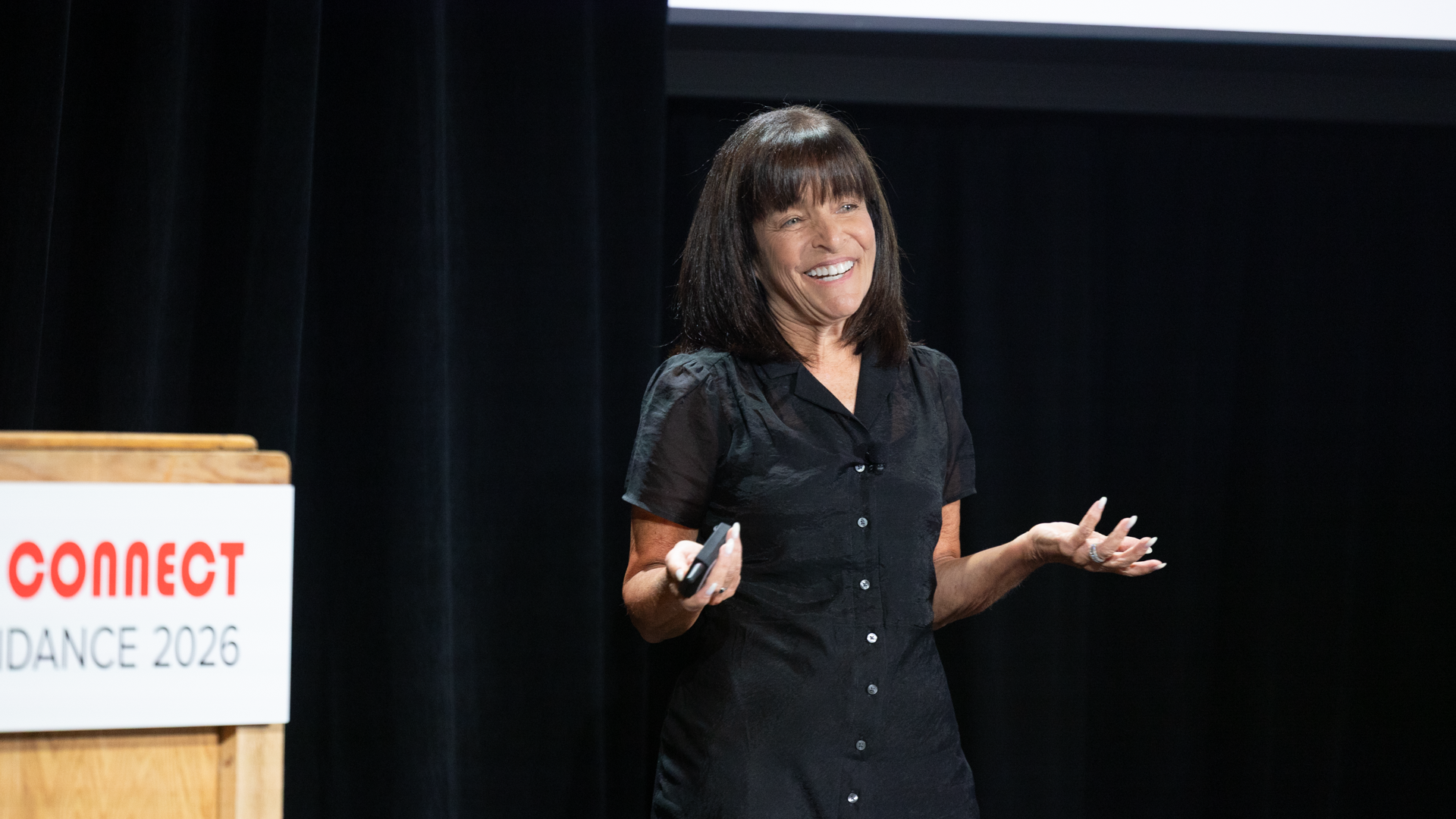
Ellen Bensky, Principal, CEO, CFO, Turner Fleischer
Talk Description
For more than 16 years, Turner Fleischer’s Academy has provided structured learning to support professional growth across the studio. What began as an in-person program has expanded into a broader learning ecosystem, shaped by changes in practice, technology, and how adults learn. Today, that evolution is more important than ever, as firms navigate an increasingly volatile, uncertain, complex, and ambiguous (VUCA) environment.
CEO Ellen Bensky shares how Turner Fleischer approaches learning as an ongoing practice rather than a finished product. Central to this work is a Learning + Development team of three professionals with formal backgrounds in adult education, grounding programs in adult learning principles and a deep understanding of how professionals engage with learning over time.
The session explores how learning programs are continually assessed through feedback, retrospectives, and ongoing dialogue with studio members. Rather than assuming programs remain effective, learning at Turner Fleischer is treated as a living system—regularly reviewed, refined, and adapted as needs shift.
Ellen also reflects on how the learning ecosystem continues to evolve. In 2025, two new programs were introduced alongside the Academy, continuing a long-standing approach of expanding learning to meet emerging needs. Looking ahead to 2026, the focus turns to defining an overarching learning framework—bringing greater structure and intention to how learning is designed and experienced. This includes more intentional learning pathways, spanning leadership development, digital learning through an LMS, and other targeted programs aligned with the evolving needs of the studio. This direction is shaped by the growing complexity of our work, and the recognition that not all challenges are the same—some are tame, with clearer paths to resolution, while others are wicked: hard to define, with no single right answer, and shaped by multiple, often competing demands.
Speaker Bio
Ellen Bensky is a transformative leader at Turner Fleischer, guiding the Toronto-based firm’s growth into a dynamic Studio specializing in Architecture, Interior Design, and Experiential Graphic Design. Her unique 35-year journey as a non-architect to becoming Principal, CEO, and CFO is a testament to her exceptional leadership and vision. Her innovative approach has redefined the traditional business model of the industry, emphasizing that operational teams are the foundation of a successful AEC practice rather than an overhead burden, allowing designers to focus on design. She has strengthened the Studio’s technological capabilities by developing a Digital Practice team with deep expertise, integrating advanced tools and systems to digitize both the practice and their projects.
Timeline
00:00 Introduction and About Turner Fleischer
03:15 Building a Learning Organization
07:29 Tame vs. Wicked Problems
11:09 Reimagining Existing Programs: TF Academy
13:36 New TF Academy Courses and Workshops
18:23 Practice Electives and Wellness
22:46 Project Site Visits with Kojo
26:11 Feedback, Communications, Leadership
29:44 What's Next: Learning Framework and eLearning Centre
34:14 AI: Wyatt ERP Financial Dashboards
37:55 AI: Synthesis Knowledge Agents
Q+A
42:30 Q: How are you communicating the pace of change?
44:09 Q: What changed after hiring an L&D manager?
45:26 Q: Why aren't you ready to measure learning yet?
45:48 Q: How will the framework change your approach?
46:53 Q: How was cutting TF Academy by a third received?
48:05 Q: How do you balance consistency with new ideas?
49:18 Q: Why build Wyatt as a custom platform?
51:09 Q: How do you afford this in a billable industry?
53:20 Q: How do you measure growth in judgment?
Transcript
This transcript was lightly edited for clarity.
Introduction and About Turner Fleischer
Ellen: We're going to be talking about tame and wicked problems, and rethinking, as Chris said, learning and development in a VUCA world.
Turner Fleischer is 52 years old. We have about 240 talented professionals, with our main office in Toronto and a smaller office in Halifax. We practice architecture, interior design, and experiential graphic design across multiple sectors.
I always like to show a few slides about our culture, because it's something I'm really proud of. We do a lot of things together, both inside and outside of work, and we give back to our community together. Those are the two things I'm most proud of in our studio, other than building a learning organization.
I like quotes, and I thought this one from Peter Senge, who wrote it in 1990, was worth sharing: "The organizations that will truly excel in the future will be the organizations that discover how to tap people's commitment and capacity to learn at all levels in an organization." That speaks to what Chris was talking about, and I really believe it's true. He also said something else I thought was really cool — and if you haven't read The Fifth Discipline, it's an incredible book — that the rate at which organizations learn may become the only sustainable source of competitive advantage. He wrote that in 1990, and here we are in 2026.
A bit about our organizational structure, which is a little different from a lot of studios: our operational departments — finance, digital practice, marketing and communications, people and culture, knowledge management, and learning and development — actually formed the foundation of our studio. Those are the people who support our practice professionals in doing the amazing creative work they do. Today we're going to dive into my learning and development team.
If any of you have heard me talk before, I start small and might get a little big — but you don't have to feel like, "If I don't have all these people Ellen has, I can't do this." All you have to do is start with one. Nihar joined me as our L&D manager; I knew I needed someone with a Master's in Adult Education, because I'd been winging it for years, and while I think I know what people want to learn, it's not my area of expertise. Niki joined us recently as a learning and development specialist, Olivia joined as a learning and development coordinator, and Sherry is also a learning and development coordinator. We've built a deep team of people with real education in learning and development to help us do everything we do.
Building a Learning Organization
I want to share why I felt strongly that we needed to become a learning organization. One reason was growth. Around 2014, we were about 60 people — big enough that we'd outgrown the "just ask someone" model. Since then we've grown to about 256 people, which is a lot of growth to manage without really thinking about learning and development.
Another reason is our demographics. I like to talk about the greens and the grays: the greens are the younger people who are going to teach us grays all the cool things they know, and the grays are the ones who pass along tacit knowledge to the greens. We're a lot more green than gray, so we knew we needed to become a learning organization to bring those two groups together.
Here's something else I'm really proud of: we believe that if you have architecture or interior design education anywhere in the world, you should be given an opportunity in Canada, even without Canadian experience. As a result, we have people educated all over the world who, when they arrive, might not know our building codes or how we construct with different materials. That became another impetus to invest in learning.
Then there are industry disruptions. Turner Fleischer was founded in 1974, and for 28 years we were doing fine — there wasn't much technological disruption. My digital team likes to say CAD wasn't really a disruption; it was just a different way of doing 2D work. But in 2002, Autodesk acquired Revit, and four years later we were considered an early adopter. In 2010, the Revit API became a stable platform. In 2012, we got photorealistic rendering, which blew our minds. Then came visual programming and scripting in 2014. And after that, I can't even describe it — you all know what's happening now, and how quickly. That was another real impetus for becoming a learning organization.
So we built out learning and development pathways: learning programs, learning events, self-directed learning, onboarding, peer-to-peer learning, and intern accreditation. We were hitting all of these pathways and creating really great content.
But then the world changed. There's a quote I really like from Jensen Huang, the president and CEO of NVIDIA, who's pretty well-spoken on technology: "The pace of change has never been this fast, yet it will never be this slow again." That concept blew my mind. It's time to rethink how we look at learning and development when the pace is this fast — and this isn't a moment in time we need to manage through. It's never going back.
So, what is VUCA? I asked my studio at a town hall how many people knew what VUCA stood for, and not many hands went up. We're in a world that's extremely volatile, uncertain, complex, and ambiguous. So how do we lead? How do we work? And how do we learn in a VUCA world — what do we need to learn to be successful in it?
Tame vs. Wicked Problems
In a VUCA world, the problems change. We used to have tame problems; now we also have to think about wicked problems. Tame problems are clearly defined challenges with known solutions in stable conditions. Examples that have impacted our studio: applying evolving building code requirements, developing master details and Revit templates, leveraging BIM for coordination and model management, building proficiency in project delivery standards, creating consistent onboarding processes, and defining clear project roles and responsibilities. When we were in the middle of them, those problems felt pretty big.
But wicked problems are complex challenges with no single right answer, shaped by changing conditions, interdependencies, and uncertainty. A few that our studio has been experiencing over the last year or two: balancing client vision, budget, and constructability in unstable market conditions; aligning clients, consultants, municipalities, and project teams around competing priorities at the same time; making critical decisions with incomplete information and compressed timelines; navigating the accelerating impact of AI and technological change; delivering greater project complexity with tighter fees and shortened schedules; and supporting our studio members through uncertainty, change, and rising expectations. Those are tame and wicked problems as we see them through our lens at Turner Fleischer.
When you have a problem, you have to navigate a solution. With tame problems, you build capacity — developing technical skills and applied knowledge, building proficiency through practice and repetition, and executing work consistently using established methods and standards. But with wicked problems, you have to strengthen judgment: how are people thinking in order to solve a problem that has no clear answer? We need to help them connect decisions to real-world outcomes, navigate competing perspectives and priorities, and adapt their thinking through experience, discussion, and reflection. That's a different kind of learning experience than simply building capacity.
Our philosophy is that learning and development moving forward has to combine building capacity and strengthening judgment. There's no going back — this isn't a moment in time where we help everyone think more critically once and move on. It's the forever moving forward.
Once we'd digested all of that, we looked at our existing programs and asked how we could readjust them through this new VUCA lens.
Reimagining Existing Programs: TF Academy
TF Academy started in 2015, and I'm proud to say we just finished our 30th term and are getting ready for our 31st. One of the things we realized, as we developed new learning programs, was that TF Academy had gotten pretty intensive — we used to run three semesters (winter, spring, and fall), which was kind of crazy, so we changed it to two terms with breaks in between. Simple, but it took some living and learning. In 2024, we had 122 learning opportunities during the year; in 2026, we've brought that down to 81 — from 26 courses to 15, from 16 workshops to 12, and so on. Less intensive focus on TF Academy has allowed for more focus on other programming.
Anybody in the studio can be an instructor in the Academy — all it takes is the passion and desire to share your expertise. In term one, we bring in external instructors, which is something we've really leaned into: if you think about the complexity of solving wicked problems alongside others in the AEC industry, bringing outside experts into the Academy helps our studio members understand and learn from those perspectives. Courses run 12 to 16 students, four to six sessions, in person and on Zoom.
New TF Academy Courses and Workshops
I want to give an example of how we changed one of our longstanding courses — understanding risk management. We now have an associate, three principals, and a senior project coordinator all participating as instructors, which broadens the perspective students get. In sessions one and two, we cover what we call the five fundamentals of risk: professional liability insurance, governance, our risk process, and what happens if you end up in a claim. Then we added something new: a fishbowl exercise, a facilitated discussion where a small group works through a real-world scenario while others observe, listen, and reflect, jumping in and out as the scenario evolves. It supports critical thinking, communication, and problem-solving through collaborative discussion and diverse perspectives — right in the moment, they get to help solve a risk situation as it's presented to them. In session four, they go through four case studies with different paths to resolution — some pending trial, some settled — and hear firsthand from colleagues about their experiences living through a claim or potential claim. Learning outcomes: understanding our approach to risk management, governance, insurance, and claims; recognizing how communication, documentation, and decision-making influence project risk; exploring risk management principles through real-world scenarios; and applying critical thinking through case studies and discussion.
Another course is our WELL certification course — designing for human health and wellbeing. Session one covers WELL principles, session two goes through global case studies, and session three covers how a project can become WELL certified. We added a fourth session: a walking tour of an actual WELL certified building, to connect what we teach with how it's applied in the real world.
One of our workshops is practice advisor drawings and details, led by Kojo, our practice advisor director, Jeremy, one of my partners, and Tab, one of our practice advisors — the people who review drawings before they go out. Workshops are smaller groups, so people get real hands-on learning: they watch Jeremy draw a detail, then everyone gets a chance to draw one themselves, while talking through construction sequencing, constructability, coordination with structure, and building control layers.
Pencil and Pixel is a new course, and it's a really amazing one — run by Michele, our design director, and Calvin, a design lead. Sessions one through three are all about the pencil: before you bring AI into your design, you have to design it yourself. We're not looking to AI to produce our first-draft designs; we want it to provide iterative enhancements to designs we've already created. In sessions four and five, they get into the pixel — illustrating design ideas through hand-drawn sketches, breaking down complex forms into simple geometric shapes, using shading techniques to turn sketches into rendered 3D forms, and exploring AI-generated variations that build on those original concepts.
Practice Electives and Wellness
Practice electives happen once or twice a semester, unlimited attendance, in person and on Zoom — this is where we bring in external voices. One coming up this term is a panel discussion called Navigating Complexity Together, with a developer, a couple of builders, and my partner Steve, identifying how developers, owners, and builders are responding to changing market conditions, describing key trends shaping the industry, and identifying strategies organizations are using to navigate uncertainty across procurement, staffing, financing, and project delivery. It really helps our studio members understand what's happening on the other side of the table — sometimes they think we're not doing a good enough job managing timelines on their behalf, and hearing directly from these people helps build the knowledge they need when they're facing a wicked problem themselves.
Another practice elective is led by Daniel, our lead software developer. We believe AI isn't going anywhere — it's absolutely going to be part of our practice — but if we want our studio members to use it well, they need foundational knowledge of what AI actually is. Daniel differentiates between artificial intelligence and machine learning, explains how platforms like ChatGPT and Copilot actually work, teaches effective prompting techniques, and covers our studio's expectations for safe, secure, and ethical AI use under our AI policy.
Our wellness electives are an area of the Academy I'm especially proud of, because if we're thinking about learning and development, we have to think about the whole human — if people feel better, they can think better. One example is sound healing, where we bring in a sound healer during the studio day to help people understand how sound and vibration support stress reduction and focus. Another is communication, since so much of navigating a VUCA world depends on people's ability to communicate through complex, difficult conversations. We work with Jordan Scholl of the Toronto Adult Speech Clinic, an expert in communication, on electives like Communicate to Motivate — recognizing how communication influences motivation and engagement, and identifying strategies that build trust and openness in team interactions.
Project Site Visits with Kojo
We also have a program called Site Visits with Kojo, which has been around for what feels like forever — Kojo's been with us about 35 years. He used to just ask, "Who wants to come to site with me?" and people would jump in his car. At 240 people, that doesn't scale, so my L&D team turned it into an actual program. It now runs quarterly, four students at a time, and participants need a defined learning goal and their manager's approval. Kojo tailors each visit to the four participants' goals over a three-month arc: a kickoff, visits to four different buildings at different stages of construction (rather than returning to the same site), a presentation back to their team, a post on Newton, our Synthesis platform, and a debrief on what went well and what could be better.
Over the last two years we've also created project site visits, because we heard loud and clear that people wanted to see what they were drawing actually being built — especially designers, who don't typically get that chance. Anyone from job captain to principal can lead one, as long as they've worked on the project, and any studio member can sign up with a defined learning goal and manager approval. It follows the same three-month structure: kickoff, a three-hour site visit, a team presentation, and a Newton post.
Feedback, Communications, Leadership
We also heard, through engagement surveys and general conversation, that giving and receiving feedback was an area we needed to strengthen — especially living in a VUCA world where communication matters so much. So we built a new multi-phase learning experience for studio members across all roles, combining workshops, coaching, and real-world practice. Every single member of our studio went through it: a three-hour session on asking for feedback, a session on receiving feedback well, and an optional one-on-one coaching session with Emma Collyer, an executive coach we've built a great relationship with. Bringing in outside experts who do this as their profession, alongside our in-house work, has made a real difference in the impact of the learning.
We ran a similar program for our associates, who sit just below partners and carry a lot of leadership responsibility. This was a new leadership development experience combining coaching, reflection, assessments, and facilitated discussion across four sessions: leadership foundations and emotional intelligence; decision-making and leading through change; communication, influence, and presence; and resilience and sustained leadership impact, with individual coaching throughout.
We took it a step further by bringing Jordan back to work with associates on the practice side and directors on the operations side together — two groups with equivalent levels of influence in the studio — to strengthen communication and collaboration between them, and build confidence navigating complex interpersonal dynamics. And we ran a similar program for our people managers, covering assertiveness, communication foundations, feedback conversations, motivational interviewing, difficult conversations, and balancing team needs and studio priorities — all central to navigating wicked problems.
What's Next: Learning Framework and eLearning Centre
Given everything I've just described, you might wonder what's left. Here's a bit of what we're working on next. We've built all of these pathways, but we realized we don't actually have a learning framework tying them together — each pathway got built as a need arose, without an overarching structure. Before we write that framework, we want to really understand our current challenges rather than guess, so we're in the middle of an assessment process. Once we understand the challenges, we can set goals for the framework, and then write it. This is a 2026–2027 project for my L&D team, done in close collaboration with our people and culture team — learning and development has moved around our org chart over the years, sitting at times in HR and at times in knowledge management, and now as its own department, but the collaboration across those teams remains constant.
Even before the framework is done, we can't stop iterating, so we're also building our e-learning center on the Synthesis LMS. It will give studio members control over when, where, and how they learn; deliver just-in-time learning at the point of need; capture and share expert knowledge across the studio; and reduce repeated training through reusable content. We've built a small team to work on it: Nihar, Niki, and Olivia from L&D; Marco and Kayla from knowledge management; and Joyce, who creates the visuals and brand presence for everything we do. So far this year they've identified the types of learning experiences best suited to the learning center, defined our course development process, and started developing beta courses.
We started with onboarding, since it's a major source of burnout for the people who repeat the same material for every new hire. Our first course covers payroll, benefits, and policies, built with Amruda, our payroll and benefits specialist. Instead of meeting with new hires before they take the course, we're trying meeting after: they take the course, let it digest for maybe a week, and then meet with Amruda for 30 minutes instead of an hour, coming in with specific questions rather than hearing everything for the first time in the room. We're also building onboarding for digital practice, starting with Revit templates — new hires will go through lessons and quizzes, then meet with Rocky, our digital practice lead, for the same kind of focused follow-up conversation.
AI: Wyatt ERP Financial Dashboards
And, of course, we have to talk about AI — no presentation these days is complete without it. AI is expanding learning beyond formal programs, turning studio knowledge and business data into guidance, insight, and better decisions in the flow of work. I'll give you two quick examples of what we're working on.
Wyatt is a custom AI platform built on Unanet, our ERP system, giving us instant access to live business insights without exporting data into Excel or building Power BI dashboards. We've only had access to it for six or seven weeks, and my finance team is already doing incredible things with it — my whole finance team is using it, along with a beta group of associates and partners. We've built three example dashboards so far. One shows revenue and effort in real time, comparing the work we're doing to the revenue we're earning, explorable by month, department, or manager — and you can build a new one just by describing what you want. Another brings our ten key financial KPIs into one live view, replacing what used to be a complex Excel workbook our finance lead had to rebuild by hand every month, so we now get an updated picture the moment the month closes. A third, built by one of our finance team members, is a payment behavior dashboard that analyzes current receivables against historical payment patterns to flag which clients are paying as expected, which are slowing down, and where we need to focus collection efforts — and it's opened up questions about what else we could analyze for behavior patterns, from bill review to timesheets.
AI: Search and Knowledge Agents
On the Synthesis side, AI search has revealed opportunities to strengthen our knowledge foundation. We thought our knowledge was in good shape, but AI showed us we need a shared taxonomy, starting with a studio glossary — when people call the same thing a guideline in one place and a standard in another, AI can't consolidate that knowledge correctly. Marco's team is working on aligning that terminology across our knowledge pages and closing content gaps and inconsistencies — which is actually where the idea came from for the roundtable I'm running this afternoon. We didn't expect that using AI well would require this much time spent making sure our underlying data is good, but it does.
We're also beginning to develop knowledge agents to make our studio knowledge easier to access in the flow of work — starting with answer agents, and eventually drafting agents and agents that analyze and create new knowledge. Studio Handbook Helper will answer questions about policies, benefits, and procedures, freeing up my people and culture team to spend time on more complex issues. Expense Expert will answer questions about expense policy and submission, since everyone wants to get reimbursed faster. There will be a Revit assistant for questions about our modeling standards, project setup, and approved workflows. Newton Content Creator, one of Marco's drafting agents, will help draft Newton posts and pages from ideas and source material aligned with our writing and brand standards. And the Knowledge Analyst — we retired the name "knowledge keeper," since it does more than just hold knowledge — analyzes knowledge capture sessions and turns them into structured lessons, tacit insights, risks, and recommendations to inform future work.
I'll close with one more quote, since you now know I like them. This is Peter Drucker, from Managing in Turbulent Times, 1980: "The greatest danger in times of turbulence is not the turbulence, but to act with yesterday's logic." Written in 1980, and it feels more relevant than ever. I really believe the greatest danger is treating change as a change-management problem instead of understanding that change is simply how we're going to be living now. Adjusting to the pace of change isn't an initiative or a program — it's literally how we work together, and how we learn and develop our people together. Thank you.
Q+A
Chris: Ellen, thanks for our first token joke of the week.
Can we start right where you left off? I'm curious how you're communicating Jensen's idea that the pace of change is never going to be this slow again to your staff, and how that message is landing.
Ellen: We are. We hold town halls — though historically they were more like a series of presentations, people sharing what they were working on in 15-minute chunks, rather than a real Q&A. At our last one, I had people submit questions beforehand and answered them in the town hall itself, and it was fascinating how many were about the pace of change — how much more are we going to go through, when is it going to stop? So we've added a new session after the last two town halls: an hour-and-a-half fireside chat where we just keep digging into it openly and honestly. It's making me lean more into radical candor. We just have to talk about it and be open that this isn't going to slow down. That's actually why I opened with that quote.
Chris: I'm not making this up.
Ellen: That's why I like quotes — I didn't make this up. It's actually a thing.
Chris: Bringing Nihar in as your learning and development manager — what would you say was the biggest impact? You called it "winging it" before. Pre-Nihar to post-Nihar, what changed?
Ellen: Everything. I didn't know who Peter Senge was — that wasn't my area. Reading, knowing who to read, understanding learning theory — I just started listening to her. She's been with me almost four years. One thing she's struggled with, and it connects to the earlier question about measurement, is that we're not actually doing "training" in the formal sense yet. You didn't hear that word much in my talk, because training, in her world of adult education, requires real validation of what was learned. That's been her learning since she joined: we're educating, we're teaching, but we're not yet measuring learning effectiveness.
Chris: Why aren't you ready for that yet? What's holding you back?
Ellen: Mostly time. There's so much we need to get out to people to help them navigate the world we're in, and honestly, we're holding ourselves back a bit. That's where the framework comes in — once that's in place, we'll move into measuring learning.
Chris: What do you think will be different? You said the framework is a 2026–2027 project — how do you imagine your approach changing once it's in place?
Ellen: We'll be able to do more targeted programming, because we'll actually understand our goals and how everything we do fits into them. If someone has an idea that's completely outside those lines, we can say, "That might be a good idea, but it's not where we need to go right now." It's not that we're accepting every idea and turning it into change — we're still being particular about what we take on. The framework will help us, and everyone else, understand how the things we're doing fit together.
Chris: Kind of a go/no-go alignment tool. One last thing before I open it up: when you cut TF Academy by roughly a third, how was that received?
Ellen: Really well — and we're continuing to cut it down, because there's fatigue with everything going on. We have so many programs now, and even though staff aren't paying to attend the Academy — it's voluntary, I only pay the instructors to develop curriculum — the site visits and project site visits are paid time, and there are still only so many hours in the day. We have to keep shrinking the Academy to make room for other L&D programming, so there's something for everybody.
Attendee: I'm thinking about level three of the maturity model, codified knowledge, and how you crowdsource content from experts across the organization. How do you balance reinforcing one consistent way of doing things against just rolling with whatever best practices your volunteer instructors bring?
Ellen: We definitely have a Turner Fleischer way, and sometimes people think it's a little too much our way. The people raising their hands to teach are working within our infrastructure, not creating new ways of working — it's more about gathering the tacit knowledge everyone already had. Before Synthesis, we had no written knowledge at all. Marco's team has done an excellent job codifying what people had in their heads into real depth and breadth of documented knowledge.
Attendee: On the Wyatt ERP platform — why build that as a custom platform instead of an agent, say, with Knowledge Architecture, or something that connects to an existing one?
Ellen: Great question — we didn't create Wyatt. Unanet did.
Attendee: Oh, I see.
Ellen: We do have software developers building custom software for us — that's a whole other session, and in fact my developers are giving a tour talking about it. We do weigh build-versus-buy for software, but Wyatt is Unanet's. It does have agentic capabilities, though — nobody on my finance team is balancing a bank statement by hand or in Excel anymore. You upload the statement and Wyatt reconciles it in seconds.
Chris: I'd add that one thing our community is figuring out is when to use an agent built into a platform versus an enterprise agent that cuts across platforms. Wyatt sits deep in financial data it's well-suited to understand — a general knowledge agent from Knowledge Architecture doesn't reach into a general ledger, so that wouldn't be the right tool there.
Ellen: It's interesting, too — our financial data is our best data, so what they've been able to do with AI in a short time is exponential, because the data was already excellent. With Synthesis, it's the opposite: it's pushing us to go back and make our data excellent so we can do the same kind of thing with it.
Attendee: I have to ask the question the rest of the room is probably wondering. You mentioned paying people to go on site visits with Kojo. In a billable industry, how do you afford all of this and still have people meet their utilization targets?
Chris: I'll add — you were in the Circle of Excellence last year, which is roughly the top percentage of firms by profit margin. So it's not just about billability, it's doing this while staying profitable.
Ellen: We don't have utilization targets — my studio members don't even know what the word means. (Laughs.) I'll also say I'm fortunate: I've been with Turner Fleischer for almost 38 years, and I'm the CEO and CFO, so I get to have an idea and approve my own funding for it. That makes it an easier sell in some ways, but harder in others, because I have to prove it works. It's built into our culture, but there's still tension — some project managers don't love that these visits aren't billed to their project, so that time comes out of the learning and development budget instead, and nobody's project budget takes the hit. And the difference it makes is instant: if a designer never gets to see how what they drew actually gets built, how do they ever learn to do it better, or understand it at all?
Attendee: Can you speak more to the judgment half of the equation? Building capacity and technical proficiency is fairly objective to measure. How are you assessing whether people are actually getting better at critical thinking, with the fishbowl exercise and things like that?
Ellen: The fishbowl exercise in the risk course was incredible — people were jumping in and out, and it's only happened once so far, but it was really successful. That's part of why we're bringing in outside experts alongside Marilyn's team to help people set goals around this and help managers work with their teams on it. Marilyn's team already does a lot of individual goal-setting work, and now they're partnering with L&D to figure out how to measure something that's genuinely hard to measure: is someone getting better at critical thinking or judgment? Really, it comes down to where we see it show up — in practice, in meetings, in conversations with their team. Part of it is simply normalizing that this is a real thing people struggle with. A lot of studio members feel like they don't know how to handle a chaotic situation on site, with everyone upset and looking to them because "the architect should know everything" — and then if it turns into a claim, everyone feels it. We're just trying to normalize that complexity and make a real impact on how people navigate it.
Chris: Ellen, that was awesome — thank you so much.
Ellen: You're welcome.
More KA Connect 2026 Talks